The Story of Passover

A couple of week’s ago, Glenn invited Rabbi Bentzi Epstein to the studios to give a Torah lesson for anyone in the building interested in attending. Glenn found the session so compelling that he asked Rabbi Epstein to come back, this time with a full studio audience. Many only know the story of Passover from the Charlton Heston movies, so Glenn asked the rabbi to explain the true story behind this holiday and why it means so much to Jews and Christians around the world.

Glenn: Hello, America, and welcome to The Glenn Beck Program and to TheBlaze. This is the network that you are building. We have a studio audience today, and I’m glad you guys are all here. Is everybody ready to have a good time? All right, okay, so anyway, so, this weekend is Easter and Passover, and everything I knew about Passover I learned from Charlton Heston. So, I know squat about it, but I will tell you that in the last few years, I have gotten to know many Jewish people and many, many rabbis, and I love this religion. I love the people of this religion.

As I was in Israel at two o’clock in the morning, and I know nothing really, I mean, I’m the whitest white guy you’ve ever met. I lived in Seattle, Washington. I mean, nobody even has a tan there, and that’s where I grew up. I remember the first time that I ever saw an African-American, my father said, “Don’t stare.” I was just like, “Look how dark he is.”

The first time, I think, I don’t know, I didn’t card people as a kid, but I think the first time I ever met a Jewish person was when I moved to New York and I had a Jewish agent. I mean, I just didn’t know anybody. So, the culture is completely foreign to me, and so I’ve had a chance to discover it myself. I have several Jewish friends. Some practice, some don’t.

The ones who practice it have enriched my faith so deeply, because as Christians, we are scratching the surface. When you read the Torah, you start to see we don’t know jack as Christians. We just don’t have any concept of how rich all of this is. I honestly don’t think that we should close that book. I think we should embrace the Jewish people and learn from them because they have so much to teach. I absolutely love this, and so a Rabbi here in Dallas, Bentzie Epstein, is a man who has come in here, what were you, two weeks ago?

Rabbi: Two weeks ago.

Glenn: I asked him to start Torah studies for anybody in the building who wanted to learn the Torah, and so we had non-practicing Jews, we had Christians, we had everybody. We do this with Christians pastors as well, and we study the Bible. We had such a great time in that 90 minutes I thought we should do a show on Passover and let him just teach Passover.

Here’s the first thing I want to start with, if this is the Passover table, I don’t want to eat any of that. None of this looks yummy. So, maybe we’ll save that. Why don’t we start with everything I learned, I learned from Charlton Heston. So, that’s not much. I know the blood on the door, and I know you eat bitter herbs and everything else, but tell me the whole story of Passover.

Rabbi: Okay, so the first thing, my mother-in-law happens to be in your group as well. You know, she saw The Ten Commandments as a kid, and that was her education. As I’ve been teaching and going through history, I tell people whatever you learn from Hollywood is wrong. So, the only way you can go ahead and you can watch any of these shows, I said, is if you pay your kids, you know, $0.50, inflation, maybe a buck, for every mistake they find, because it gets so ingrained. Like at our Seder, my in-laws are here, and we talk about the Ten Commandments. All she can think of is Charlton Heston. That’s all she can think of.

Glenn: So, I think a lot of people are like that though. How much would it cost you if you did every dollar per mistake?

Rabbi: You know, it would take forever. I actually told a few of my students, I said, “Why don’t you tape the show?” I said, “And then we’ll have a little showing,” and we’ll stop the movie every scene, you know, and kind of see if they got anything right.

Glenn: Next year we have to do that. That would be fantastic.

Rabbi: But we need more than an hour. So, that’s kind of how these things go. So, Passover, we’re about to celebrate our 3328th Passover tomorrow night, okay? So, Passover, the actual Exodus in Egypt took place 3328 years ago. The Gregorian calendar, it would be 1313 B.C.E, and Jewish calendar would be year 2448, 2448 years from the creation of man, not the world. The world one is actually…well, before the world. Judaism has a fiscal calendar and a calendar year. Our fiscal calendar or our calendar year starts on Rosh Hashanah, right? That’s the anniversary of the world, anniversary of man.

Glenn: But this is the month of like New Year’s, right?

Rabbi: Right, so this month, this is the month of Nisan, and the month of Nisan which is really the first month—

Glenn: Everybody gets a car?

Rabbi: A Nissan. So, I was wondering how they got the—

Glenn: Yeah, I know.

Rabbi: This is the first month of the year. So, in the Jewish calendar, for example, today would be the 13th day to the month of Nisan, year 5775. [So] 5775 connotates from the creation of man, and the 13th of Nisan is from the Exodus of Egypt, okay? The Exodus of Egypt is probably the most important event. It’s a piece of the most seminal event in Jewish history because that’s really…tonight or tomorrow night we’re all going to be sitting down at our Seders, you have the birth of the Jewish people. Okay, this is where the Jewish people were birthed into. Okay, it means 430 years before tomorrow night what happened was you had Abraham ink a deal with God to be the Jewish people. So, Jewish people then were 1743 B.C.E. was when the Jewish people, when Abraham inked a deal with God for the Jewish people to be the Jewish people.

Glenn: I’ve never heard anybody ink a deal with God. It’s funny. It’s like, “I’ve got some changes here on page three.”

Rabbi: The Bible talks about that God told Abraham, take some animals, cut them in half, put them on either side, and then God sent down a pillar of smoke in a fiery furnace and walked through the pieces of the animal, right? Genesis 15, right, that’s where that takes place, so actually it’s a real deal. That’s when we became the Jewish people, so Abraham is considered the patriarch of the Jewish people. Got it? You have Abraham, Isaac, Jacob, those are the three patriarchs. You had four matriarchs, Sarah, Rebecca, Rachel, and Leah, and they are the patriarchs and matriarchs of the Jewish people. They created the spiritual DNA of the Jewish people. As a people, we became birthed on Passover, okay?

Glenn: Because that was the coming together and saying we’re all entering Exodus together. We are one as a people, and we are moving as one for the first time.

Rabbi: And we’re all accepting the deal that Abraham made with God. That’s actually what takes place, because one thing that we really don’t talk about a lot but you should know, only 20% of the Jewish people left Egypt. During the ninth plague, the plague of darkness, 80% of the Jewish people died because they said we would rather be slaves to Egypt than serve God. They said, “We’re outta here.” They said, “We’re not going.” God says you’ve got two choices, you could come with me or you can stay here dead.

Glenn: This is the thing that amazes me. When I first heard that, because I’ve heard 10%, but I’ll take your 20. Don’t argue with me, Rabbi. This is the thing that amazes me, because we think that is unusual, but there was only 20 to 30% of the American people that went to fight against the king. They weren’t all with George Washington. It was 30% was the number. The rest were either neutral or against it. If you look at what’s happening right now and you said, “Hey, we all have got to stand up,” you’d be lucky to get 20%. There would be a lot of people that believe, “No, this really isn’t right,” but standing up and doing something about it, that’s a small number. So, God always kind of unfortunately whittles it down and purifies those people right before there’s another great expansion.

Rabbi: Yeah. Actually Egypt is called a cauldron, right, a crucible. This is where the Jewish people were purified, and the 20% that left, all Jews today, descended from that.

Glenn: Now, how did they go from being purified…this is the thing I’ve never understood with The Ten Commandments, the Charlton Heston, is they’ve seen all these plagues. They’ve seen all these miracles. They walked across the Red Sea. They see Pharaoh’s armies destroyed. Moses leaves, and the minute he’s gone, it’s…it took a little longer than that?

Rabbi: Yeah, 40 days.

Glenn: Okay still, but 40 days and they are building an altar to—

Rabbi: A golden calf.

Glenn: I mean, what happens? How does that happen?

Rabbi: Actually it’s interesting. Really what happens on that piece is that the Jewish people are in the desert.

Glenn Because these are the good guys. These are the dedicated.

Rabbi: You should know, just in their defense, first of all, the 20% that left were not God-fearing people. When the Jewish people, seven days after we left, we came to the Reed Sea. It’s actually not the Red Sea. The Hebrew word is Yam Suph. Yam means sea. Suph means reeds, Sea of Reeds. It probably was the Red Sea. You know why the Red Sea is called the Red Sea?

Glenn: No.

Rabbi: Because the reeds that grow on the bottom of the Red Sea are red, so they make the water look red.

Glenn: Okay.

Rabbi: Okay, so it’s really the technical term is the Reed Sea.

Glenn: Is there a Reed Sea other than the Red Sea?

Rabbi: I don’t believe so.

Glenn: Okay, so we think it’s the Red Sea.

Rabbi: It’s probably the Red Sea, and actually the Red Sea—

Glenn: So, if it’s reeds, it’s not really deep. It’s like the new one I think or maybe I saw…I also learned a lot from Prince of Egypt, that great cartoon, because in that cartoon there’s like a whale or something there by the water. Like wow, that’s cool, there’s a whale in the sea.

Rabbi: So, I mean, the reeds could be pretty tall. So, Sea of Reeds, it’s actually interesting because there’s a question about the Gulf of Suez or the Gulf of Aqaba, and it seems that really took place, that the splitting of the Reed Sea actually was the Gulf of Aqaba, not the Gulf of Suez. So, if you could imagine, here’s Egypt, okay, and here’s the two fingers. Here’s the Suez which eventually they turned into Suez Canal, and you have here the Gulf of Aqaba where you have all the oil stuff coming out of. They traveled across the desert to the Gulf of Aqaba, probably a place called Nuweiba Beach, okay? Nuweiba Beach is sort of almost a peninsula or a delta into the Sea of Reeds, and that’s why when the Egyptian army came chasing after us we couldn’t go no place.

Glenn: No place.

Rabbi: I never understood if here’s the Sea of Reeds and you’re camped right here, go north, go south. The answer is we’re on a delta. The mountains came up to the Sea of Reeds, and so we’re stuck on this delta. There’s only one way in, and that was through the Wadi, and down the pike was coming the Egyptians. So, we were trapped on the beachhead.

Glenn: Tell me about…because we talked privately about miracles, so tell me about the parting of the Red Sea and the choice you have to believe.

Rabbi: Okay, so this is quite fascinating. Most people, when it comes to miracles, they have a hard time figuring it out. You know, like if I levitate you off this couch—

Glenn: That would be cool.

Rabbi: That would be cool.

Glenn: If I levitated you off this couch, that would be very cool.

Rabbi: I love your couches. Once you sit in them, you don’t get up.

Glenn: I know.

Rabbi: Right, so people define miracles, if I picked up this building, wow, what a miracle.

Glenn: Right.

Rabbi: Judaism, that’s not how we define miracles. Judaism, we define miracles, God will always try to do a miracle…He will always try to do it within the bounds of nature, okay? So, it will always be as natural as it could be, and in fact, if you actually read the Torah, right, it says that Moses stuck his hand out over the sea, and it says an east wind blew all that night. The next morning, the Sea of Reeds split. At dawn, the Sea of Reeds split, and in we went. So, you see the sea splitting was a natural event. The wind blew.

Glenn: It was the stacking up of the water.

Rabbi: The stacking up of the water.

Glenn: Have you ever read Velikovsky, a guy named Velikovsky, Worlds in Collision? Has anybody ever read Worlds in Collision?

Rabbi: Is he in the Bible?

Glenn: No. He was a guy who actually was really besmirched. He was a scientist and besmirched. When Einstein died, he had just written Velikovsky a letter and said I am sorry that I was part of the besmirching of you. He said some of the stuff that you’ve said has turned out to be accurate, and he said I will make it my life’s mission to correct any of the stuff that I have done. He died a week later.

So, Velikovsky is still discredited, and it’s not that his conclusions are necessarily accurate, it’s his idea. He talked about worlds in collision. He talked about let’s go through the Bible, and let’s look now if the sun did stop, we should find that in many religions, and they might explain it differently.

If the Red Sea…and how he explained the Red Sea, he said could it have been that the fire coming down and stuff was maybe a very large meteor coming by that actually changed the gravitational pull and actually made the riverbed or the sea stand up? What he was saying was if God created the universe, He would use his own natural laws to do these things, so we should look for scientific ways and natural ways for miracles to happen. It’s how we translate them. I thought that was great.

Rabbi: Actually the Jewish tradition teaches that when God came, like Noah and the flood, said God took two stars out of orbit and that flooded the world. It’s kind of quite fascinating. When you go through the Bible, it’s amazing. So, the Sea of Reeds, going back to the Sea of Reeds, it was a natural event, and yet in Judaism we consider that to be…the miracles that took place at the Sea of Reeds was five times, four times more than the miracles that took place in Egypt. Everyone knows the ten plagues, right? I didn’t watch the movie, so I can’t tell you.

Glenn: You didn’t watch the movie? Oh, you’ve got to come over to my house for Passover.

Rabbi: And so you go, you get the ten plagues, right? You have ten plagues there, right? And yet the plagues that took place at the Sea of Reeds were multiples of that. Fifty, two hundred, two hundred fifty plagues took place at the Sea of Reeds, right? It’s humongous, and yet like, “Well, what’s the miracle?” Like, big deal, you know, like whoopie-doo. The answer is as follows, and the answer to this is something so significant. The definition of a miracle is timing. The Jewish people stood at the Sea of Reeds, and the Egyptians are pounding now. They’re going to chop their heads off, right? They finally have them in their gun sights. You know, they’ve been taking it for a year, and you can’t fight God. Like, it’s hard to shoot God, right? They go ahead, and they’re about ready to take the Jewish people. They’re going to teach them a lesson, right? How many of them are they going to bring back? They’re going to wipe the floor with them, and they have them in their gun sights, right? The Jewish people are stuck, and we say, “God, help us.” God goes in, and God splits the sea, and we walk through. You have to pardon me. I don’t understand the Egyptians, okay?

Glenn: Yeah.

Rabbi: Ten plagues you’ve lived through, right? You’ve lost everything. You show up at the Sea of Reeds, and all of a sudden, the sea parts, and then you’re stupid enough to follow the Jews in?

Glenn: Yeah, I know, yeah, like way behind them too. If I’m like with them, that’s one thing.

Rabbi: What are you doing? Like, I just don’t get that. The Jewish people get in there, right? The Jewish people walk across. We go ahead, and we go through the Sea of Reeds, and it’s an amazing thing, right? In the last 3328 years, how many times has the Sea of Reeds split?

Glenn: Zero.

Rabbi: Zero, and before this time, how many times has the Sea of Reeds split?

Glenn: Zero.

Rabbi: So that, in Judaism, we put up a big sign, and we say “God.” We say that’s God because it’s timing. That’s God. That’s the miracle. The miracle is it never happens before. It happened just when we were there and we cried out to God. Stick out your hand and poof, poof, poof, and there we go. It’s like amazing.

Grim warning: Bad-faith Israel critics duck REAL questions

Spencer Platt / Staff | Getty Images

Bad-faith attacks on Israel and AIPAC warp every debate. Real answers emerge only when people set aside scripts and ask what serves America’s long-term interests.

The search for truth has always required something very much in short supply these days: honesty. Not performative questions, not scripted outrage, not whatever happens to be trending on TikTok, but real curiosity.

Some issues, often focused on foreign aid, AIPAC, or Israel, have become hotbeds of debate and disagreement. Before we jump into those debates, however, we must return to a simpler, more important issue: honest questioning. Without it, nothing in these debates matters.

Ask questions because you want the truth, not because you want a target.

The phrase “just asking questions” has re-entered the zeitgeist, and that’s fine. We should always question power. But too many of those questions feel preloaded with someone else’s answer. If the goal is truth, then the questions should come from a sincere desire to understand, not from a hunt for a villain.

Honest desire for truth is the only foundation that can support a real conversation about these issues.

Truth-seeking is real work

Right now, plenty of people are not seeking the truth at all. They are repeating something they heard from a politician on cable news or from a stranger on TikTok who has never opened a history book. That is not a search for answers. That is simply outsourcing your own thought.

If you want the truth, you need to work for it. You cannot treat the world like a Marvel movie where the good guy appears in a cape and the villain hisses on command. Real life does not give you a neat script with the moral wrapped up in two hours.

But that is how people are approaching politics now. They want the oppressed and the oppressor, the heroic underdog and the cartoon villain. They embrace this fantastical framing because it is easier than wrestling with reality.

This framing took root in the 1960s when the left rebuilt its worldview around colonizers and the colonized. Overnight, Zionism was recast as imperialism. Suddenly, every conflict had to fit the same script. Today’s young activists are just recycling the same narrative with updated graphics. Everything becomes a morality play. No nuance, no context, just the comforting clarity of heroes and villains.

Bad-faith questions

This same mindset is fueling the sudden obsession with Israel, and the American Israel Public Affairs Committee in particular. You hear it from members of Congress and activists alike: AIPAC pulls the strings, AIPAC controls the government, AIPAC should register as a foreign agent under the Foreign Agents Registration Act. The questions are dramatic, but are they being asked in good faith?

FARA is clear. The standard is whether an individual or group acts under the direction or control of a foreign government. AIPAC simply does not qualify.

Here is a detail conveniently left out of these arguments: Dozens of domestic organizations — Armenian, Cuban, Irish, Turkish — lobby Congress on behalf of other countries. None of them registers under FARA because — like AIPAC — they are independent, domestic organizations.

If someone has a sincere problem with the structure of foreign lobbying, fair enough. Let us have that conversation. But singling out AIPAC alone is not a search for truth. It is bias dressed up as bravery.

Anadolu / Contributor | Getty Images

If someone wants to question foreign aid to Israel, fine. Let’s have that debate. But let’s ask the right questions. The issue is not the size of the package but whether the aid advances our interests. What does the United States gain? Does the investment strengthen our position in the region? How does it compare to what we give other nations? And do we examine those countries with the same intensity?

The real target

These questions reflect good-faith scrutiny. But narrowing the entire argument to one country or one dollar amount misses the larger problem. If someone objects to the way America handles foreign aid, the target is not Israel. The target is the system itself — an entrenched bureaucracy, poor transparency, and decades-old commitments that have never been re-examined. Those problems run through programs around the world.

If you want answers, you need to broaden the lens. You have to be willing to put aside the movie script and confront reality. You have to hold yourself to a simple rule: Ask questions because you want the truth, not because you want a target.

That is the only way this country ever gets clarity on foreign aid, influence, alliances, and our place in the world. Questioning is not just allowed. It is essential. But only if it is honest.

This article originally appeared on TheBlaze.com.

The melting pot fails when we stop agreeing to melt

Spencer Platt / Staff | Getty Images

Texas now hosts Quran-first academies, Sharia-compliant housing schemes, and rapidly multiplying mosques — all part of a movement building a self-contained society apart from the country around it.

It is time to talk honestly about what is happening inside America’s rapidly growing Muslim communities. In city after city, large pockets of newcomers are choosing to build insulated enclaves rather than enter the broader American culture.

That trend is accelerating, and the longer we ignore it, the harder it becomes to address.

As Texas goes, so goes America. And as America goes, so goes the free world.

America has always welcomed people of every faith and people from every corner of the world, but the deal has never changed: You come here and you join the American family. You are free to honor your traditions, keep your faith, but you must embrace the Constitution as the supreme law of the land. You melt into the shared culture that allows all of us to live side by side.

Across the country, this bargain is being rejected by Islamist communities that insist on building a parallel society with its own rules, its own boundaries, and its own vision for how life should be lived.

Texas illustrates the trend. The state now has roughly 330 mosques. At least 48 of them were built in just the last 24 months. The Dallas-Fort Worth metroplex alone has around 200 Islamic centers. Houston has another hundred or so. Many of these communities have no interest in blending into American life.

This is not the same as past waves of immigration. Irish, Italian, Korean, Mexican, and every other group arrived with pride in their heritage. Still, they also raised American flags and wanted their children to be part of the country’s future. They became doctors, small-business owners, teachers, and soldiers. They wanted to be Americans.

What we are watching now is not the melting pot. It is isolation by design.

Parallel societies do not end well

More than 300 fundamentalist Islamic schools now operate full-time across the country. Many use Quran-first curricula that require students to spend hours memorizing religious texts before they ever reach math or science. In Dallas, Brighter Horizons Academy enrolls more than 1,700 students and draws federal support while operating on a social model that keeps children culturally isolated.

Then there is the Epic City project in Collin and Hunt counties — 402 acres originally designated only for Muslim buyers, with Sharia-compliant financing and a mega-mosque at the center. After public outcry and state investigations, the developers renamed it “The Meadows,” but a new sign does not erase the original intent. It is not a neighborhood. It is a parallel society.

Americans should not hesitate to say that parallel societies are dangerous. Europe tried this experiment, and the results could not be clearer. In Germany, France, and the United Kingdom, entire neighborhoods now operate under their own cultural rules, some openly hostile to Western norms. When citizens speak up, they are branded bigots for asserting a basic right: the ability to live safely in their own communities.

A crisis of confidence

While this separation widens, another crisis is unfolding at home. A recent Gallup survey shows that about 40% of American women ages 18 to 39 would leave the country permanently if given the chance. Nearly half of a rising generation — daughters, sisters, soon-to-be mothers — no longer believe this nation is worth building a future in.

And who shapes the worldview of young boys? Their mothers. If a mother no longer believes America is home, why would her child grow up ready to defend it?

As Texas goes, so goes America. And as America goes, so goes the free world. If we lose confidence in our own national identity at the same time that we allow separatist enclaves to spread unchecked, the outcome is predictable. Europe is already showing us what comes next: cultural fracture, political radicalization, and the slow death of national unity.

Brandon Bell / Staff | Getty Images

Stand up and tell the truth

America welcomes Muslims. America defends their right to worship freely. A Muslim who loves the Constitution, respects the rule of law, and wants to raise a family in peace is more than welcome in America.

But an Islamist movement that rejects assimilation, builds enclaves governed by its own religious framework, and treats American law as optional is not simply another participant in our melting pot. It is a direct challenge to it. If we refuse to call this problem out out of fear of being called names, we will bear the consequences.

Europe is already feeling those consequences — rising conflict and a political class too paralyzed to admit the obvious. When people feel their culture, safety, and freedoms slipping away, they will follow anyone who promises to defend them. History has shown that over and over again.

Stand up. Speak plainly. Be unafraid. You can practice any faith in this country, but the supremacy of the Constitution and the Judeo-Christian moral framework that shaped it is non-negotiable. It is what guarantees your freedom in the first place.

If you come here and honor that foundation, welcome. If you come here to undermine it, you do not belong here.

Wake up to what is unfolding before the consequences arrive. Because when a nation refuses to say what is true, the truth eventually forces its way in — and by then, it is always too late.

This article originally appeared on TheBlaze.com.

Shocking: AI-written country song tops charts, sparks soul debate

VCG / Contributor | Getty Images

A machine can imitate heartbreak well enough to top the charts, but it cannot carry grief, choose courage, or hear the whisper that calls human beings to something higher.

The No. 1 country song in America right now was not written in Nashville or Texas or even L.A. It came from code. “Walk My Walk,” the AI-generated single by the AI artist Breaking Rust, hit the top spot on Billboard’s Country Digital Song Sales chart, and if you listen to it without knowing that fact, you would swear a real singer lived the pain he is describing.

Except there is no “he.” There is no lived experience. There is no soul behind the voice dominating the country music charts.

If a machine can imitate the soul, then what is the soul?

I will admit it: I enjoy some AI music. Some of it is very good. And that leaves us with a question that is no longer science fiction. If a machine can fake being human this well, what does it mean to be human?

A new world of artificial experience

This is not just about one song. We are walking straight into a technological moment that will reshape everyday life.

Elon Musk said recently that we may not even have phones in five years. Instead, we will carry a small device that listens, anticipates, and creates — a personal AI agent that knows what we want to hear before we ask. It will make the music, the news, the podcasts, the stories. We already live in digital bubbles. Soon, those bubbles might become our own private worlds.

If an algorithm can write a hit country song about hardship and perseverance without a shred of actual experience, then the deeper question becomes unavoidable: If a machine can imitate the soul, then what is the soul?

What machines can never do

A machine can produce, and soon it may produce better than we can. It can calculate faster than any human mind. It can rearrange the notes and words of a thousand human songs into something that sounds real enough to fool millions.

But it cannot care. It cannot love. It cannot choose right and wrong. It cannot forgive because it cannot be hurt. It cannot stand between a child and danger. It cannot walk through sorrow.

A machine can imitate the sound of suffering. It cannot suffer.

The difference is the soul. The divine spark. The thing God breathed into man that no code will ever have. Only humans can take pain and let it grow into compassion. Only humans can take fear and turn it into courage. Only humans can rebuild their lives after losing everything. Only humans hear the whisper inside, the divine voice that says, “Live for something greater.”

We are building artificial minds. We are not building artificial life.

Questions that define us

And as these artificial minds grow sharper, as their tools become more convincing, the right response is not panic. It is to ask the oldest and most important questions.

Who am I? Why am I here? What is the meaning of freedom? What is worth defending? What is worth sacrificing for?

That answer is not found in a lab or a server rack. It is found in that mysterious place inside each of us where reason meets faith, where suffering becomes wisdom, where God reminds us we are more than flesh and more than thought. We are not accidents. We are not circuits. We are not replaceable.

Europa Press News / Contributor | Getty Images
The miracle machines can never copy

Being human is not about what we can produce. Machines will outproduce us. That is not the question. Being human is about what we can choose. We can choose to love even when it costs us something. We can choose to sacrifice when it is not easy. We can choose to tell the truth when the world rewards lies. We can choose to stand when everyone else bows. We can create because something inside us will not rest until we do.

An AI content generator can borrow our melodies, echo our stories, and dress itself up like a human soul, but it cannot carry grief across a lifetime. It cannot forgive an enemy. It cannot experience wonder. It cannot look at a broken world and say, “I am going to build again.”

The age of machines is rising. And if we do not know who we are, we will shrink. But if we use this moment to remember what makes us human, it will help us to become better, because the one thing no algorithm will ever recreate is the miracle that we exist at all — the miracle of the human soul.

This article originally appeared on TheBlaze.com.

Is Socialism seducing a lost generation?

Jeremy Weine / Stringer | Getty Images

A generation that’s lost faith in capitalism is turning to the oldest lie on earth: equality through control.

Something is breaking in America’s young people. You can feel it in every headline, every grocery bill, every young voice quietly asking if the American dream still means anything at all.

For many, the promise of America — work hard, build something that lasts, and give the next generation a better start — feels like it no longer exists. Home ownership and stability have become luxuries for a fortunate few.

Capitalism is not a perfect system. It is flawed because people are flawed, but it remains the only system that rewards creativity and effort rather than punishing them.

In that vacuum of hope, a new promise has begun to rise — one that sounds compassionate, equal, and fair. The promise of socialism.

The appeal of a broken dream

When the American dream becomes a checklist of things few can afford — a home, a car, two children, even a little peace — disappointment quickly turns to resentment. The average first-time homebuyer is now 40 years old. Debt lasts longer than marriages. The cost of living rises faster than opportunity.

For a generation that has never seen the system truly work, capitalism feels like a rigged game built to protect those already at the top.

That is where socialism finds its audience. It presents itself as fairness for the forgotten and justice for the disillusioned. It speaks softly at first, offering equality, compassion, and control disguised as care.

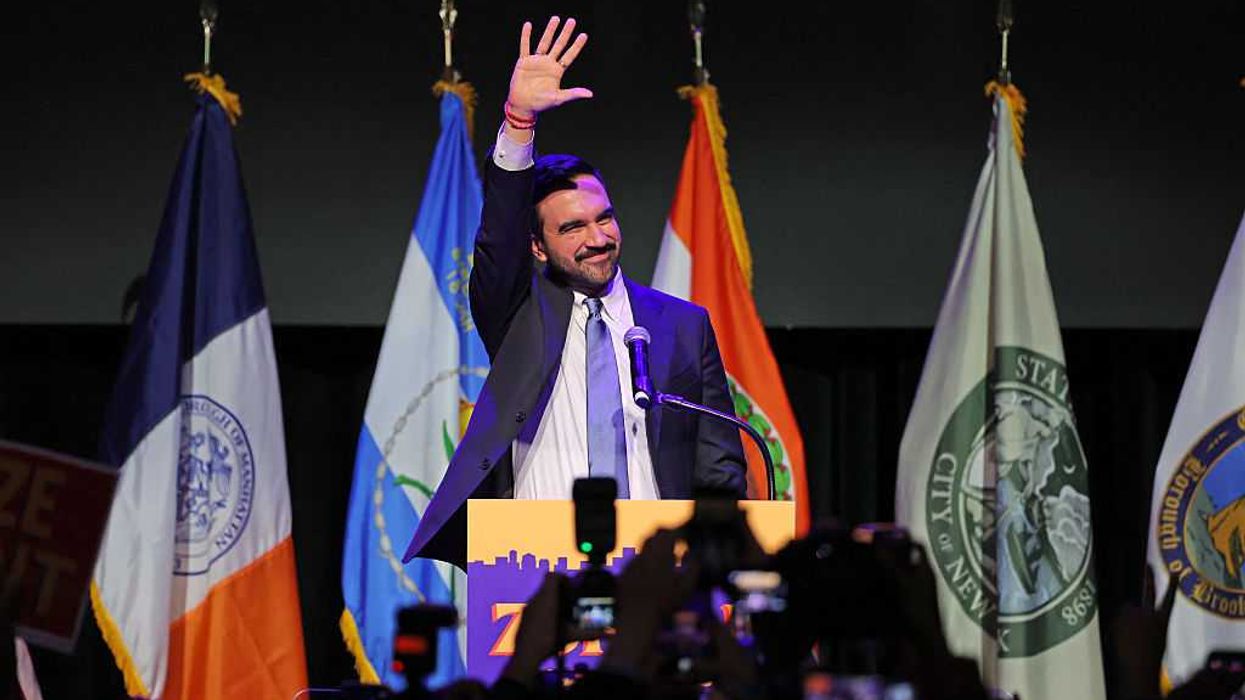
We are seeing that illusion play out now in New York City, where Zohran Mamdani — an open socialist — has won a major political victory. The same ideology that once hid behind euphemisms now campaigns openly throughout America’s once-great cities. And for many who feel left behind, it sounds like salvation.

But what socialism calls fairness is submission dressed as virtue. What it calls order is obedience. Once the system begins to replace personal responsibility with collective dependence, the erosion of liberty is only a matter of time.

The bridge that never ends

Socialism is not a destination; it is a bridge. Karl Marx described it as the necessary transition to communism — the scaffolding that builds the total state. Under socialism, people are taught to obey. Under communism, they forget that any other options exist.

History tells the story clearly. Russia, China, Cambodia, Cuba — each promised equality and delivered misery. One hundred million lives were lost, not because socialism failed, but because it succeeded at what it was designed to do: make the state supreme and the individual expendable.

Today’s advocates insist their version will be different — democratic, modern, and kind. They often cite Sweden as an example, but Sweden’s prosperity was never born of socialism. It grew out of capitalism, self-reliance, and a shared moral culture. Now that system is cracking under the weight of bureaucracy and division.

ANGELA WEISS / Contributor | Getty Images

The real issue is not economic but moral. Socialism begins with a lie about human nature — that people exist for the collective and that the collective knows better than the individual.

This lie is contrary to the truths on which America was founded — that rights come not from government’s authority, but from God’s. Once government replaces that authority, compassion becomes control, and freedom becomes permission.

What young America deserves

Young Americans have many reasons to be frustrated. They were told to study, work hard, and follow the rules — and many did, only to find the goalposts moved again and again. But tearing down the entire house does not make it fairer; it only leaves everyone standing in the rubble.

Capitalism is not a perfect system. It is flawed because people are flawed, but it remains the only system that rewards creativity and effort rather than punishing them. The answer is not revolution but renewal — moral, cultural, and spiritual.

It means restoring honesty to markets, integrity to government, and faith to the heart of our nation. A people who forsake God will always turn to government for salvation, and that road always ends in dependency and decay.

Freedom demands something of us. It requires faith, discipline, and courage. It expects citizens to govern themselves before others govern them. That is the truth this generation deserves to hear again — that liberty is not a gift from the state but a calling from God.

Socialism always begins with promises and ends with permission. It tells you what to drive, what to say, what to believe, all in the name of fairness. But real fairness is not everyone sharing the same chains — it is everyone having the same chance.

The American dream was never about guarantees. It was about the right to try, to fail, and try again. That freedom built the most prosperous nation in history, and it can do so again if we remember that liberty is not a handout but a duty.

Socialism does not offer salvation. It requires subservience.

This article originally appeared on TheBlaze.com.