
When the doctors told Glenn he couldn't speak for thirty days, he was scared that he could return to the microphone with nothing. But it turns out the isolation from work, friends, and family gave Glenn a new perspective on what really changes the world. Here's a hint - it doesn't involve merely going to church every Sunday.
Listen to a portion of this segment below:
Below is a rush transcript of this segment, it may contain errors:
I'm not going to start with the problems. You know what the problems in this country are. You know what the problems of the world are. You see them every day. You talk about them with your friends. You can't make sense of what's going on. Honestly, I don't even recognize my country anymore. Common sense is truly dead in America.
Let me ask you what is it that you do believe in? What are the things that you say, yes, I believe in this? Do you believe in the office of the presidency anymore? Do you believe in Congress? Do you believe the Supreme Court will actually issue justice? Our court system? Do you believe in our cops? Do you believe in the military?
Military actually has the highest score out of all of these things. But even that is falling. What is it that you really believe in now? Do you believe in the media? In Hollywood? You believe in the government of Detroit or the government of Philadelphia or the government of New York? I think if you're like most people, you probably don't believe in religion anymore.
You probably are waffling a little bit on belief in God. You're concerned about your family. Can I trust my family? Can I trust my children? I hope so. But I don't know. They're under attack every day. I trust my spouse. I hope so. So many of us -- so many of us I think aren't even sure we can trust ourselves. We've dropped the ball so many times in so many ways. If people just knew what I really think or who I really am or the mistakes that I've made. What is it that you trust?
I've never asked for your trust. And I'm amazed at how many people in this country for the pummeling that this show has taken over the years, I'm really shocked that so many people still trust us. But I will tell you this: We work hard to try to get things right. We don't always succeed. But we do work hard.
I've been gone for 30 days. The doctor has ordered that I stop using my voice for 30 days. And the people on left cheered. Yeah! Can it be longer than 30 days?
Last night, I wrote on Facebook, I'm not even sure if I can do this job anymore. I don't -- I have butterflies in my stomach today trying to come back. I don't know how to do this job, as if I've lost 38 years of experience. This is more time off than I've had since I was 14 years old. I've been away from this microphone longer than any other period in my life since 14.
But it has given me real clarity on a few things. Being forced to be quiet. And I can literally say, I've been to the mountaintop to reflect, to listen.
You surprisingly, and not all the way along, but you have weathered this storm with me. And you have given me the benefit of the doubt on things like Benghazi, when I came out three days later and said they're running guns. Year and a half later, it comes out that they're running guns. You gave me your trust in that, something I don't ask for.
You stuck with me when I said, there's a banking crisis coming. In 2006 and '7, there's a collapse coming. So many people gave me the benefit of the doubt.
The first thing anybody gave me the benefit of the doubt was, was 9/11. In 1999, I said, there's going to be bodies and buildings in the streets of New York. And it will be perpetrated by Osama bin Laden. It will happen before the end of the decade. Happened a lot sooner than I thought. It happened in 2001.
You stuck with me through the caliphate. The rise of Iran. The abandonment of Israel. Which was crazy when I said it under George W. Bush. That this country will turn against Israel. And we will abandon Israel. When I said there would be riots in the streets of Europe and America, you gave me the benefit of the doubt. The collapse of Greece, the rise of the Nazi parties in Europe, you gave me the benefit of the doubt, when there was no reason to.
When I said, there will come a time that you will no longer recognize your country and it will happen sooner than you think, the Bubba Effect. The dedollarization of the world. The rise of Russian fascism. The stopping of the purchasing of American bonds. When I said that, it was insane to think that. And you gave me the benefit of the doubt.
Recently, I have said, beware of artificial intelligence because there's no oversight there. Latest story I saw on this was over the weekend now. Fifty of the greatest minds on planet earth have just said, we need to ban any kind of killer AI.
We've been fortune enough to be ahead on a few of the stories. And you've given me the benefit of the doubt when it was crazy to. People have asked me for a solution. And I've told you before, I don't have a solution. I'm not the guy to come to for a solution. I don't know the solutions to these things.
We've looked to leaders: Presidents, congressmen, senators, elections. And all down the line, over and over again, those people and those parties have let us down, some more than others.
I talked to somebody in Congress last week. He reached out to see how I was doing. And I said, how are you doing? He said, I'm not -- I'm not sure I can do this much longer. He said, it was worse than I thought it was. He said, but, Glenn, now with the G.O.P. in control, it's worse than it ever has been.
And he's a Republican.
Do you see a political solution, honestly? Elect whoever it is in your mind. Do you see a political solution? Because I don't. One man can't make the difference.
Do you see a financial solution, with everything -- the greatest minds on earth get together and say, okay, here's what we'll do with all these bonds? Do you see a financial solution? Or do you see a reset? It's going to have to reset? How about a military solution? Yeah, well, here's what we'll do with ISIS and the rest of the Middle East. And then it's fixed. Because I don't see one.
Out of all the things that you could possibly believe in, is there anything -- anything left that has enough power to solve this?
I say there is. But my guess is, even in this audience, the majority disagrees with me. They might -- they might even intellectually say, yeah, okay. But when it really comes down to it, no, not really.
Gandhi said, about Christians, Gandhi said, there is more dynamite in that New Testament. It could shake the foundations of the western world, if not the entire world. There's enough dynamite in those words to revolutionize everything, but Christians just don't see it or just won't do it.
Maybe the solution is so easy that we either fail to recognize it or we fail to see that it actually has power. Because we've become disillusioned. But it's the only thing that you can actually change. And that is you. You can't control others. I can elect somebody. But I can't control what's going to happen. I can't control the situation. I'm a raging alcoholic. I'm recovering. But still there's an alcoholic in me just crying to get out. You give me one snifter of whisky, and I'll drink the whole bottle. I'm an all-or-nothing kind of guy.
I can't even control myself alone.
I want to talk to you about a solution. And it doesn't involve going to church. Because going to church, it does nothing. Honestly. Going to church does not change the world.
Living a set of principles does change the world. And changing you as an individual changes the world. And I know this sounds stupid. But let me give you a piece of history. Ancient Israel. They come in. They attack. They kill everybody in Jerusalem. And they tear down the walls. Anybody who is left, they enslave. All the walls, all the gates, destroyed. Now if you back in the day didn't have a city with walls around it, you're done.
How are they going to rebuild these walls? Enemies are everywhere. How are they going to possibly rebuild the walls when they're not really even in charge? One guy has an idea. He says to one guy who has a house right there by the wall, would you do me a favor? Can you just -- you and your sons, you just rebuild this part of the wall. Just the part that's in your backyard. And I'll go to Phil who is your neighbor, and I'll ask him just to rebuild what's in his backyard. And he goes around the city to all of the people that live right there by the wall. And everybody is responsible for just rebuilding that part of the wall. That's it.
Not the whole wall. Because if you go to everybody and say, we're going to rebuild the wall. Everybody says that's nuts. We can't do it. But if he goes to individuals and says, you just do your part. You just build your part of the wall.
They rebuilt the wall.
See, the only thing we can control is us. That's it. And looking at this as a massive problem, we're never going to be able to solve it. We'll never solve it.
I took my American flag down. I don't fly the 50-star banner anymore, and I do it for a myriad of reasons. But I replaced it with a Bennington banner. The Bennington flag.
The Bennington flag is the -- you've seen it a million times. It's the United States flag, except the stars are arranged differently. They're the ones that have the half arc. Thirteen stars. And then it says "76" on it. You've seen it a million times.
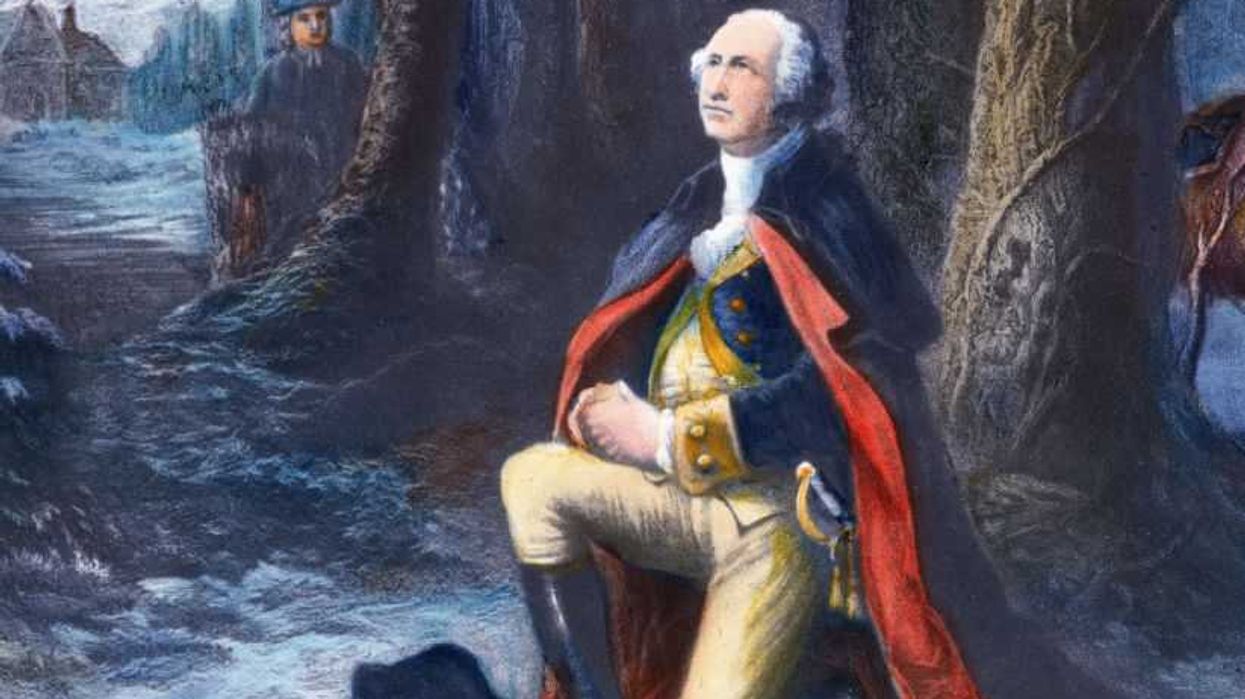
But I started flying that, and underneath it, I flew the first American flag, which eventually became George Washington's Navy. His cruisers. It's just the one with the cypress tree on it that says an appeal to heaven. And I took the flag down, and I posted it up on Facebook. And so many people came out of the woodwork and said, how dare you, Glenn. That flag represents the American people, not the government. You may not understand what the government is doing, but that doesn't -- that doesn't mean that you take down the flag because that represents the people.
Okay. I'm going to take you at your word on that. If that's what that flag means, I still am going to take it down. Because I've seen the outpouring of love and the outpouring of action for Cecil the lion from the American people. And then I saw what happened, where they are crushing babies' skulls with Planned Parenthood and the outcry there.
They are like a quarter of a million -- how many names here? I think it's like a quarter of a million names. Yeah, 229,783 names. People that want to extradite Minnesota dentist, Walter Palmer. They want to extradite him and send him to Zimbabwe to face a court over there. There's 229,783 people that signed a petition. To defund Planned Parenthood, there's a petition going around that has 21,560 signatures. We are a group of people that worship the creation, and not the Creator. We will follow man's laws, not God's laws.
The problem isn't in Washington. The problem is us. There are breaches in our own walls. Too many of us have too much stuff going on in our own lives, that we're barely in control of our own lives. We just have to shuttle everything off to somebody else. And the reason why, and I say this from experience, I used to be a liberal.
I was very liberal. I would have absolutely supported Planned Parenthood. I did support abortion. You know why? I wanted to keep some options open for me. Why -- why would you condemn somebody because, you know what, you might want to use that one yourself?
There were breaches in my wall. So how do we fix this?
[Break]
GLENN: I want to play Hillary Clinton speaking on Planned Parenthood. This is her recently now. This is her new stand on Planned Parenthood. Listen.
HILLARY: Republicans like Scott Walker and Jeb Bush are calling to defund Planned Parenthood, the country's leading provider of reproductive health care. And they are joined by Republicans in Congress who will not waste a minute in voting to make that happen. If this feels like a full-on assault on women's health, that's because it is.
When politicians talk about defunding Planned Parenthood, they're talking about blocking millions of women, men, and young people from lifesaving preventive care. Cancer screenings. Breast exams. Birth control. They're talking about cutting people off from the health care provider they know and trust.
Unfortunately, these attacks aren't new. They're more of the same. We've seen them in Wisconsin, where Governor Walker defunded Planned Parenthood and left women across the state stranded with nowhere else to turn.
We've seen them in Florida, where Jeb Bush funneled millions of taxpayer dollars into abstinence-only programs, while gutting funds for crucial family planning programs.
And we've seen them in Texas where Governor Perry drastically cut funding for breast and cervical cancer screenings, and then signed legislation that forced health centers across the state to close their doors in an attempt to wipe out access to safe and legal abortion altogether.
GLENN: Now, listen to what she says here.
HILLARY: When they attack women's health, they attack America's health. And it's wrong. And we're not going to let them get away with it. We're not going back. We're going to fight back. I'm proud to stand with Planned Parenthood. I'll never stop fighting to protect the ability and right of every woman in this country to make her own --
GLENN: Okay. Enough.
So I want to ask you. She has accepted the award, the Margaret Sanger Award. And if you know anything about Margaret Sanger, Margaret Sanger was flat-out evil. She's the closest thing we've had to Joseph Mengele in our country. She is flat-out evil. And Hillary accepted that and gave a speech on how great Margaret Sanger was. Closest thing in this country to Joseph Mengele.
So what are you fighting here? Are you fighting politics? Because if you're fighting politics -- the Senate failed to pass the bill to defund Planned Parenthood last night. Rand Paul will be on television with me tonight to talk about it.
So what are you really fighting? I contend if you're fighting politics with politics, you're bringing a slingshot to a nuke fight. Because you're not fighting politics or politicians here. When you're talking about taking the limbs off of babies, taking the livers and the hearts and not wanting to crush their skull because you want to have some of their brain tissue, you're talking evil. No ifs, ands, or buts. Call it what it is: It is flat-out Joseph Mengele evil. And we have a large number of people in this country that don't see it.
I don't know how -- I don't know how to fight that. You can't fight that with politics. You can't fight that with focus groups. You can't fight that. You're fighting evil. And you're not going to win fighting evil with more evil. You're not going to win fighting hate with more hate.
Only light conquers darkness. And this is darkness. Profound spiritual darkness.
Are we going to -- are we going to -- are we going to get everybody to go to church? No. Would that solve anything? No. Church is not the answer.
A personal relationship is. Trying to find those universal long-time eternal principles, that is the answer. And people will say, oh, enough with the God thing. I get it. I want you to understand, I am prepared to lose my audience. I am prepared to lose my position on radio. I'm prepared to lose my position on anything. I'm prepared to do this in an open field someplace. But you have trusted me with so many things that were insane before. All of these predictions that I've made that were insane, you've trusted me. Please, please, I do ask you this one time for trust.
We don't believe in anything anymore. In fact, we're to the point to where we don't believe that God is powerful enough to do it or even concerned. First of all, he's powerful enough to set up the system that keeps us from spiraling into the sun every single day.
But he couldn't handle this?
I don't care what you say, even if God is a fantasy, it changes people. That's not me. That's Ben Franklin talking to Thomas Paine. You may not believe. Fine. But look at the good that has been done by people who are trying to serve him. All we concentrate on are all the bad things that happen. The Westboro Baptist Church or the killers in the Middle East.
Let's look at all of the good things. Man never ruled himself until we came here as a people and freed ourselves from the king. And said, there is no king, but God. We will serve no man. We will serve God.
Now, Thomas Jefferson and Thomas Paine, they didn't see the difference between the American Revolution and the French Revolution. And the only difference was: God. They didn't see the difference until the end.
That ended in -- first the guillotines, then a dictatorship. Why did we -- why were we different? For the first time, why were we different? What stopped the Civil War? What started it, to end slavery, were God-fearing people.
What stopped the Salem witch trials? God-fearing people. It went on for centuries over in Europe. It lasted less than three years here. Why?
Because people actually as individuals read the Bible, understood it, and then stood with it. And it -- it's changed the world.
Ask Gandhi. He wasn't even a Christian. He used that book. In his own words, that's what he said he was doing. He didn't even look at -- every place look at Jesus as God or the Son of God. He looked at Jesus as a revolutionary. You don't have to buy into it. Just understand the position. Understand what the system that he used works.
When the people will not stand against a nuclear Iran, when the people won't stand up and say, we're giving nukes to crazy people? We're negotiating with crazy people that are on an evil side? When they're stoning homosexuals, when they're stoning women, when they're crucifying children, I'm sorry, I don't think you get a play in the nuke drawer. But is that rising to Facebook status so I can get my news on what's happening -- nope. Is that a problem with the system or is that a problem with us? That's a problem with us, my friend. That's a problem with us.
When we can't defund people who are crushing the skulls of babies and selling their body parts, Mengele. When our country is engaged in Mengele-style experiments, we can't defund it? That's not a problem with the government. That's a problem with us.
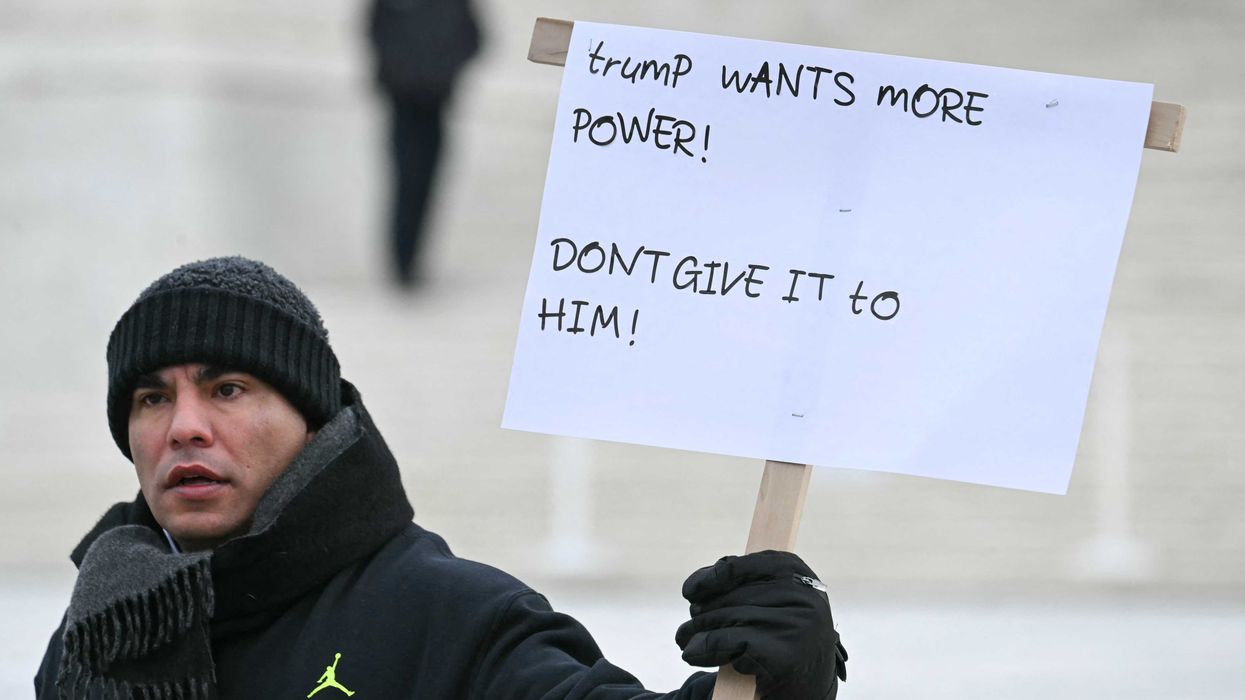
I talked about Donald Trump today. A guy willing to take the blows. You may not agree with him. I don't agree with him. But he's willing to take the blows. Are we?
Too many of us are curled up into a fetal position. And I understand it. Glenn, my family is falling apart. I can barely hold on to my kids. I get it.
I tell my son, no, you're not playing video games today. Oh, my gosh, it's World War III.
Glenn, I can barely make my car payment. I know. I've been there. Our families are on the verge of getting lost because of drugs. The culture. Pornography. Friends.
If you're lucky, you have friends. Some people are just completely alone. Help! That's what the average person is feeling. Help! Help! Help me!
We're so worried about ourselves that we can't see others. That's why we want to hire somebody in Washington to take care of this for us because I got other stuff I'm dealing with. Can I just hire somebody that will just do this for me? It's too complex. That's a lie.
We're not going to find the solution in another man. We have to trust one power to be strong enough to do it. We ask him for the little things. Why don't we ask him to heal our land?
Here's why: Because it requires us to do things we don't really want to do. And the reason why we don't want to do those things is because it's been so perverted. It's been, let's just go to church and be a church person. Who wants to be a church person? I want to actually do things.
I do want to change the world. I think you do too. Going to church doesn't change the world. Actually living those principles, that changes the world.
We need to get our own lives in order. There are so many of us that are hiding things from ourselves. We're lying to ourselves about things that are happening in our own lives. We're hiding from ourselves. And that makes us a target.
There's a breach in our wall. Enemies look for breaches in walls. There are so many breaches in our own walls. Our own personal walls. The walls of our family.
People are the weak link. They always are. There has to be 10 percent of this nation, 5 percent of this nation, that is willing to stand up and say, I'm going to repair my wall. My portion of the wall. I'm not going to worry about somebody else's portion. I'm repairing my part of the wall. I'm not going to -- I'm not going to sit here and take my time. And waste my time on how somebody else is repairing their wall. I'm going to take care of my part and I'm going to make sure my part is right. We need to be strong enough to stand up and stand up together.
They can't come through all of us. If we've all replaced and repaired our part of the wall. We need to be whole enough to be able to stand in the gap and stand against evil and say, you shall not pass.
Make no mistake, what we are facing is not a problem with politicians. Hillary Clinton saying I am proud to stand with Planned Parenthood is not a problem of Hillary Clinton's. It's a problem with us.
That someone can say after videotape showing them selling body parts, it's a problem with us that there's enough of us that say, yeah, I proudly stand with them too. Good God Almighty, help us. You cannot change her. You cannot change the parties. You cannot change anything. We cannot build -- rebuild the wall around our country, unless we do it like Nehemiah.
Just focus on the breach of the wall in your backyard. That will work.
 JIM WATSON / Contributor | Getty Images
 Joe Raedle / Staff | Getty Images
 AASHISH KIPHAYET / Contributor | Getty Images
 Harold M. Lambert / Contributor | Getty Images