
Pulpit Freedom Sunday

On Thursday's radio show, Glenn invited Pastor Jim Garlow onto the show to discuss Pulpit Freedom Sunday.The event is designed to raise awareness about the fact that pastors are not allowed to speak up about political issues from the pulpit without losing their tax-exempt status. Garlow and other pastors want to fight back against the idea that politics have no place in discussions within the church. You can catch the whole interview in the clip above from radio. Read more on these issues at TheBlaze.


Read a Rush transcript of the interview below:

GLENN:  Pastor Jim Garlowe is a church in San Diego.  This is a church that has stood in California and has stood against all odds and the attacks on this church are just staggering.  They have tried to put this church out of business, and  they're not going to step down. He is here because he is seeing over and sheparding a program.  How many years have you been doing this?  


           VOICE:  This is only my second year. 


GLENN:  What the government is telling you that you can't get involved in politics that is an out‑and‑out unconstitutional lie.  They want it to be challenged in court because they know it's unconstitutional. 


VOICE:  Years ago Lyndon Baines Johnson returned from Texas angry at two businessmen.  They opposed him through 501(c)(3) nonprofit organizations.  He was going through the Senate was an overhaul of the tax code.  He asserted a few words called the Johnson Amendment.  They didn't have churches in mind.  They had just had these two guys he was mad at. Even the Internal Revenue Service doesn't know.  So the result over all of these years pastors have backed away from fear, and people in the pew have bought into the cultural myth of separation of church and state.  So pastors aren't speaking out on issues. They bought into a cultural myth thinking as pastors we wouldn't speak politically if we got the tax exemption.  The tax exemption comes from our founding fathers.  Knowing if the government can tax and they can control and the government can destroy.  Based upon that separation, there have been no taxation of churches.  There should be no government intrusion into the pulpit and so an entire movement has developed. 


GLENN:  This is really important because of everything that we're facing now with the President, this week coming out and laying the groundwork for no blasphemy laws for Islam or any religion. Uh‑huh.  The way we are moving and the press and freedom of speech is overrated, and the rest of the world doesn't agree with it.  And America needs to grow up, and starts moving the way of the rest of the world.  It is if we control the speech of pulpits.  The pulpits are the most important thing.  Jim I know when we first met it was right before Restoring Honor in Washington D.C..  you were one of the few that stood up, and you were bold at the time, and I hadn't seen a lot of the bold preachers or priests or rabbis.  They were being quiet.  Now a lot of them are standing up, and they're not being quiet.  Because they know it's over if they don't. 


VOICE:  It is over.  It's changed dramatically even the last few years.  I'm amazed what has happened in the area of religious liberty.  Those that are discerning know you can have religious liberty and have radicalists coming at the same time in the nation.   That line is sliding very rapidly. 


GLENN:  I know.  That's what a church is for to tell you what the parameters are.  I don't need somebody to tell how to vote.  To tell me the standard God's standard that he holds.  And then I can Judge myself.  But you can't even talk about the standard.  We're moving to a place where you can't talk about that standard because it's political or racist or sexist. 


VOICE:  The Internal Revenue Service would say that we can.  Now that the people in the pew oftentimes have this wrong understanding pastor if you're going to speak that way I'll find myself another church.  Consequently alliance of religious liberty, and hand selected 33 pastors in 2008 to intentionally challenge the Johnson Amendment.  The Johnson Amendment says we cannot oppose or endorse a candidate directly or indirectly.  So pastors are afraid of it.  They don't want to lose their tax exemption.  They recorded their sermons, and sent them to the court.  There's a Damocles sword threatening pastors if you do this.  They sent in their sermon nothing happened.  In 2009 84 pastors exercised their constitutional rights but violated the Johnson Amendment which we believe is unconstitutional.  And they sent their sermons. Nothing happened.  The next year 2010 100 pastors did it.  Last year 539 pastors did it, this year around 1,100 have signed up.  We anticipate it will be around 1,500 or more masters. 


GLENN:  If you're a pastor.  You go to a parish and you want your priest to be involved in this what do. 


VOICE:  They go to pulpitfreedom.org.  And October 7th is pulpit freedom Sunday.  Most of us are doing it in solidarity October 7th.  They can sign up at pulpitfreedom.org. This applies to a liberal left wing church.  It was replies to everybody.  We say there should be no governmental intrusion.  They monitor our speech to see what we're saying.  We encourage people to go to pulpitfreedom.org


           GLENN:  If they do this, and the Internal Revenue Service decides to go after them. 


VOICE:  There are 2200 attorneys prepared to defend us pro bono. It used to be the church would roll over and play dead.  If a church lawyers up, the Internal Revenue Service strings it along for a couple of years and then say we're going to close your case, and just don't do it.  The alliance defending freedom is this group of attorneys saying this is unconstitutional based on the First Amendment.  We're absolutely making it nationwide very open posting our names and sending in our sermons saying sue us, so we get this to court, and get this defined and taken care of. 


GLENN:  You don't have to worry as a church you won't have to worry about being strung along.  The attorneys will do it. 


VOICE:  There are attorneys all across America. 


GLENN:  Are you going to be saying to vote for one person. 


VOICE:  I will walk through the biblical principles, and where the candidates stand on the issues. 


GLENN:  There's nothing wrong with that. 


VOICE:  Any follower of Jesus Christ would not want to vote for a candidate that is defying biblical principles. 


GLENN:  I don't have a problem.  I do have a problem vote Mitt Romney or Barack Obama.  Not a legal problem.  I don't want my pastor saying that. 


VOICE:  If somebody doesn't wan tto hear it that they can go to another church.  We don't want the ‑‑ the issue is who decides what a pastor says? Is it going to be the state ultimately or that pastor and the church.  We're contending ‑‑ we're not even saying a pastor has to endorse or condemn a candidate. 


GLENN:  The problem is that our churches have stopped saying if you believe the Bible, I mean ‑‑ my daughter she went with a friend to a Catholic Church that's run by a priest who is ex communicated by the Catholics.  And I said did he start his own church.  That's not a Catholic Church.  That's not a Catholic Church.  I don't have a problem with you disagreeing.  You want to do stuff.  When you go to church I don't understand the people that don't buy into it.  Why are you there? What are getting out of it if you can't get somebody standing up there here's the principle, and here's how we apply it, and live your life according to these rules.  Otherwise what are you doing? How many people do you think go to church who're just are going there because I don't know ‑‑ I don't even know. 


VOICE:  We're told only 9% of the people in the pew of a church know how to apply the scripture to life.  And in other words have a biblical world view.  9 out of 10 do not.  Are any of our communities more righteous or less righteous.  We had this privilege in America for 166 years until it was taken away in 1954, and it was working very good at that time. 


GLENN:  Look at our world.  Some things have gotten better, but a lot of things have gotten worse. 


VOICE:  Think what would happen if 350,000 churches would have been saying to the electorate we should be choosing the people to represent us in Washington D.C. thou shalt not steal from future generations.  That's a moral biblical issue.  Our nation is in economic suicide because of a failure to follow scriptural principles.


GLENN:  Go to pulpitfreedom.org. It has to be reversed.  It has to be put to rest.  Pulpit freedom.org. Sunday October 7th.  Make sure that your church is participation.  Quickly how is your wife. 


VOICE:  She's doing well.  We're moving on this cancer journey.  It's come back seven times in five years.  It's been a long walk here.  We're moving forward.  She's having some good days recently. That's why I'm able to be here. 


GLENN:  You want a good pastor or good church it's the Garlowes in San Diego. 
The melting pot fails when we stop agreeing to melt

Spencer Platt / Staff | Getty Images

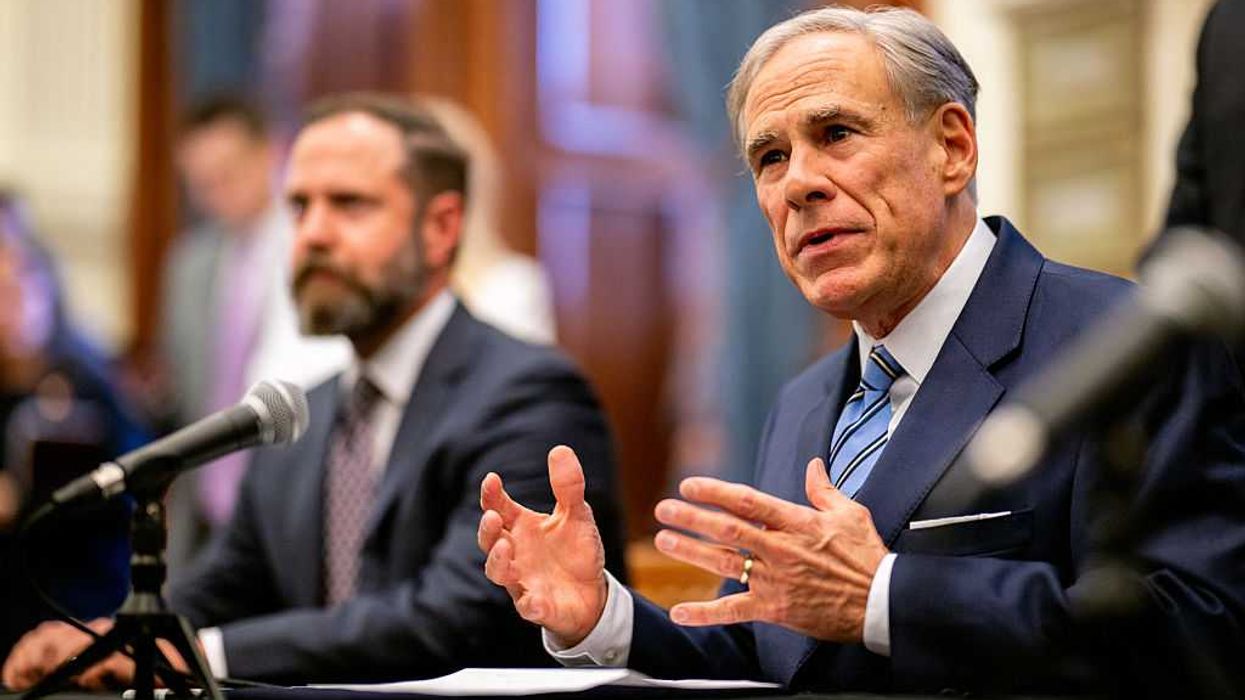
Texas now hosts Quran-first academies, Sharia-compliant housing schemes, and rapidly multiplying mosques — all part of a movement building a self-contained society apart from the country around it.

It is time to talk honestly about what is happening inside America’s rapidly growing Muslim communities. In city after city, large pockets of newcomers are choosing to build insulated enclaves rather than enter the broader American culture.

That trend is accelerating, and the longer we ignore it, the harder it becomes to address.

As Texas goes, so goes America. And as America goes, so goes the free world.

America has always welcomed people of every faith and people from every corner of the world, but the deal has never changed: You come here and you join the American family. You are free to honor your traditions, keep your faith, but you must embrace the Constitution as the supreme law of the land. You melt into the shared culture that allows all of us to live side by side.

Across the country, this bargain is being rejected by Islamist communities that insist on building a parallel society with its own rules, its own boundaries, and its own vision for how life should be lived.

Texas illustrates the trend. The state now has roughly 330 mosques. At least 48 of them were built in just the last 24 months. The Dallas-Fort Worth metroplex alone has around 200 Islamic centers. Houston has another hundred or so. Many of these communities have no interest in blending into American life.

This is not the same as past waves of immigration. Irish, Italian, Korean, Mexican, and every other group arrived with pride in their heritage. Still, they also raised American flags and wanted their children to be part of the country’s future. They became doctors, small-business owners, teachers, and soldiers. They wanted to be Americans.

What we are watching now is not the melting pot. It is isolation by design.

Parallel societies do not end well

More than 300 fundamentalist Islamic schools now operate full-time across the country. Many use Quran-first curricula that require students to spend hours memorizing religious texts before they ever reach math or science. In Dallas, Brighter Horizons Academy enrolls more than 1,700 students and draws federal support while operating on a social model that keeps children culturally isolated.

Then there is the Epic City project in Collin and Hunt counties — 402 acres originally designated only for Muslim buyers, with Sharia-compliant financing and a mega-mosque at the center. After public outcry and state investigations, the developers renamed it “The Meadows,” but a new sign does not erase the original intent. It is not a neighborhood. It is a parallel society.

Americans should not hesitate to say that parallel societies are dangerous. Europe tried this experiment, and the results could not be clearer. In Germany, France, and the United Kingdom, entire neighborhoods now operate under their own cultural rules, some openly hostile to Western norms. When citizens speak up, they are branded bigots for asserting a basic right: the ability to live safely in their own communities.

A crisis of confidence

While this separation widens, another crisis is unfolding at home. A recent Gallup survey shows that about 40% of American women ages 18 to 39 would leave the country permanently if given the chance. Nearly half of a rising generation — daughters, sisters, soon-to-be mothers — no longer believe this nation is worth building a future in.

And who shapes the worldview of young boys? Their mothers. If a mother no longer believes America is home, why would her child grow up ready to defend it?

As Texas goes, so goes America. And as America goes, so goes the free world. If we lose confidence in our own national identity at the same time that we allow separatist enclaves to spread unchecked, the outcome is predictable. Europe is already showing us what comes next: cultural fracture, political radicalization, and the slow death of national unity.

Brandon Bell / Staff | Getty Images

Stand up and tell the truth

America welcomes Muslims. America defends their right to worship freely. A Muslim who loves the Constitution, respects the rule of law, and wants to raise a family in peace is more than welcome in America.

But an Islamist movement that rejects assimilation, builds enclaves governed by its own religious framework, and treats American law as optional is not simply another participant in our melting pot. It is a direct challenge to it. If we refuse to call this problem out out of fear of being called names, we will bear the consequences.

Europe is already feeling those consequences — rising conflict and a political class too paralyzed to admit the obvious. When people feel their culture, safety, and freedoms slipping away, they will follow anyone who promises to defend them. History has shown that over and over again.

Stand up. Speak plainly. Be unafraid. You can practice any faith in this country, but the supremacy of the Constitution and the Judeo-Christian moral framework that shaped it is non-negotiable. It is what guarantees your freedom in the first place.

If you come here and honor that foundation, welcome. If you come here to undermine it, you do not belong here.

Wake up to what is unfolding before the consequences arrive. Because when a nation refuses to say what is true, the truth eventually forces its way in — and by then, it is always too late.

This article originally appeared on TheBlaze.com.

Shocking: Chart-topping ‘singer’ has no soul at all

VCG / Contributor | Getty Images

A machine can imitate heartbreak well enough to top the charts, but it cannot carry grief, choose courage, or hear the whisper that calls human beings to something higher.

The No. 1 country song in America right now was not written in Nashville or Texas or even L.A. It came from code. “Walk My Walk,” the AI-generated single by the AI artist Breaking Rust, hit the top spot on Billboard’s Country Digital Song Sales chart, and if you listen to it without knowing that fact, you would swear a real singer lived the pain he is describing.

Except there is no “he.” There is no lived experience. There is no soul behind the voice dominating the country music charts.

If a machine can imitate the soul, then what is the soul?

I will admit it: I enjoy some AI music. Some of it is very good. And that leaves us with a question that is no longer science fiction. If a machine can fake being human this well, what does it mean to be human?

A new world of artificial experience

This is not just about one song. We are walking straight into a technological moment that will reshape everyday life.

Elon Musk said recently that we may not even have phones in five years. Instead, we will carry a small device that listens, anticipates, and creates — a personal AI agent that knows what we want to hear before we ask. It will make the music, the news, the podcasts, the stories. We already live in digital bubbles. Soon, those bubbles might become our own private worlds.

If an algorithm can write a hit country song about hardship and perseverance without a shred of actual experience, then the deeper question becomes unavoidable: If a machine can imitate the soul, then what is the soul?

What machines can never do

A machine can produce, and soon it may produce better than we can. It can calculate faster than any human mind. It can rearrange the notes and words of a thousand human songs into something that sounds real enough to fool millions.

But it cannot care. It cannot love. It cannot choose right and wrong. It cannot forgive because it cannot be hurt. It cannot stand between a child and danger. It cannot walk through sorrow.

A machine can imitate the sound of suffering. It cannot suffer.

The difference is the soul. The divine spark. The thing God breathed into man that no code will ever have. Only humans can take pain and let it grow into compassion. Only humans can take fear and turn it into courage. Only humans can rebuild their lives after losing everything. Only humans hear the whisper inside, the divine voice that says, “Live for something greater.”

We are building artificial minds. We are not building artificial life.

Questions that define us

And as these artificial minds grow sharper, as their tools become more convincing, the right response is not panic. It is to ask the oldest and most important questions.

Who am I? Why am I here? What is the meaning of freedom? What is worth defending? What is worth sacrificing for?

That answer is not found in a lab or a server rack. It is found in that mysterious place inside each of us where reason meets faith, where suffering becomes wisdom, where God reminds us we are more than flesh and more than thought. We are not accidents. We are not circuits. We are not replaceable.

Europa Press News / Contributor | Getty Images
The miracle machines can never copy

Being human is not about what we can produce. Machines will outproduce us. That is not the question. Being human is about what we can choose. We can choose to love even when it costs us something. We can choose to sacrifice when it is not easy. We can choose to tell the truth when the world rewards lies. We can choose to stand when everyone else bows. We can create because something inside us will not rest until we do.

An AI content generator can borrow our melodies, echo our stories, and dress itself up like a human soul, but it cannot carry grief across a lifetime. It cannot forgive an enemy. It cannot experience wonder. It cannot look at a broken world and say, “I am going to build again.”

The age of machines is rising. And if we do not know who we are, we will shrink. But if we use this moment to remember what makes us human, it will help us to become better, because the one thing no algorithm will ever recreate is the miracle that we exist at all — the miracle of the human soul.

This article originally appeared on TheBlaze.com.

Shocking shift: America’s youth lured by the “Socialism trap”

Jeremy Weine / Stringer | Getty Images

A generation that’s lost faith in capitalism is turning to the oldest lie on earth: equality through control.

Something is breaking in America’s young people. You can feel it in every headline, every grocery bill, every young voice quietly asking if the American dream still means anything at all.

For many, the promise of America — work hard, build something that lasts, and give the next generation a better start — feels like it no longer exists. Home ownership and stability have become luxuries for a fortunate few.

Capitalism is not a perfect system. It is flawed because people are flawed, but it remains the only system that rewards creativity and effort rather than punishing them.

In that vacuum of hope, a new promise has begun to rise — one that sounds compassionate, equal, and fair. The promise of socialism.

The appeal of a broken dream

When the American dream becomes a checklist of things few can afford — a home, a car, two children, even a little peace — disappointment quickly turns to resentment. The average first-time homebuyer is now 40 years old. Debt lasts longer than marriages. The cost of living rises faster than opportunity.

For a generation that has never seen the system truly work, capitalism feels like a rigged game built to protect those already at the top.

That is where socialism finds its audience. It presents itself as fairness for the forgotten and justice for the disillusioned. It speaks softly at first, offering equality, compassion, and control disguised as care.

We are seeing that illusion play out now in New York City, where Zohran Mamdani — an open socialist — has won a major political victory. The same ideology that once hid behind euphemisms now campaigns openly throughout America’s once-great cities. And for many who feel left behind, it sounds like salvation.

But what socialism calls fairness is submission dressed as virtue. What it calls order is obedience. Once the system begins to replace personal responsibility with collective dependence, the erosion of liberty is only a matter of time.

The bridge that never ends

Socialism is not a destination; it is a bridge. Karl Marx described it as the necessary transition to communism — the scaffolding that builds the total state. Under socialism, people are taught to obey. Under communism, they forget that any other options exist.

History tells the story clearly. Russia, China, Cambodia, Cuba — each promised equality and delivered misery. One hundred million lives were lost, not because socialism failed, but because it succeeded at what it was designed to do: make the state supreme and the individual expendable.

Today’s advocates insist their version will be different — democratic, modern, and kind. They often cite Sweden as an example, but Sweden’s prosperity was never born of socialism. It grew out of capitalism, self-reliance, and a shared moral culture. Now that system is cracking under the weight of bureaucracy and division.

ANGELA WEISS / Contributor | Getty Images
The real issue is not economic but moral. Socialism begins with a lie about human nature — that people exist for the collective and that the collective knows better than the individual.

This lie is contrary to the truths on which America was founded — that rights come not from government’s authority, but from God’s. Once government replaces that authority, compassion becomes control, and freedom becomes permission.

What young America deserves

Young Americans have many reasons to be frustrated. They were told to study, work hard, and follow the rules — and many did, only to find the goalposts moved again and again. But tearing down the entire house does not make it fairer; it only leaves everyone standing in the rubble.

Capitalism is not a perfect system. It is flawed because people are flawed, but it remains the only system that rewards creativity and effort rather than punishing them. The answer is not revolution but renewal — moral, cultural, and spiritual.

It means restoring honesty to markets, integrity to government, and faith to the heart of our nation. A people who forsake God will always turn to government for salvation, and that road always ends in dependency and decay.

Freedom demands something of us. It requires faith, discipline, and courage. It expects citizens to govern themselves before others govern them. That is the truth this generation deserves to hear again — that liberty is not a gift from the state but a calling from God.

Socialism always begins with promises and ends with permission. It tells you what to drive, what to say, what to believe, all in the name of fairness. But real fairness is not everyone sharing the same chains — it is everyone having the same chance.

The American dream was never about guarantees. It was about the right to try, to fail, and try again. That freedom built the most prosperous nation in history, and it can do so again if we remember that liberty is not a handout but a duty.

Socialism does not offer salvation. It requires subservience.

This article originally appeared on TheBlaze.com.

Rage isn’t conservatism — THIS is what true patriots stand for

Gary Hershorn / Contributor | Getty Images

Conservatism is not about rage or nostalgia. It’s about moral clarity, national renewal, and guarding the principles that built America’s freedom.

Our movement is at a crossroads, and the question before us is simple: What does it mean to be a conservative in America today?

For years, we have been told what we are against — against the left, against wokeism, against decline. But opposition alone does not define a movement, and it certainly does not define a moral vision.

We are not here to cling to the past or wallow in grievance. We are not the movement of rage. We are the movement of reason and hope.

The media, as usual, are eager to supply their own answer. The New York Times recently suggested that Nick Fuentes represents the “future” of conservatism. That’s nonsense — a distortion of both truth and tradition. Fuentes and those like him do not represent American conservatism. They represent its counterfeit.

Real conservatism is not rage. It is reverence. It does not treat the past as a museum, but as a teacher. America’s founders asked us to preserve their principles and improve upon their practice. That means understanding what we are conserving — a living covenant, not a relic.

Conservatism as stewardship

In 2025, conservatism means stewardship — of a nation, a culture, and a moral inheritance too precious to abandon. To conserve is not to freeze history. It is to stand guard over what is essential. We are custodians of an experiment in liberty that rests on the belief that rights come not from kings or Congress, but from the Creator.

That belief built this country. It will be what saves it. The Constitution is a covenant between generations. Conservatism is the duty to keep that covenant alive — to preserve what works, correct what fails, and pass on both wisdom and freedom to those who come next.

Economics, culture, and morality are inseparable. Debt is not only fiscal; it is moral. Spending what belongs to the unborn is theft. Dependence is not compassion; it is weakness parading as virtue. A society that trades responsibility for comfort teaches citizens how to live as slaves.

Freedom without virtue is not freedom; it is chaos. A culture that mocks faith cannot defend liberty, and a nation that rejects truth cannot sustain justice. Conservatism must again become the moral compass of a disoriented people, reminding America that liberty survives only when anchored to virtue.

Rebuilding what is broken

We cannot define ourselves by what we oppose. We must build families, communities, and institutions that endure. Government is broken because education is broken, and education is broken because we abandoned the formation of the mind and the soul. The work ahead is competence, not cynicism.

Conservatives should embrace innovation and technology while rejecting the chaos of Silicon Valley. Progress must not come at the expense of principle. Technology must strengthen people, not replace them. Artificial intelligence should remain a servant, never a master. The true strength of a nation is not measured by data or bureaucracy, but by the quiet webs of family, faith, and service that hold communities together. When Washington falters — and it will — those neighborhoods must stand.

Eric Lee / Stringer | Getty Images

This is the real work of conservatism: to conserve what is good and true and to reform what has decayed. It is not about slogans; it is about stewardship — the patient labor of building a civilization that remembers what it stands for.

A creed for the rising generation

We are not here to cling to the past or wallow in grievance. We are not the movement of rage. We are the movement of reason and hope.

For the rising generation, conservatism cannot be nostalgia. It must be more than a memory of 9/11 or admiration for a Reagan era they never lived through. Many young Americans did not experience those moments — and they should not have to in order to grasp the lessons they taught and the truths they embodied. The next chapter is not about preserving relics but renewing purpose. It must speak to conviction, not cynicism; to moral clarity, not despair.

Young people are searching for meaning in a culture that mocks truth and empties life of purpose. Conservatism should be the moral compass that reminds them freedom is responsibility and that faith, family, and moral courage remain the surest rebellions against hopelessness.

To be a conservative in 2025 is to defend the enduring principles of American liberty while stewarding the culture, the economy, and the spirit of a free people. It is to stand for truth when truth is unfashionable and to guard moral order when the world celebrates chaos.

We are not merely holding the torch. We are relighting it.

This article originally appeared on TheBlaze.com.