Glenn is going to the border...

On Tuesday’s Glenn Beck Program, Glenn delivered a monologue further explaining his stance on the immigration crisis. Glenn made it clear that amnesty is not an option and the government must work swiftly to handle the “border crisis.” Meanwhile, it is time for the American people to step in and begin correcting the “humanitarian crisis.”

Glenn announced he will be visiting the border town of McAllen, Texas on Saturday, July 19. He will be joined by politicians like Senator Mike Lee (R-UT) and Congressman Louie Gohmert (R-TX) and faith leaders as Mercury One begins to distribute the goods and services it has accumulated through donations to its Children and Family Border Relief Fund.

Over the last several days and weeks, Glenn has read countless emails and social media comments from fans who both support and oppose the position he has taken on this issue. On radio this morning, Glenn shared details about his upcoming trip to the border and sought to further clarify why he believes “there is no justice without mercy.”

Below is an edited transcript of the monologue:

We announced yesterday that I'm going to go down to the border a week from Saturday. And we have been asked if we would provide aid to the churches that are actually standing and bearing the brunt of what is happening on our border. This is Cloward and Piven. They're trying to collapse the system. We can't allow the system to collapse. We have to dig in and do all that we can while we stand and fight against illegal immigration. While we stand and say, ‘These people must be returned home,’ we must have compassion and not allow the system to collapse.

I am being joined by Senator Mike Lee (R-UT) and Congressman Louie Gohmert (R-TX) a week from Saturday, and if you think those guys are soft on illegal immigration or soft on the Constitution, you might want to check yourself before you wreck yourself. I announced this yesterday on television, and we saw people change their position – not everybody – but a lot of the people who had written just two, three weeks ago who said they'll never watch or listen; they're going to cancel their subscription; they're definitely going to stop helping Mercury One help people; those people wrote to us and said, ‘I have been thinking about this. I've been praying about this. I have been watching what's going on. And I do not agree with illegal immigration.’ Neither do I. ‘But we have to be human first, and take care of human needs and don't let the system collapse.’ The way we will lose is by appearing to be something that we're not, by appearing to be hateful people that don't care about children. That's how you lose. Guarantee it.

Do you know how we lost the gay marriage thing? Because we made it about homosexuality. I don't hate homosexuals. If you are in love with another person, and you want to get married, okay. But don't force me to perform the marriage. Don't force me or my church to accept you into the fold. There are other churches that will. That's my right to freedom of conscience. Your right to freedom of conscience is you want to get married. Great. Why is the government in the marriage business in the first place? Control. Power. To be able to use this to separate one another.

I am for legal immigration reform. The system does not work. But we've got to change. Nobody is going to listen to you if they think they're a hatemonger. They're not going to listen to you. You're going to lose this again. So, what can we do? Pick up our personal responsibility with malice toward none and charity toward all and go and serve.

Now, I'm going down to the border in McAllen, Texas, next Saturday. I am also going to the border at night with Louie Gohmert. Louie is going to help us unload these trucks. Louie is going to be there along with some of the pastors. Some of these pastors disagree with us. Some of these pastors are all for illegal immigration. What we're doing is not political. Because I can tell you Louie Gohmert is not for illegal immigration. Ted Cruz is not for illegal immigration. Mike Lee is not for illegal immigration. We are all for the rule of law.

But our first responsibility is take care of one another. And we can do that together. And as we do that, believe me, we will be having conversations with people. We will be having conversations and they will probably be the first conversations where we're not yelling at each other. Why? Because everybody unloading those buses will know we love people. We don't hate people. So we're starting at a different place. ‘Look, you care about the children just as much as I do. By the way, can anybody tell me at the HuffPo how many truckloads of food they've raised? Can anybody tell me any liberal talk show host – how much money you have raised? Can you tell me, anybody, anybody, who has gone down there and actually unloaded the buses or the trucks, the semi-tractor trailers, how many have you fed? How many of the liberal talk show hosts on MSNBC have gone and actually had a breakfast and a lunch where they served these people?’

I will tell you that next Saturday, I'm going to be doing that. And I invite everyone else to put your time – not your money –where your heart is. My heart is with anyone who is suffering. My brain is with the law. The law must be enforced. My heart is where I have mercy. And there is no justice without mercy. You have to have both of them. And right now, the conservatives only look like they just want judgment, and the liberals only look at it as mercy. You cannot have a rule of law if it is nothing but mercy. You cannot have justice without mercy. You need both. So why don't we lead the way? Why don't we do both? Why don't we demand real justice by being the first to stand up? Let us lead the way with mercy and duty and sacrifice and honor and integrity. And we will humble ourselves. We will swallow or pride. We will do the right thing even though it really kind of rubs us wrong because we shouldn't have to be doing this if you would have obeyed the law in the first place. But we voted these people in.

Please don't tell me, ‘Well, I didn't vote these people in.’ Really? Because I see the results of Congress. I see what John McCain did. I see what George W. Bush did on the border. So don't tell me we didn't do this. All of us have been involved.

I would like to ask you if you'd like to join me. This is not going to be a path for the sunshine patriot. It's not. I will tell you, you're going to make enemies on both sides now. I've already done that. I have already been called a traitor to the Constitution, a traitor to the republic. You name it, I've been called it. So now I am not popular on the right or the left. So be it.

I said last night, my fans are mocking me on Facebook and that's okay. Believe me, I went into this one wide open. I know exactly where I'm going. I know exactly who I am, and I know exactly what the consequences of that could be. And that's fine. But what I said on TV last night is: I've said a lot of controversial things. I've asked you to do a lot of crazy things. People will say all the time to me, ‘Glenn, you know what? You were right on so many things.’ ‘My gosh, I can't believe your track record.’ ‘You know, I thought you were crazy on the collapse of the economy in 2008, and you turned out to be right on that one.’ ‘I thought you were crazy about Cloward Piven, and then I started seeing stuff.’ ‘I thought you were crazy on the Progressives.’ ‘I thought you were crazy on what happened in Egypt.’ ‘I thought you were crazy that there could be a caliphate.’

I’m not talking about the border. I am talking about the human condition. I am talking about our heart, and I have never been more right on anything in my life than I am on our heart. If we close our heart, if we don't do the hard work right now – and I mean it's going to be hard. You're gonna do things and you're gonna stand with people you don't want to stand with. Nothing worthwhile comes easy. Hard times make us, to quote JFK. We don't do these things because they're easy. We do them because they are hard, because they're right. I've never been more right on anything ever in my life, and if it means I do it alone, then I will do it alone.

But I ask you to join me because I know who you are. I know who you are. It's why I love you so much. It's why I love this audience so much. It's why I have so much respect for you. You are unlike any other audience. You really are. You are not the typical talk radio audience. You are not the typical television audience. You are so atypical. I wish there was some verifiable way I could prove it to you. There is no other audience in the history of mass communication like this audience. Period.

I have said this to you since September 11th – and this does not come from me, this comes from my gut, from the prompting, whatever you want to call it – you are going to be responsible for a great change. You are going to be the ones that save the nation. And if I have to be out in the middle of a field all by myself with 10 people saying: Love one another. Be better than everyone else. Do the hard thing. Be kind. Be gentle. I know the world wants you to hate. I know the world is teeming with hatred. It's teeming with darkness. Shun it. Be good. Be a beacon of light and hope. Be the flame on the Statue of Liberty that the whole world looks to and says, ‘I want to go that way.’ You will be the shining city on the hill. I don't know what that city looks like in the end. But that's what we're supposed to build. And the eyes of the world will be upon us. They already are. Let's show them who we really are. Let's prove the world wrong.

If you'd like to make a donation and join me, you can make a donation at MercuryOne.org. If you can't make a donation, because you can't afford one, just pray for us. If you don't want to make a donation, please accept my hand as your friend, and I hope someday you'll be able to join us.

Learn more about Mercury One HERE.
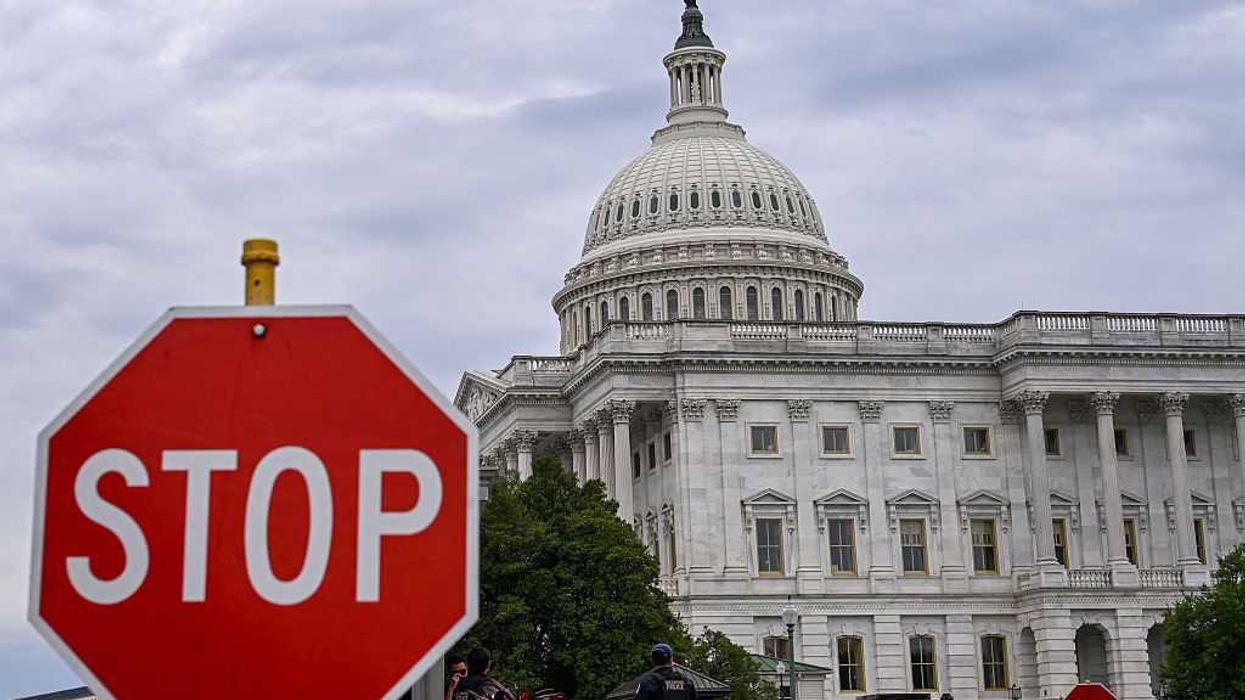
The Bubba Effect erupts as America’s power brokers go rogue

Gary Hershorn / Contributor | Getty Images

When institutions betray the public’s trust, the country splits, and the spiral is hard to stop.

Something drastic is happening in American life. Headlines that should leave us stunned barely register anymore. Stories that once would have united the country instead dissolve into silence or shrugs.

It is not apathy exactly. It is something deeper — a growing belief that the people in charge either cannot or will not fix what is broken.

When people feel ignored or betrayed, they will align with anyone who appears willing to fight on their behalf.

I call this response the Bubba effect. It describes what happens when institutions lose so much public trust that “Bubba,” the average American minding his own business, finally throws his hands up and says, “Fine. I will handle it myself.” Not because he wants to, but because the system that was supposed to protect him now feels indifferent, corrupt, or openly hostile.

The Bubba effect is not a political movement. It is a survival instinct.

What triggers the Bubba effect

We are watching the triggers unfold in real time. When members of Congress publicly encourage active duty troops to disregard orders from the commander in chief, that is not a political squabble. When a federal judge quietly rewrites the rules so one branch of government can secretly surveil another, that is not normal. That is how republics fall. Yet these stories glided across the news cycle without urgency, without consequence, without explanation.

When the American people see the leadership class shrug, they conclude — correctly — that no one is steering the ship.

This is how the Bubba effect spreads. It is not just individuals resisting authority. It is sheriffs refusing to enforce new policies, school boards ignoring state mandates, entire communities saying, “We do not believe you anymore.” It becomes institutional, cultural, national.

A country cracking from the inside

This effect can be seen in Dearborn, Michigan. In the rise of fringe voices like Nick Fuentes. In the Epstein scandal, where powerful people could not seem to locate a single accountable adult. These stories are different in content but identical in message: The system protects itself, not you.

When people feel ignored or betrayed, they will align with anyone who appears willing to fight on their behalf. That does not mean they suddenly agree with everything that person says. It means they feel abandoned by the institutions that were supposed to be trustworthy.

The Bubba effect is what fills that vacuum.

The dangers of a faithless system

A republic cannot survive without credibility. Congress cannot oversee intelligence agencies if it refuses to discipline its own members. The military cannot remain apolitical if its chain of command becomes optional. The judiciary cannot defend the Constitution while inventing loopholes that erase the separation of powers.

History shows that once a nation militarizes politics, normalizes constitutional shortcuts, or allows government agencies to operate without scrutiny, it does not return to equilibrium peacefully. Something will give.

The question is what — and when.

The responsibility now belongs to us

In a healthy country, this is where the media steps in. This is where universities, pastors, journalists, and cultural leaders pause the outrage machine and explain what is at stake. But today, too many see themselves not as guardians of the republic, but of ideology. Their first loyalty is to narrative, not truth.

The founders never trusted the press more than the public. They trusted citizens who understood their rights, lived their responsibilities, and demanded accountability. That is the antidote to the Bubba effect — not rage, but citizenship.

How to respond without breaking ourselves

Do not riot. Do not withdraw. Do not cheer on destruction just because you dislike the target. That is how nations lose themselves. Instead, demand transparency. Call your representatives. Insist on consequences. Refuse to normalize constitutional violations simply because “everyone does it.” If you expect nothing, you will get nothing.

Do not hand your voice to the loudest warrior simply because he is swinging a bat at the establishment. You do not beat corruption by joining a different version of it. You beat it by modeling the country you want to preserve: principled, accountable, rooted in truth.

Adam Gray / Stringer | Getty Images

Every republic reaches a moment when historians will later say, “That was the warning.” We are living in ours. But warnings are gifts if they are recognized. Institutions bend. People fail. The Constitution can recover — if enough Americans still know and cherish it.

It does not take a majority. Twenty percent of the country — awake, educated, and courageous — can reset the system. It has happened before. It can happen again.

Wake up. Stand up. Demand integrity — from leaders, from institutions, and from yourself. Because the Bubba effect will not end until Americans reclaim the duty that has always belonged to them: preserving the republic for the next generation.

This article originally appeared on TheBlaze.com.

Warning: Stop letting TikTok activists think for you

Spencer Platt / Staff | Getty Images

Bad-faith attacks on Israel and AIPAC warp every debate. Real answers emerge only when people set aside scripts and ask what serves America’s long-term interests.

The search for truth has always required something very much in short supply these days: honesty. Not performative questions, not scripted outrage, not whatever happens to be trending on TikTok, but real curiosity.

Some issues, often focused on foreign aid, AIPAC, or Israel, have become hotbeds of debate and disagreement. Before we jump into those debates, however, we must return to a simpler, more important issue: honest questioning. Without it, nothing in these debates matters.

Ask questions because you want the truth, not because you want a target.

The phrase “just asking questions” has re-entered the zeitgeist, and that’s fine. We should always question power. But too many of those questions feel preloaded with someone else’s answer. If the goal is truth, then the questions should come from a sincere desire to understand, not from a hunt for a villain.

Honest desire for truth is the only foundation that can support a real conversation about these issues.

Truth-seeking is real work

Right now, plenty of people are not seeking the truth at all. They are repeating something they heard from a politician on cable news or from a stranger on TikTok who has never opened a history book. That is not a search for answers. That is simply outsourcing your own thought.

If you want the truth, you need to work for it. You cannot treat the world like a Marvel movie where the good guy appears in a cape and the villain hisses on command. Real life does not give you a neat script with the moral wrapped up in two hours.

But that is how people are approaching politics now. They want the oppressed and the oppressor, the heroic underdog and the cartoon villain. They embrace this fantastical framing because it is easier than wrestling with reality.

This framing took root in the 1960s when the left rebuilt its worldview around colonizers and the colonized. Overnight, Zionism was recast as imperialism. Suddenly, every conflict had to fit the same script. Today’s young activists are just recycling the same narrative with updated graphics. Everything becomes a morality play. No nuance, no context, just the comforting clarity of heroes and villains.

Bad-faith questions

This same mindset is fueling the sudden obsession with Israel, and the American Israel Public Affairs Committee in particular. You hear it from members of Congress and activists alike: AIPAC pulls the strings, AIPAC controls the government, AIPAC should register as a foreign agent under the Foreign Agents Registration Act. The questions are dramatic, but are they being asked in good faith?

FARA is clear. The standard is whether an individual or group acts under the direction or control of a foreign government. AIPAC simply does not qualify.

Here is a detail conveniently left out of these arguments: Dozens of domestic organizations — Armenian, Cuban, Irish, Turkish — lobby Congress on behalf of other countries. None of them registers under FARA because — like AIPAC — they are independent, domestic organizations.

If someone has a sincere problem with the structure of foreign lobbying, fair enough. Let us have that conversation. But singling out AIPAC alone is not a search for truth. It is bias dressed up as bravery.

Anadolu / Contributor | Getty Images

If someone wants to question foreign aid to Israel, fine. Let’s have that debate. But let’s ask the right questions. The issue is not the size of the package but whether the aid advances our interests. What does the United States gain? Does the investment strengthen our position in the region? How does it compare to what we give other nations? And do we examine those countries with the same intensity?

The real target

These questions reflect good-faith scrutiny. But narrowing the entire argument to one country or one dollar amount misses the larger problem. If someone objects to the way America handles foreign aid, the target is not Israel. The target is the system itself — an entrenched bureaucracy, poor transparency, and decades-old commitments that have never been re-examined. Those problems run through programs around the world.

If you want answers, you need to broaden the lens. You have to be willing to put aside the movie script and confront reality. You have to hold yourself to a simple rule: Ask questions because you want the truth, not because you want a target.

That is the only way this country ever gets clarity on foreign aid, influence, alliances, and our place in the world. Questioning is not just allowed. It is essential. But only if it is honest.

This article originally appeared on TheBlaze.com.

A nation unravels when its shared culture is the first thing to go

Spencer Platt / Staff | Getty Images

Texas now hosts Quran-first academies, Sharia-compliant housing schemes, and rapidly multiplying mosques — all part of a movement building a self-contained society apart from the country around it.

It is time to talk honestly about what is happening inside America’s rapidly growing Muslim communities. In city after city, large pockets of newcomers are choosing to build insulated enclaves rather than enter the broader American culture.

That trend is accelerating, and the longer we ignore it, the harder it becomes to address.

As Texas goes, so goes America. And as America goes, so goes the free world.

America has always welcomed people of every faith and people from every corner of the world, but the deal has never changed: You come here and you join the American family. You are free to honor your traditions, keep your faith, but you must embrace the Constitution as the supreme law of the land. You melt into the shared culture that allows all of us to live side by side.

Across the country, this bargain is being rejected by Islamist communities that insist on building a parallel society with its own rules, its own boundaries, and its own vision for how life should be lived.

Texas illustrates the trend. The state now has roughly 330 mosques. At least 48 of them were built in just the last 24 months. The Dallas-Fort Worth metroplex alone has around 200 Islamic centers. Houston has another hundred or so. Many of these communities have no interest in blending into American life.

This is not the same as past waves of immigration. Irish, Italian, Korean, Mexican, and every other group arrived with pride in their heritage. Still, they also raised American flags and wanted their children to be part of the country’s future. They became doctors, small-business owners, teachers, and soldiers. They wanted to be Americans.

What we are watching now is not the melting pot. It is isolation by design.

Parallel societies do not end well

More than 300 fundamentalist Islamic schools now operate full-time across the country. Many use Quran-first curricula that require students to spend hours memorizing religious texts before they ever reach math or science. In Dallas, Brighter Horizons Academy enrolls more than 1,700 students and draws federal support while operating on a social model that keeps children culturally isolated.

Then there is the Epic City project in Collin and Hunt counties — 402 acres originally designated only for Muslim buyers, with Sharia-compliant financing and a mega-mosque at the center. After public outcry and state investigations, the developers renamed it “The Meadows,” but a new sign does not erase the original intent. It is not a neighborhood. It is a parallel society.

Americans should not hesitate to say that parallel societies are dangerous. Europe tried this experiment, and the results could not be clearer. In Germany, France, and the United Kingdom, entire neighborhoods now operate under their own cultural rules, some openly hostile to Western norms. When citizens speak up, they are branded bigots for asserting a basic right: the ability to live safely in their own communities.

A crisis of confidence

While this separation widens, another crisis is unfolding at home. A recent Gallup survey shows that about 40% of American women ages 18 to 39 would leave the country permanently if given the chance. Nearly half of a rising generation — daughters, sisters, soon-to-be mothers — no longer believe this nation is worth building a future in.

And who shapes the worldview of young boys? Their mothers. If a mother no longer believes America is home, why would her child grow up ready to defend it?

As Texas goes, so goes America. And as America goes, so goes the free world. If we lose confidence in our own national identity at the same time that we allow separatist enclaves to spread unchecked, the outcome is predictable. Europe is already showing us what comes next: cultural fracture, political radicalization, and the slow death of national unity.

Brandon Bell / Staff | Getty Images

Stand up and tell the truth

America welcomes Muslims. America defends their right to worship freely. A Muslim who loves the Constitution, respects the rule of law, and wants to raise a family in peace is more than welcome in America.

But an Islamist movement that rejects assimilation, builds enclaves governed by its own religious framework, and treats American law as optional is not simply another participant in our melting pot. It is a direct challenge to it. If we refuse to call this problem out out of fear of being called names, we will bear the consequences.

Europe is already feeling those consequences — rising conflict and a political class too paralyzed to admit the obvious. When people feel their culture, safety, and freedoms slipping away, they will follow anyone who promises to defend them. History has shown that over and over again.

Stand up. Speak plainly. Be unafraid. You can practice any faith in this country, but the supremacy of the Constitution and the Judeo-Christian moral framework that shaped it is non-negotiable. It is what guarantees your freedom in the first place.

If you come here and honor that foundation, welcome. If you come here to undermine it, you do not belong here.

Wake up to what is unfolding before the consequences arrive. Because when a nation refuses to say what is true, the truth eventually forces its way in — and by then, it is always too late.

This article originally appeared on TheBlaze.com.

Shocking: AI-written country song tops charts, sparks soul debate

VCG / Contributor | Getty Images

A machine can imitate heartbreak well enough to top the charts, but it cannot carry grief, choose courage, or hear the whisper that calls human beings to something higher.

The No. 1 country song in America right now was not written in Nashville or Texas or even L.A. It came from code. “Walk My Walk,” the AI-generated single by the AI artist Breaking Rust, hit the top spot on Billboard’s Country Digital Song Sales chart, and if you listen to it without knowing that fact, you would swear a real singer lived the pain he is describing.

Except there is no “he.” There is no lived experience. There is no soul behind the voice dominating the country music charts.

If a machine can imitate the soul, then what is the soul?

I will admit it: I enjoy some AI music. Some of it is very good. And that leaves us with a question that is no longer science fiction. If a machine can fake being human this well, what does it mean to be human?

A new world of artificial experience

This is not just about one song. We are walking straight into a technological moment that will reshape everyday life.

Elon Musk said recently that we may not even have phones in five years. Instead, we will carry a small device that listens, anticipates, and creates — a personal AI agent that knows what we want to hear before we ask. It will make the music, the news, the podcasts, the stories. We already live in digital bubbles. Soon, those bubbles might become our own private worlds.

If an algorithm can write a hit country song about hardship and perseverance without a shred of actual experience, then the deeper question becomes unavoidable: If a machine can imitate the soul, then what is the soul?

What machines can never do

A machine can produce, and soon it may produce better than we can. It can calculate faster than any human mind. It can rearrange the notes and words of a thousand human songs into something that sounds real enough to fool millions.

But it cannot care. It cannot love. It cannot choose right and wrong. It cannot forgive because it cannot be hurt. It cannot stand between a child and danger. It cannot walk through sorrow.

A machine can imitate the sound of suffering. It cannot suffer.

The difference is the soul. The divine spark. The thing God breathed into man that no code will ever have. Only humans can take pain and let it grow into compassion. Only humans can take fear and turn it into courage. Only humans can rebuild their lives after losing everything. Only humans hear the whisper inside, the divine voice that says, “Live for something greater.”

We are building artificial minds. We are not building artificial life.

Questions that define us

And as these artificial minds grow sharper, as their tools become more convincing, the right response is not panic. It is to ask the oldest and most important questions.

Who am I? Why am I here? What is the meaning of freedom? What is worth defending? What is worth sacrificing for?

That answer is not found in a lab or a server rack. It is found in that mysterious place inside each of us where reason meets faith, where suffering becomes wisdom, where God reminds us we are more than flesh and more than thought. We are not accidents. We are not circuits. We are not replaceable.

Europa Press News / Contributor | Getty Images

The miracle machines can never copy

Being human is not about what we can produce. Machines will outproduce us. That is not the question. Being human is about what we can choose. We can choose to love even when it costs us something. We can choose to sacrifice when it is not easy. We can choose to tell the truth when the world rewards lies. We can choose to stand when everyone else bows. We can create because something inside us will not rest until we do.

An AI content generator can borrow our melodies, echo our stories, and dress itself up like a human soul, but it cannot carry grief across a lifetime. It cannot forgive an enemy. It cannot experience wonder. It cannot look at a broken world and say, “I am going to build again.”

The age of machines is rising. And if we do not know who we are, we will shrink. But if we use this moment to remember what makes us human, it will help us to become better, because the one thing no algorithm will ever recreate is the miracle that we exist at all — the miracle of the human soul.

This article originally appeared on TheBlaze.com.