Obama's Final Betrayal

Substituting for Glenn, John Cardillo interviewed conservative journalist Tiffany Gabbay on The Glenn Beck Program Monday. As someone of Iraqi-Jewish descent, Gabbay shared unique insights on the United States' poor relationship with Israel during the past eight years.

According to Gabbay, the Obama administration left an unsettled and agitated Israel for President-elect Trump to have to deal with.

Listen to the segment or read the transcript below.

JOHN: Good morning. And welcome to the Glenn Beck Program. I'm John Cardillo, standing in for the vacationing Glenn Beck, taking a well-deserved vacation.

And you must be wondering, well, who is this John Cardillo guy? Well, real quick, just a quick intro on me so you know who you're going to be listening to, for the next three hours and tomorrow morning, I actually got my start in media with Glenn. But I'm not a media guy. I wasn't a radio guy. I wasn't a TV guy. I was a New York City cop. And I started a business that grew.

And so I saw the world through two very unique lenses. One through the lens of a street cop in the South Bronx and the NYPD, the other through an executive, a private equity guy that founded a company. I was an entrepreneur. Company that grew rapidly. And we were tracking bad guys in large online communities.

And I wound up spending a good part of my life in the legislative arena. Testifying to 15, 20 state legislatures. The US Congress, US Senate, and subcommittees on pedophiles and terror fundraising online and all these bad guys and interesting topics.

And I came away with a very unique skill set that was of interest and value to people like Glenn Beck and the others on-air. And they started using me as a guest, as a guy who was coming on as a subject matter expert. And it turned out I really enjoyed it. And it was my calling. And I decided to go on-air. Give it a shot for myself.

Got my start with Glenn about three, three and a half years ago. We were doing political analysis. I loved it, and it just went from there.

And luckily -- luckily, it turned into a career for me. And I owe a lot to Glenn. And interestingly, one of the things you'll learn about me -- if you don't already know me -- I know many of you know me from Glenn Beck's show, from my radio show. I host the Morning Show down in Miami, Fort Lauderdale, where I'm based. But many of you know that I was an ardent Trump supporter from the beginning. And Glenn obviously was not. And he's still very skeptical.

But isn't that the great thing about America? Isn't that the great thing about America? That a media giant like Glenn Beck, who can be so anti a candidate, and a guy like me who can be so pro a candidate, stands in for his show. Because, see, we can be friends and disagree on an issue. And that's one of the things that's very disappointing to me. I'm watching -- this whole past year, this campaign season, people who were otherwise very good friends, having these fallings out and not speaking to each other and harassing each other. And being very vitriolic and angry with one another on Facebook and Twitter over a political candidate.

I mean, I've lost friends, colleagues in this industry, who were on the Never Trump side. And I was pro-Trump. And we don't speak. We don't -- we unfollowed each other. We blocked each other over this.

And I will say: I was never really the catalyst for that. Maybe it goes back to being a street cop in my 20s. I'm pretty thick-skinned. I don't care who you support. If you're a good American and you live your life well, I don't care who you -- well, we can disagree. I think you're misguided on issues. But I'm not going to personally dislike you.

And that's why I've always had such respect for Glenn, in that he can have a guy like me come in and guest host for him, knowing that we differ on this issue.

But being the giant in the industry that he is and being the guy that he is, want his audience to hear that opposing viewpoint. Want to educate his audience -- let his audience hear both sides. It's just a shame that more people in media aren't doing the same thing. And I think we should, not just those of us in media, but those of us in general. In general. One of my best friends is a hard-core liberal Obama-supporting Democrat. The guy is like family to me. I even call him baby Obama because he's mixed race and graduated Harvard Law School.

But our families have done holidays together for the last 30-something years. We don't let politics get away of this nonsense, of our friendship. We don't let nonsense get in the way of friendship.

And so it really bothers me when people treat their friends poorly. And I had such a great Christmas, and it's been such a great holiday season for me. And Tiffany Gabbay is in the studio with me. Tiffany had a great Hanukkah. Tiffany got her start on TheBlaze as well.

And say hi Tiffany.

TIFFANY: Hi, John. Thank you for having me on the show.

JOHN: It's a pleasure. And the reason I wanted you to be here, because you really have become one of my go-to experts on Israel. And I had a great Christmas, and you had a great Hanukkah. And we had a great holiday season. And we're going to have a great new year.

We haven't treated Israel very well. You know, going back to what I was talking about -- friends disagreeing, but ultimately backing each other up.

It's okay for the United States and Israel to disagree. But I find, what we just did to Israel at the United Nations is reprehensible. We were a very bad friend to Israel, who is one of our greatest allies in history.

But more importantly, an irreplaceable strategic partner in what is now the most volatile region in the world, historically speaking. I would argue that the Middle East in a nuclear age is the most historically volatile region in the world. So explain a little bit.

You've been studying this. And you've been studying it for me. Explain a little bit, a couple of points, what this resolution was, what it means, and things that we can do to mitigate the fallout of this.

TIFFANY: Of course. Well, let's make no mistake. The -- under the Obama administration, the US has not been a friend to Israel for the past eight years. And this was Obama's final back-stabbing for Israel. He wanted to basically set a fire ablaze and leave it for President-elect Trump to have to deal with, when he -- you know, when he takes office.

Essentially, the Security Council Resolution 2334 condemns Israeli settlements in the West Bank and east Jerusalem. It considers them occupy territory -- and it talks about the 1967 borders, which we'll get into a little bit later because there are no such thing as 1967 borders. But basically what this resolution does is deem the western wall, one of Judaism's most sacred places, occupied Palestinian territory.

JOHN: Let me ask you a question about that. Because that's really important. There have been since 2008, allegations of a subconscious anti-Semitism that permeates the Obama administration. You're one of the most rational people I know. You have family in Israel. You're a Jewish woman. You're a Zionist. But you've also been very rational. I've watched you do hits on other shows. Where you've been so opinion-driven that you let the obvious fall away.

Now, with all that in mind -- and I mean that, I'm not just playing that up because we're friends and you're a colleague. Do you feel that that subconscious anti-Semitism has permeated the Obama administration? Because I do. I personally do.

I think there's always been this detest of Israel. Maybe it's come through Barack Obama's academic career. I think Samantha Power at the UN has been our worst UN ambassador. She has worked against the interest of the United States for as many years as she's been there. And John Kerry to me is kind of this moronic do-nothing figurehead caught in between power and Obama, who are ideologically identical.

So they needed a Secretary of State that wouldn't get in their way. And I think all three of them couldn't care less about the Jewish state and truly want to either be loved by the Middle Eastern Muslim nations. Or they just -- they desire to be loved by the globalist community, that European globalist mentality community that they think is cool and invites them to the really ritzy dinner parties. Am I on to something, or is this crazy conspiracy Cardillo theory?

TIFFANY: Definitely not conspiracy theory.

In fact, I think one of the things people get confused about is when they think about anti-Semitism, they think about it the way the anti-defamation league would characterize it. If you see a little green frog meme on Twitter, for example, or someone uses the term "Jew," you have particularly liberals screaming about anti-Semitism. But people do not realize that being anti-Israel is the new incarnation of anti-Semitism. And that is Barack Obama.

Whether it's because he feels sympathetic for the Islamic world and he believes that they are truly colonized and oppressed people and, you know, he looks at Israel as the little Satan and as a colonizer and subjugator of, the quote, indigenous Palestinians, which, of course, that's not true. I think that he's definitely motivated by that ideology. And, of course, there's also the cocktail party cred at the end of the day. It's fashionable and cool to vilify Israel because they're new, exotic people that the left can align itself with and act like champions of. And those are Muslims.

TIFFANY: Right. And here's what gets me though: When I -- it's always the people who purport to be the most educated, the most cultured, who have this mentality.

Because when I go and talk to my friends, the New York City cops, the firefighters -- and I've become pretty well-known media guy in the first responder community. I speak to other cops and fire firefighters and medics and military personnel from around the country. And often, I'll be on IM with those deployed around the world. We're just chatting. They listen to my show. Or they follow me on Twitter. Or they're friends of mine. They get it. They get it. It's common sense. They'll send things to me like, "Well, isn't Israel like our only friend in that neighborhood? Aren't these the guys who are holding down the fort, we share intelligence -- I mean, Jordan has been an ally to an extent. But Israel is a go-to solid ally, you know, in the vein of the UK.

But, look, we haven't treated the UK very well. Poland has been another staunch ally. Their Special Forces -- the GROM, Polish Special Forces were into not just the First Gulf War, rather this war, but also the First Gulf War in the first waves, alongside our Seals and our Delta guys. We've treated Poland like dirt. Like dirt. We've pulled their missile defenses. We've pulled money for their defense.

It seems like under the Obama administration, the nations who have been there, who have put their people on the front lines, to shed blood with ours, have been treated the worst. And the people drawing that blood have been treated the best.

And it doesn't take a Harvard Law degree to figure that out. Yet, those with the Harvard -- I'm not condemning everybody who went to Harvard Law. Some great people. But those in that cocktail party set, that liberal intelligentsia, do they not get it, or do they just not care?

TIFFANY: Well, they don't get it. And people make the fatal mistake of thinking that college-educated equals smart. It just means they're indoctrinated into the same school of thought.

You know, and with regard to Obama, this has been, you know, his cause from the beginning, when he went on his world apology tour. It was about cutting America's role down to size. It was about distancing ourselves from our allies. Israel. The only democracy in the Middle East. The UK. And befriending these despot I can third world regimes, like Cuba, for instance, because they're going to do so much for us.

JOHN: Right.

TIFFANY: But if you look at Obama's background, he was raised and indoctrinated through his mother, through Frank Marshall Davis, through dreams of his father into this far left-wing ideology. So it absolutely makes sense that someone with this worldview would want to align with the left entities and to bring America down to size.

JOHN: You know, and I just want to add something that has nothing to do with the Middle East. I don't know if Americans know this, but one of the things I demanded -- and I wrote the White House. I emailed the White House, and I've asked this of Donald Trump's administration as well. I had Katrina Pierson on my show, and I demanded of her.

Joanne Chesimard, aka, Assata Shakur, who murdered state trooper Warner Foerster back in the '70s, she's number four on the FBI's most wanted terrorist list. She lives openly in Cuba. Our intelligence people know exactly -- they know her address. She shops at open air markets. We have photos of her.

She lives openly in Cuba. Okay? Her name, Assata Shakur, is the name she assumed when she became a radical. Bill Ayers, Obama's best friend, named his son Zayd, Z-A-Y-D, after Zayd Shakur, her coconspirator in the murder of Trooper Foerster. Obama never demanded her return. Worse, and a lot of people don't know this, democratic congresswoman Maxine Waters, in 1998, while a sitting US congresswoman wrote a letter to Fidel Castro, calling this cop killer, this terrorist a freedom fighter, and begging Fidel Castro not to extradite her to the US.

Now, she was convicted. She broke out of prison, She is not facing trial here. She's going back to jail.

This is today's Democratic Party. But even worse Tiffany, John Kerry is about to draft another resolution that makes things even worst for Israel.

Featured Image: Chip Somodevilla/Getty Images

Warning: Stop letting TikTok activists think for you

Spencer Platt / Staff | Getty Images

Bad-faith attacks on Israel and AIPAC warp every debate. Real answers emerge only when people set aside scripts and ask what serves America’s long-term interests.

The search for truth has always required something very much in short supply these days: honesty. Not performative questions, not scripted outrage, not whatever happens to be trending on TikTok, but real curiosity.

Some issues, often focused on foreign aid, AIPAC, or Israel, have become hotbeds of debate and disagreement. Before we jump into those debates, however, we must return to a simpler, more important issue: honest questioning. Without it, nothing in these debates matters.

Ask questions because you want the truth, not because you want a target.

The phrase “just asking questions” has re-entered the zeitgeist, and that’s fine. We should always question power. But too many of those questions feel preloaded with someone else’s answer. If the goal is truth, then the questions should come from a sincere desire to understand, not from a hunt for a villain.

Honest desire for truth is the only foundation that can support a real conversation about these issues.

Truth-seeking is real work

Right now, plenty of people are not seeking the truth at all. They are repeating something they heard from a politician on cable news or from a stranger on TikTok who has never opened a history book. That is not a search for answers. That is simply outsourcing your own thought.

If you want the truth, you need to work for it. You cannot treat the world like a Marvel movie where the good guy appears in a cape and the villain hisses on command. Real life does not give you a neat script with the moral wrapped up in two hours.

But that is how people are approaching politics now. They want the oppressed and the oppressor, the heroic underdog and the cartoon villain. They embrace this fantastical framing because it is easier than wrestling with reality.

This framing took root in the 1960s when the left rebuilt its worldview around colonizers and the colonized. Overnight, Zionism was recast as imperialism. Suddenly, every conflict had to fit the same script. Today’s young activists are just recycling the same narrative with updated graphics. Everything becomes a morality play. No nuance, no context, just the comforting clarity of heroes and villains.

Bad-faith questions

This same mindset is fueling the sudden obsession with Israel, and the American Israel Public Affairs Committee in particular. You hear it from members of Congress and activists alike: AIPAC pulls the strings, AIPAC controls the government, AIPAC should register as a foreign agent under the Foreign Agents Registration Act. The questions are dramatic, but are they being asked in good faith?

FARA is clear. The standard is whether an individual or group acts under the direction or control of a foreign government. AIPAC simply does not qualify.

Here is a detail conveniently left out of these arguments: Dozens of domestic organizations — Armenian, Cuban, Irish, Turkish — lobby Congress on behalf of other countries. None of them registers under FARA because — like AIPAC — they are independent, domestic organizations.

If someone has a sincere problem with the structure of foreign lobbying, fair enough. Let us have that conversation. But singling out AIPAC alone is not a search for truth. It is bias dressed up as bravery.

Anadolu / Contributor | Getty Images

If someone wants to question foreign aid to Israel, fine. Let’s have that debate. But let’s ask the right questions. The issue is not the size of the package but whether the aid advances our interests. What does the United States gain? Does the investment strengthen our position in the region? How does it compare to what we give other nations? And do we examine those countries with the same intensity?

The real target

These questions reflect good-faith scrutiny. But narrowing the entire argument to one country or one dollar amount misses the larger problem. If someone objects to the way America handles foreign aid, the target is not Israel. The target is the system itself — an entrenched bureaucracy, poor transparency, and decades-old commitments that have never been re-examined. Those problems run through programs around the world.

If you want answers, you need to broaden the lens. You have to be willing to put aside the movie script and confront reality. You have to hold yourself to a simple rule: Ask questions because you want the truth, not because you want a target.

That is the only way this country ever gets clarity on foreign aid, influence, alliances, and our place in the world. Questioning is not just allowed. It is essential. But only if it is honest.

This article originally appeared on TheBlaze.com.

A nation unravels when its shared culture is the first thing to go

Spencer Platt / Staff | Getty Images

Texas now hosts Quran-first academies, Sharia-compliant housing schemes, and rapidly multiplying mosques — all part of a movement building a self-contained society apart from the country around it.

It is time to talk honestly about what is happening inside America’s rapidly growing Muslim communities. In city after city, large pockets of newcomers are choosing to build insulated enclaves rather than enter the broader American culture.

That trend is accelerating, and the longer we ignore it, the harder it becomes to address.

As Texas goes, so goes America. And as America goes, so goes the free world.

America has always welcomed people of every faith and people from every corner of the world, but the deal has never changed: You come here and you join the American family. You are free to honor your traditions, keep your faith, but you must embrace the Constitution as the supreme law of the land. You melt into the shared culture that allows all of us to live side by side.

Across the country, this bargain is being rejected by Islamist communities that insist on building a parallel society with its own rules, its own boundaries, and its own vision for how life should be lived.

Texas illustrates the trend. The state now has roughly 330 mosques. At least 48 of them were built in just the last 24 months. The Dallas-Fort Worth metroplex alone has around 200 Islamic centers. Houston has another hundred or so. Many of these communities have no interest in blending into American life.

This is not the same as past waves of immigration. Irish, Italian, Korean, Mexican, and every other group arrived with pride in their heritage. Still, they also raised American flags and wanted their children to be part of the country’s future. They became doctors, small-business owners, teachers, and soldiers. They wanted to be Americans.

What we are watching now is not the melting pot. It is isolation by design.

Parallel societies do not end well

More than 300 fundamentalist Islamic schools now operate full-time across the country. Many use Quran-first curricula that require students to spend hours memorizing religious texts before they ever reach math or science. In Dallas, Brighter Horizons Academy enrolls more than 1,700 students and draws federal support while operating on a social model that keeps children culturally isolated.

Then there is the Epic City project in Collin and Hunt counties — 402 acres originally designated only for Muslim buyers, with Sharia-compliant financing and a mega-mosque at the center. After public outcry and state investigations, the developers renamed it “The Meadows,” but a new sign does not erase the original intent. It is not a neighborhood. It is a parallel society.

Americans should not hesitate to say that parallel societies are dangerous. Europe tried this experiment, and the results could not be clearer. In Germany, France, and the United Kingdom, entire neighborhoods now operate under their own cultural rules, some openly hostile to Western norms. When citizens speak up, they are branded bigots for asserting a basic right: the ability to live safely in their own communities.

A crisis of confidence

While this separation widens, another crisis is unfolding at home. A recent Gallup survey shows that about 40% of American women ages 18 to 39 would leave the country permanently if given the chance. Nearly half of a rising generation — daughters, sisters, soon-to-be mothers — no longer believe this nation is worth building a future in.

And who shapes the worldview of young boys? Their mothers. If a mother no longer believes America is home, why would her child grow up ready to defend it?

As Texas goes, so goes America. And as America goes, so goes the free world. If we lose confidence in our own national identity at the same time that we allow separatist enclaves to spread unchecked, the outcome is predictable. Europe is already showing us what comes next: cultural fracture, political radicalization, and the slow death of national unity.

Brandon Bell / Staff | Getty Images

Stand up and tell the truth

America welcomes Muslims. America defends their right to worship freely. A Muslim who loves the Constitution, respects the rule of law, and wants to raise a family in peace is more than welcome in America.

But an Islamist movement that rejects assimilation, builds enclaves governed by its own religious framework, and treats American law as optional is not simply another participant in our melting pot. It is a direct challenge to it. If we refuse to call this problem out out of fear of being called names, we will bear the consequences.

Europe is already feeling those consequences — rising conflict and a political class too paralyzed to admit the obvious. When people feel their culture, safety, and freedoms slipping away, they will follow anyone who promises to defend them. History has shown that over and over again.

Stand up. Speak plainly. Be unafraid. You can practice any faith in this country, but the supremacy of the Constitution and the Judeo-Christian moral framework that shaped it is non-negotiable. It is what guarantees your freedom in the first place.

If you come here and honor that foundation, welcome. If you come here to undermine it, you do not belong here.

Wake up to what is unfolding before the consequences arrive. Because when a nation refuses to say what is true, the truth eventually forces its way in — and by then, it is always too late.

This article originally appeared on TheBlaze.com.

Shocking: Chart-topping ‘singer’ has no soul at all

VCG / Contributor | Getty Images

A machine can imitate heartbreak well enough to top the charts, but it cannot carry grief, choose courage, or hear the whisper that calls human beings to something higher.

The No. 1 country song in America right now was not written in Nashville or Texas or even L.A. It came from code. “Walk My Walk,” the AI-generated single by the AI artist Breaking Rust, hit the top spot on Billboard’s Country Digital Song Sales chart, and if you listen to it without knowing that fact, you would swear a real singer lived the pain he is describing.

Except there is no “he.” There is no lived experience. There is no soul behind the voice dominating the country music charts.

If a machine can imitate the soul, then what is the soul?

I will admit it: I enjoy some AI music. Some of it is very good. And that leaves us with a question that is no longer science fiction. If a machine can fake being human this well, what does it mean to be human?

A new world of artificial experience

This is not just about one song. We are walking straight into a technological moment that will reshape everyday life.

Elon Musk said recently that we may not even have phones in five years. Instead, we will carry a small device that listens, anticipates, and creates — a personal AI agent that knows what we want to hear before we ask. It will make the music, the news, the podcasts, the stories. We already live in digital bubbles. Soon, those bubbles might become our own private worlds.

If an algorithm can write a hit country song about hardship and perseverance without a shred of actual experience, then the deeper question becomes unavoidable: If a machine can imitate the soul, then what is the soul?

What machines can never do

A machine can produce, and soon it may produce better than we can. It can calculate faster than any human mind. It can rearrange the notes and words of a thousand human songs into something that sounds real enough to fool millions.

But it cannot care. It cannot love. It cannot choose right and wrong. It cannot forgive because it cannot be hurt. It cannot stand between a child and danger. It cannot walk through sorrow.

A machine can imitate the sound of suffering. It cannot suffer.

The difference is the soul. The divine spark. The thing God breathed into man that no code will ever have. Only humans can take pain and let it grow into compassion. Only humans can take fear and turn it into courage. Only humans can rebuild their lives after losing everything. Only humans hear the whisper inside, the divine voice that says, “Live for something greater.”

We are building artificial minds. We are not building artificial life.

Questions that define us

And as these artificial minds grow sharper, as their tools become more convincing, the right response is not panic. It is to ask the oldest and most important questions.

Who am I? Why am I here? What is the meaning of freedom? What is worth defending? What is worth sacrificing for?

That answer is not found in a lab or a server rack. It is found in that mysterious place inside each of us where reason meets faith, where suffering becomes wisdom, where God reminds us we are more than flesh and more than thought. We are not accidents. We are not circuits. We are not replaceable.

Europa Press News / Contributor | Getty Images
The miracle machines can never copy

Being human is not about what we can produce. Machines will outproduce us. That is not the question. Being human is about what we can choose. We can choose to love even when it costs us something. We can choose to sacrifice when it is not easy. We can choose to tell the truth when the world rewards lies. We can choose to stand when everyone else bows. We can create because something inside us will not rest until we do.

An AI content generator can borrow our melodies, echo our stories, and dress itself up like a human soul, but it cannot carry grief across a lifetime. It cannot forgive an enemy. It cannot experience wonder. It cannot look at a broken world and say, “I am going to build again.”

The age of machines is rising. And if we do not know who we are, we will shrink. But if we use this moment to remember what makes us human, it will help us to become better, because the one thing no algorithm will ever recreate is the miracle that we exist at all — the miracle of the human soul.

This article originally appeared on TheBlaze.com.

Shocking shift: America’s youth lured by the “Socialism trap”

Jeremy Weine / Stringer | Getty Images

A generation that’s lost faith in capitalism is turning to the oldest lie on earth: equality through control.

Something is breaking in America’s young people. You can feel it in every headline, every grocery bill, every young voice quietly asking if the American dream still means anything at all.

For many, the promise of America — work hard, build something that lasts, and give the next generation a better start — feels like it no longer exists. Home ownership and stability have become luxuries for a fortunate few.

Capitalism is not a perfect system. It is flawed because people are flawed, but it remains the only system that rewards creativity and effort rather than punishing them.

In that vacuum of hope, a new promise has begun to rise — one that sounds compassionate, equal, and fair. The promise of socialism.

The appeal of a broken dream

When the American dream becomes a checklist of things few can afford — a home, a car, two children, even a little peace — disappointment quickly turns to resentment. The average first-time homebuyer is now 40 years old. Debt lasts longer than marriages. The cost of living rises faster than opportunity.

For a generation that has never seen the system truly work, capitalism feels like a rigged game built to protect those already at the top.

That is where socialism finds its audience. It presents itself as fairness for the forgotten and justice for the disillusioned. It speaks softly at first, offering equality, compassion, and control disguised as care.

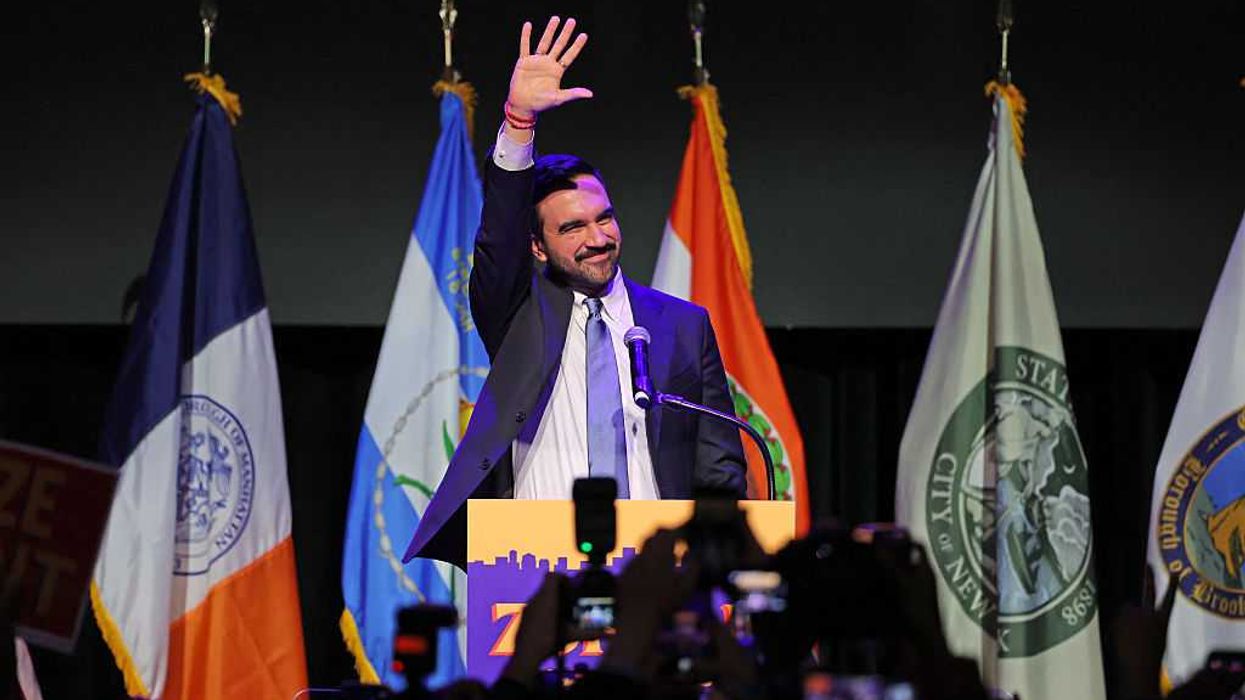
We are seeing that illusion play out now in New York City, where Zohran Mamdani — an open socialist — has won a major political victory. The same ideology that once hid behind euphemisms now campaigns openly throughout America’s once-great cities. And for many who feel left behind, it sounds like salvation.

But what socialism calls fairness is submission dressed as virtue. What it calls order is obedience. Once the system begins to replace personal responsibility with collective dependence, the erosion of liberty is only a matter of time.

The bridge that never ends

Socialism is not a destination; it is a bridge. Karl Marx described it as the necessary transition to communism — the scaffolding that builds the total state. Under socialism, people are taught to obey. Under communism, they forget that any other options exist.

History tells the story clearly. Russia, China, Cambodia, Cuba — each promised equality and delivered misery. One hundred million lives were lost, not because socialism failed, but because it succeeded at what it was designed to do: make the state supreme and the individual expendable.

Today’s advocates insist their version will be different — democratic, modern, and kind. They often cite Sweden as an example, but Sweden’s prosperity was never born of socialism. It grew out of capitalism, self-reliance, and a shared moral culture. Now that system is cracking under the weight of bureaucracy and division.

ANGELA WEISS / Contributor | Getty Images

The real issue is not economic but moral. Socialism begins with a lie about human nature — that people exist for the collective and that the collective knows better than the individual.

This lie is contrary to the truths on which America was founded — that rights come not from government’s authority, but from God’s. Once government replaces that authority, compassion becomes control, and freedom becomes permission.

What young America deserves

Young Americans have many reasons to be frustrated. They were told to study, work hard, and follow the rules — and many did, only to find the goalposts moved again and again. But tearing down the entire house does not make it fairer; it only leaves everyone standing in the rubble.

Capitalism is not a perfect system. It is flawed because people are flawed, but it remains the only system that rewards creativity and effort rather than punishing them. The answer is not revolution but renewal — moral, cultural, and spiritual.

It means restoring honesty to markets, integrity to government, and faith to the heart of our nation. A people who forsake God will always turn to government for salvation, and that road always ends in dependency and decay.

Freedom demands something of us. It requires faith, discipline, and courage. It expects citizens to govern themselves before others govern them. That is the truth this generation deserves to hear again — that liberty is not a gift from the state but a calling from God.

Socialism always begins with promises and ends with permission. It tells you what to drive, what to say, what to believe, all in the name of fairness. But real fairness is not everyone sharing the same chains — it is everyone having the same chance.

The American dream was never about guarantees. It was about the right to try, to fail, and try again. That freedom built the most prosperous nation in history, and it can do so again if we remember that liberty is not a handout but a duty.

Socialism does not offer salvation. It requires subservience.

This article originally appeared on TheBlaze.com.