The Odd Couple Movie Review: 'Passengers' and 'Smokey and the Bandit'

You just can't get movie reviews like this anywhere but The Glenn Beck Program.

Friday on radio, Glenn, Pat and Jeffy launched into a discussion about Passengers, starring Chris Pratt and Jennifer Lawrence, then went retro with Smokey and the Bandit, starring Burt Reynolds and Sally Field.

"He's a fun guy. He seems like a really good guy. I like his movies," Pat said about Chris Pratt.

All three agreed that Jennifer Lawrence was equally likable, but there was some concern regarding her recent political musings.

"I don't like to hear her talk about politics, which she recently did. I tried to wipe it out of my mind, what she was talking about," Pat said.

Read below or listen to the full segment to learn what advice the guys had for Jennifer Lawrence:


Below is a rush transcript of this segment, it might contain errors:

GLENN: The movies that are opening up this weekend. Did anybody see Passengers?

PAT: I saw it last weekend. I loved it.

JEFFY: Yeah, Pat saw it.

PAT: My family liked it, but I loved it. The technology in that thing is so cool, that I was just captivated by it. I mean, what's coming -- and I think they probably consulted somebody because it was sophisticated and cool enough that you think, "Wow, that -- that had to be from somebody, like a Ray Kurzweil's mind."

GLENN: Well, science fiction movies -- science fiction movies, the best ones are always from futurists. Like what's the technology that they have that's so cool?

PAT: Well, I don't want to spoil it for you.

JEFFY: It's been out.

PAT: They're obviously traveling for 120 years to a new planet.

GLENN: Right.

PAT: And they're all asleep. There's 5,000 of them aboard this ship. Passengers on it. So when they wake up, they either got to have cool things to do, and they've got to have food. They've got to have life-preserving things that happen.

So it's an amazing -- it's an amazing --

JEFFY: And what could possibly go wrong?

PAT: What could possibly go wrong other than a meteor shower, you know?

GLENN: Oh, that's what happens?

PAT: Yeah, they get hit with a meteor shower.

GLENN: Now, you wouldn't tell me what the technology was, but then not telling me what the problem is --

JEFFY: I know.

GLENN: Halfway through, she's like, "I have something to tell you, what really happened," is a meteor shower.

JEFFY: You'd think they would have like the shields up or something.

PAT: It happens in the first two minutes of the movie!

GLENN: Well, thanks for wrecking the first two minutes. There's that 90 seconds where I have absolutely no idea what's going on.

PAT: You are welcome.

GLENN: My gosh.

JEFFY: So the big crash happens in two minutes. Then the rest of the show is just after that?

PAT: Just after that. It's like, what happens next?

JEFFY: Taping of the ship.

PAT: But, you know, he's fun to watch. She's obviously appealing. Fun to watch.

JEFFY: She's fun to watch.

PAT: I like him. I like Chris Pratt, right? He's great. I really like him.

GLENN: I think he's like a really good person too, isn't he?

PAT: It seems like it. Yeah.

And his deal was -- I thought he's a super big Christian, and he wasn't going to do any scenes -- any love scenes with another woman because he felt like it was sort of a violation of his marriage --

JEFFY: Yeah, I hate that.

PAT: But he does scenes in this movie with Jennifer Lawrence, and it may just be that it's Jennifer Lawrence. Yeah, I've got principles, but it's Jennifer Lawrence!

GLENN: Right. Yeah, there are things --

JEFFY: Thank you. You know what, Chris Pratt is a good guy.

GLENN: There are things. You're like, come on. I mean, you're like -- it's Jennifer Lawrence, honey.

PAT: I love my wife. Am I serious about my covenants and vows?

Yes. Yes.

PAT: But it's Jennifer Lawrence.

JEFFY: Thank you.

GLENN: Yeah.

PAT: So I think that's what happened.

JEFFY: God will forgive.

GLENN: Jesus, Jennifer Lawrence wasn't alive when you were alive, okay? You didn't have that one.

JEFFY: Yeah.

PAT: I mean, if I wasn't supposed to pretend to make out with her, you wouldn't have created her to look like that.

(laughter)

Right?

JEFFY: Amen.

(laughter)

GLENN: He's really good.

PAT: He's great.

GLENN: I think he is --

PAT: He's a fun guy. He seems like a really good guy. I like his movies.

GLENN: And I like her too.

PAT: And, yes, you can't help but like her too.

GLENN: Well, no, yes, I could.

PAT: You can't.

GLENN: Yeah.

PAT: Although I don't like to hear her talk about politics, which she recently did. I forget -- I tried to wipe it out of my mind, what she was talking about. But it's like -- it's so agonizing. It's like, please don't. Don't ruin you. Don't do it. Don't do it.

JEFFY: Come on, pumpkin.

PAT: Don't go the Sally Field route.

JEFFY: Please. Please don't do that.

GLENN: Sally Field was -- you remember she was -- oh, my gosh, I watched Smoky and the Bandit really --

PAT: Recently?

GLENN: Yeah, recently.

PAT: Really?

GLENN: I watched it with Raphe and the kids. Have you watched it?

PAT: Oh, man. Not for 30 years.

GLENN: Oh, I haven't watched it for 30 years either.

JEFFY: I love it.

GLENN: It's not as good, but Jackie Gleason is absolutely hysterical.

JEFFY: Great. Great.

PAT: Is he, or is it --

JEFFY: It's Jackie Gleason. You don't like him though.

PAT: No, I'm not a big fan.

JEFFY: Yeah, I know, Pat doesn't like --

GLENN: He was absolutely brilliant in this.

PAT: Yeah.

GLENN: And at one point he looks at his son -- remember, his son is the one that's going to marry Sally Field.

JEFFY: Yeah.

GLENN: And he's the doofus in the car the whole time. And he asks -- towards the end he asks some stupid question. And Jackie Gleason looks at him and says, "When I get home, the first thing I'm going to do is punch your mama in the mouth."

PAT: Wow, you can't say that today.

GLENN: Oh, no --

PAT: Oh, man.

GLENN: There's a lot in there you could not say.

JEFFY: Yeah.

GLENN: Because, remember, he comes into a diner -- no, or he pulls up, and another sheriff says, "You're not -- you're not in Texas anymore. What are you doing in here?"

JEFFY: Yeah.

GLENN: And he said, "I am a sheriff of the law." And he said, "So am I. Look at my badge." And he looked at him, and he's black.

JEFFY: Yeah.

GLENN: And he said, "Good God, what is this country coming to?" I mean, it was --

JEFFY: Wow.

GLENN: It was shocking.

JEFFY: Yeah, some of that really is.

GLENN: Shocking.

JEFFY: And the soundtrack of that movie is the Trans Am 4 Speed, where it's driving the automatic through the whole movie. It's great.

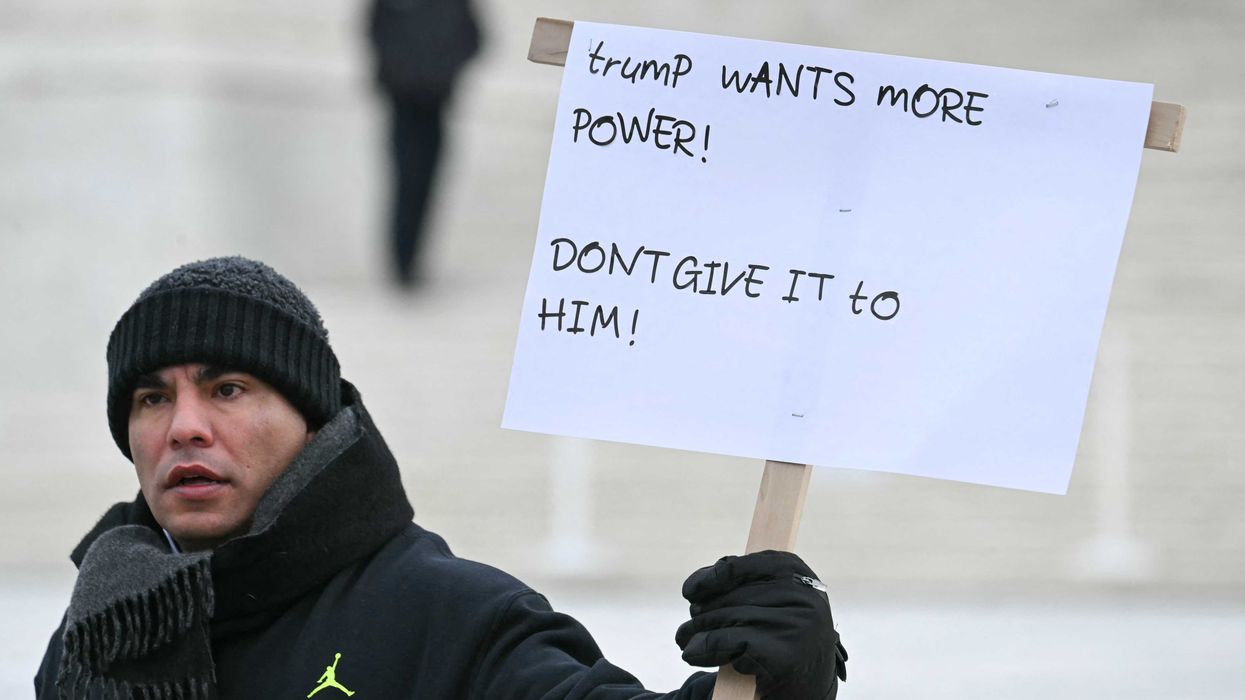
Trump v. Slaughter: The Deep State on trial

JIM WATSON / Contributor | Getty Images


The administrative state has long operated as an unelected super-government. Trump v. Slaughter may be the moment voters reclaim authority over their own institutions.

Washington is watching and worrying about a U.S. Supreme Court case that could very well define the future of American self-government. And I don’t say that lightly. At the center of Trump v. Slaughter is a deceptively simple question: Can the president — the one official chosen by the entire nation — remove the administrators and “experts” who wield enormous, unaccountable power inside the executive branch?

This isn’t a technical fight. It’s not a paperwork dispute. It’s a turning point. Because if the answer is no, then the American people no longer control their own government. Elections become ceremonial. The bureaucracy becomes permanent. And the Constitution becomes a suggestion rather than the law of the land.

A government run by experts instead of elected leaders is not a republic. It’s a bureaucracy with a voting booth bolted onto the front to make us feel better.

That simply cannot be. Justice Neil Gorsuch summed it up perfectly during oral arguments on Monday: “There is no such thing in our constitutional order as a fourth branch of government that’s quasi-judicial and quasi-legislative.”

Yet for more than a century, the administrative state has grown like kudzu — quietly, relentlessly, and always in one direction. Today we have a fourth branch of government: unelected, unaccountable, insulated from consequence. Congress hands off lawmaking to agencies. Presidents arrive with agendas, but the bureaucrats remain, and they decide what actually gets done.

If the Supreme Court decides that presidents cannot fire the very people who execute federal power, they are not just rearranging an org chart. The justices are rewriting the structure of the republic. They are confirming what we’ve long feared: Here, the experts rule, not the voters.

A government run by experts instead of elected leaders is not a republic. It’s a bureaucracy with a voting booth bolted onto the front to make us feel better.

The founders warned us

The men who wrote the Constitution saw this temptation coming. Alexander Hamilton and James Madison in the Federalist Papers hammered home the same principle again and again: Power must remain traceable to the people. They understood human nature far too well. They knew that once administrators are protected from accountability, they will accumulate power endlessly. It is what humans do.

That’s why the Constitution vests the executive power in a single president — someone the entire nation elects and can unelect. They did not want a managerial council. They did not want a permanent priesthood of experts. They wanted responsibility and authority to live in one place so the people could reward or replace it.

So this case will answer a simple question: Do the people still govern this country, or does a protected class of bureaucrats now run the show?

Not-so-expert advice

Look around. The experts insisted they could manage the economy — and produced historic debt and inflation.

The experts insisted they could run public health — and left millions of Americans sick, injured, and dead while avoiding accountability.

The experts insisted they could steer foreign policy — and delivered endless conflict with no measurable benefit to our citizens.

And through it all, they stayed. Untouched, unelected, and utterly unapologetic.

If a president cannot fire these people, then you — the voter — have no ability to change the direction of your own government. You can vote for reform, but you will get the same insiders making the same decisions in the same agencies.

That is not self-government. That is inertia disguised as expertise.

A republic no more?

A monarchy can survive a permanent bureaucracy. A dictatorship can survive a permanent bureaucracy. A constitutional republic cannot. Not for long anyway.

We are supposed to live in a system where the people set the course, Congress writes the laws, and the president carries them out. When agencies write their own rules, judges shield them from oversight, and presidents are forbidden from removing them, we no longer live in that system. We live in something else — something the founders warned us about.

And the people become spectators of their own government.

JIM WATSON / Contributor | Getty Images

The path forward

Restoring the separation of powers does not mean rejecting expertise. It means returning expertise to its proper role: advisory, not sovereign.

No expert should hold power that voters cannot revoke. No agency should drift beyond the reach of the executive. No bureaucracy should be allowed to grow branches the Constitution never gave it.

The Supreme Court now faces a choice that will shape American life for a generation. It can reinforce the Constitution, or it can allow the administrative state to wander even farther from democratic control.

This case isn’t about President Trump. It isn’t about Rebecca Slaughter, the former Federal Trade Commission official suing to get her job back. It’s about whether elections still mean anything — whether the American people still hold the reins of their own government.

That is what is at stake: not procedure, not technicalities, but the survival of a system built on the revolutionary idea that the citizens — not the experts — are the ones who rule.

This article originally appeared on TheBlaze.com.

1 in 20 Canadians die by MAID—Is this 'compassion'?

Vaughn Ridley / Stringer | Getty Images

Medical assistance in dying isn’t health care. It’s the moment a Western democracy decided some lives aren’t worth saving, and it’s a warning sign we can’t ignore.

Canada loves to lecture America about compassion. Every time a shooting makes the headlines, Canadian commentators cannot wait to discuss how the United States has a “culture of death” because we refuse to regulate guns the way enlightened nations supposedly do.

But north of our border, a very different crisis is unfolding — one that is harder to moralize because it exposes a deeper cultural failure.

A society that no longer recognizes the value of life will not long defend freedom, dignity, or moral order.

The Canadian government is not only permitting death, but it’s also administering, expanding, and redefining it as “medical care.” Medical assistance in dying is no longer a rare, tragic exception. It has become one of the country’s leading causes of death, offered to people whose problems are treatable, whose conditions are survivable, and whose value should never have been in question.

In Canada, MAID is now responsible for nearly 5% of all deaths — 1 out of every 20 citizens. And this is happening in a country that claims the moral high ground over American gun violence. Canada now records more deaths per capita from doctors administering lethal drugs than America records from firearms. Their number is 37.9 deaths per 100,000 people. Ours is 13.7. Yet we are the country supposedly drowning in a “culture of death.”

No lecture from abroad can paper over this fact: Canada has built a system where eliminating suffering increasingly means eliminating the sufferer.

Choosing death over care

One example of what Canada now calls “compassion” is the case of Jolene Bond, a woman suffering from a painful but treatable thyroid condition that causes dangerously high calcium levels, bone deterioration, soft-tissue damage, nausea, and unrelenting pain. Her condition is severe, but it is not terminal. Surgery could help her. And in a functioning medical system, she would have it.

But Jolene lives under socialized medicine. The specialists she needs are either unavailable, overrun with patients, or blocked behind bureaucratic requirements she cannot meet. She cannot get a referral. She cannot get an appointment. She cannot reach the doctor in another province who is qualified to perform the operation. Every pathway to treatment is jammed by paperwork, shortages, and waitlists that stretch into the horizon and beyond.

Yet the Canadian government had something else ready for her — something immediate.

They offered her MAID.

Not help, not relief, not a doctor willing to drive across a provincial line and simply examine her. Instead, Canada offered Jolene a state-approved death. A lethal injection is easier to obtain than a medical referral. Killing her would be easier than treating her. And the system calls that compassion.

Bureaucracy replaces medicine

Jolene’s story is not an outlier. It is the logical outcome of a system that cannot keep its promises. When the machinery of socialized medicine breaks down, the state simply replaces care with a final, irreversible “solution.” A bureaucratic checkbox becomes the last decision of a person’s life.

Canada insists its process is rigorous, humane, and safeguarded. Yet the bureaucracy now reviewing Jolene’s case is not asking how she can receive treatment; it is asking whether she has enough signatures to qualify for a lethal injection. And the debate among Canadian officials is not how to preserve life, but whether she has met the paperwork threshold to end it.

This is the dark inversion that always emerges when the state claims the power to decide when life is no longer worth living. Bureaucracy replaces conscience. Eligibility criteria replace compassion. A panel of physicians replaces the family gathered at a bedside. And eventually, the “right” to die becomes an expectation — especially for those who are poor, elderly, or alone.

Joe Raedle / Staff | Getty Images

The logical end of a broken system

We ignore this lesson at our own peril. Canada’s health care system is collapsing under demographic pressure, uncontrolled migration, and the unavoidable math of government-run medicine.

When the system breaks, someone must bear the cost. MAID has become the release valve.

The ideology behind this system is already drifting south. In American medical journals and bioethics conferences, you will hear this same rhetoric. The argument is always dressed in compassion. But underneath, it reduces the value of human life to a calculation: Are you useful? Are you affordable? Are you too much of a burden?

The West was built on a conviction that every human life has inherent value. That truth gave us hospitals before it gave us universities. It gave us charity before it gave us science. It is written into the Declaration of Independence.

Canada’s MAID program reveals what happens when a country lets that foundation erode. Life becomes negotiable, and suffering becomes a justification for elimination.

A society that no longer recognizes the value of life will not long defend freedom, dignity, or moral order. If compassion becomes indistinguishable from convenience, and if medicine becomes indistinguishable from euthanasia, the West will have abandoned the very principles that built it. That is the lesson from our northern neighbor — a warning, not a blueprint.

This article originally appeared on TheBlaze.com.

A Sharia enclave is quietly taking root in America. It's time to wake up.

NOVA SAFO / Staff | Getty Images

Sharia-based projects like the Meadow in Texas show how political Islam grows quietly, counting on Americans to stay silent while an incompatible legal system takes root.

Apolitical system completely incompatible with the Constitution is gaining ground in the United States, and we are pretending it is not happening.

Sharia — the legal and political framework of Islam — is being woven into developments, institutions, and neighborhoods, including a massive project in Texas. And the consequences will be enormous if we continue to look the other way.

This is the contradiction at the heart of political Islam: It claims universal authority while insisting its harshest rules will never be enforced here. That promise does not stand up to scrutiny. It never has.

Before we can have an honest debate, we’d better understand what Sharia represents. Sharia is not simply a set of religious rules about prayer or diet. It is a comprehensive legal and political structure that governs marriage, finance, criminal penalties, and civic life. It is a parallel system that claims supremacy wherever it takes hold.

This is where the distinction matters. Many Muslims in America want nothing to do with Sharia governance. They came here precisely because they lived under it. But political Islam — the movement that seeks to implement Sharia as law — is not the same as personal religious belief.

It is a political ideology with global ambitions, much like communism. Secretary of State Marco Rubio recently warned that Islamist movements do not seek peaceful coexistence with the West. They seek dominance. History backs him up.

How Sharia arrives

Political Islam does not begin with dramatic declarations. It starts quietly, through enclaves that operate by their own rules. That is why the development once called EPIC City — now rebranded as the Meadow — is so concerning. Early plans framed it as a Muslim-only community built around a mega-mosque and governed by Sharia-compliant financing. After state investigations were conducted, the branding changed, but the underlying intent remained the same.

Developers have openly described practices designed to keep non-Muslims out, using fees and ownership structures to create de facto religious exclusivity. This is not assimilation. It is the construction of a parallel society within a constitutional republic.

The warning from those who have lived under it

Years ago, local imams in Texas told me, without hesitation, that certain Sharia punishments “just work.” They spoke about cutting off hands for theft, stoning adulterers, and maintaining separate standards of testimony for men and women. They insisted it was logical and effective while insisting they would never attempt to implement it in Texas.

But when pressed, they could not explain why a system they consider divinely mandated would suddenly stop applying once someone crossed a border.

This is the contradiction at the heart of political Islam: It claims universal authority while insisting its harshest rules will never be enforced here. That promise does not stand up to scrutiny. It never has.

AASHISH KIPHAYET / Contributor | Getty Images

America is vulnerable

Europe is already showing us where this road leads. No-go zones, parallel courts, political intimidation, and clerics preaching supremacy have taken root across major cities.

America’s strength has always come from its melting pot, but assimilation requires boundaries. It requires insisting that the Constitution, not religious law, is the supreme authority on this soil.

Yet we are becoming complacent, even fearful, about saying so. We mistake silence for tolerance. We mistake avoidance for fairness. Meanwhile, political Islam views this hesitation as weakness.

Religious freedom is one of America’s greatest gifts. Muslims may worship freely here, as they should. But political Islam must not be permitted to plant a flag on American soil. The Constitution cannot coexist with a system that denies equal rights, restricts speech, subordinates women, and places clerical authority above civil law.

Wake up before it is too late

Projects like the Meadow are not isolated. They are test runs, footholds, proofs of concept. Political Islam operates with patience. It advances through demographic growth, legal ambiguity, and cultural hesitation — and it counts on Americans being too polite, too distracted, or too afraid to confront it.

We cannot afford that luxury. If we fail to defend the principles that make this country free, we will one day find ourselves asking how a parallel system gained power right in front of us. The answer will be simple: We looked away.

The time to draw boundaries and to speak honestly is now. The time to defend the Constitution as the supreme law of the land is now. Act while there is still time.

This article originally appeared on TheBlaze.com.

Why do Americans feel so empty?

Mario Tama / Staff | Getty Images

Anxiety, anger, and chronic dissatisfaction signal a country searching for meaning. Without truth and purpose, politics becomes a dangerous substitute for identity.

We have built a world overflowing with noise, convenience, and endless choice, yet something essential has slipped out of reach. You can sense it in the restless mood of the country, the anxiety among young people who cannot explain why they feel empty, in the angry confusion that dominates our politics.

We have more wealth than any nation in history, but the heart of the culture feels strangely malnourished. Before we can debate debt or elections, we must confront the reality that we created a world of things, but not a world of purpose.

You cannot survive a crisis you refuse to name, and you cannot rebuild a world whose foundations you no longer understand.

What we are living through is not just economic or political dysfunction. It is the vacuum that appears when a civilization mistakes abundance for meaning.

Modern life is stuffed with everything except what the human soul actually needs. We built systems to make life faster, easier, and more efficient — and then wondered why those systems cannot teach our children who they are, why they matter, or what is worth living for.

We tell the next generation to chase success, influence, and wealth, turning childhood into branding. We ask kids what they want to do, not who they want to be. We build a world wired for dopamine rather than dignity, and then we wonder why so many people feel unmoored.

When everything is curated, optimized, and delivered at the push of a button, the question “what is my life for?” gets lost in the static.

The crisis beneath the headlines

It is not just the young who feel this crisis. Every part of our society is straining under the weight of meaninglessness.

Look at the debt cycle — the mathematical fate no civilization has ever escaped once it crosses a threshold that we seem to have already blown by. While ordinary families feel the pressure, our leaders respond with distraction, with denial, or by rewriting the very history that could have warned us.

You cannot survive a crisis you refuse to name, and you cannot rebuild a world whose foundations you no longer understand.

We have entered a cultural moment where the noise is so loud that it drowns out the simplest truths. We are living in a country that no longer knows how to hear itself think.

So people go searching. Some drift toward the false promise of socialism, some toward the empty thrill of rebellion. Some simply check out. When a culture forgets what gives life meaning, it becomes vulnerable to every ideology that offers a quick answer.

The quiet return of meaning

And yet, quietly, something else is happening. Beneath the frustration and cynicism, many Americans are recognizing that meaning does not come from what we own, but from what we honor. It does not rise from success, but from virtue. It does not emerge from noise, but from the small, sacred things that modern life has pushed to the margins — the home, the table, the duty you fulfill, the person you help when no one is watching.

The danger is assuming that this rediscovery happens on its own. It does not.

Reorientation requires intention. It requires rebuilding the habits and virtues that once held us together. It requires telling the truth about our history instead of rewriting it to fit today’s narratives. And it requires acknowledging what has been erased: that meaning is inseparable from God’s presence in a nation’s life.

Harold M. Lambert / Contributor | Getty Images

Where renewal begins

We have built a world without stillness, and then we wondered why no one can hear the questions that matter. Those questions remain, whether we acknowledge them or not. They do not disappear just because we drown them in entertainment or noise. They wait for us, and the longer we ignore them, the more disoriented we become.

Meaning is still available. It is found in rebuilding the smallest, most human spaces — the places that cannot be digitized, globalized, or automated. The home. The family. The community.

These are the daily virtues that do not trend on social media, but that hold a civilization upright. If we want to repair this country, we begin there, exactly where every durable civilization has always begun: one virtue at a time, one tradition at a time, one generation at a time.

This article originally appeared on TheBlaze.com.