Here are the 14 states fighting ESG. Is YOURS?

This week on his Wednesday night Glenn TV special, Glenn will delve into ESG and how large corporations are using YOUR money to fund woke agendas—while also compromising the return on your investment. As Glenn's audience is well aware, ESG stands for "environmental, social, and governance." It's a scoring system for businesses based on their compliance with environmental and social standards that has turned into a quasi-extortion scheme, forcing investment companies to use YOUR assets to fund progressive projects.

It is vitally important that fighting ESG becomes a central campaign item heading into the 2024 Presidential debate. 14 states have already stepped up to put measures in place to fight ESG. Did your state make the list? If not, as Glenn said, you should call your Congressional office NOW to push them to bring this legislation to the table. Though it can be discouraging to watch national politics, heroes in YOUR state are stepping up to defend your rights and freedoms through legislation that is actually getting things done.

1. Arizona

The Arizona State Board of Investment adopted anti-ESG revisions to its investment policy, specifying that only "pecuniary factors" may be considered in the investment management of its asset pools—that means they can only use your money for a return on investment, NOT to fund a woke agenda.

However, Arizona's new Democrat AG Kris Mayes recently announced the state will no longer conduct investigations into corporations over ESG matters. Here's what she said:

Corporations should be permitted to access capital markets in ways that they feel are necessary for the advancement of their investor objectives and for society, as long as they are doing so in a lawful manner. Corporations increasingly realize that investing in sustainability is both good for our country, our environment, and public health and good for their bottom lines.

If you are an Arizona resident, call your Congressional office to push back against Mayes' recent policy.

2. Idaho
Found Image Holdings Inc / Contributor | Getty Images

Republican Idaho state legislators have been preparing anti-ESG legislation in 2022 to push to the floor in 2023. If you are an Idaho resident, contact your Congressional office to help push this legislation forward.

3. Indiana
media.giphy.com

On February 28th, Indiana's state House passed anti-ESG laws. The bill's author Rep. Ethan Manning said:

ESG, or so-called environmental, social and governance policies, are highly subjective measures that have real-world impacts. We need to focus our pension investments, the roughly $45 billion in assets we control, on financial factors, and leave politics and social and ideological considerations out of it.

Manning hit the nail on the head: investment firms should leave politics out of YOUR money. If you are an Indiana resident, help push this bill into law by contacting your local Congressional office.

5. Florida

​Florida has been one of the original states leading the pack in passing anti-ESG laws. On the day of its announcement, Governor Ron DeSantis said:

Today’s announcement builds on my commitment to protect consumers’ investments and their ability to access financial services in the Free State of Florida. By applying arbitrary ESG financial metrics that serve no one except the companies that created them, elites are circumventing the ballot box to implement a radical ideological agenda. Through this legislation, we will protect the investments of Floridians and the ability of Floridians to participate in the economy.

DeSantis said it well: anti-ESG laws are about protecting consumers from elites who want to use YOUR money to fund their own political agendas.

4. Kansas

Glenn had Kansas state Rep Michael Murphy on his show (3/06/23) to discuss the anti-ESG legislation he is pushing in the Kansas state House. Kansas residents, give Rep. Murphy and the other GOP Reps the extra help to push this legislation forward!

6. Kentucky
Jim Steinfeldt / Contributor | Getty Images

Not only does Kentucky have anti-ESG laws in place, but moreover, the state's AG Daniel Cameron launched an investigation into major banks, including Bank of America, Citigroup, Goldman Sachs, JP Morgan Chase, Morgan Stanley, and Wells Fargo for "anti-trust" practices and for locking consumers out of their assets over ESG conflicts. AG Cameron said:

Kentucky’s consumer protection and antitrust laws prohibit companies from engaging in coordinated practices that block certain Kentucky businesses from accessing banking services. We joined this investigation to ensure Kentucky companies that reject the Biden Administration’s anti-fossil fuel climate agenda have the same financial freedoms as those who accept it.

It is inspiring to see states like Kentucky take such a strong stance for the consumer rights of their people!

7. Louisiana

Found Image Holdings Inc / Contributor | Getty Images

Louisiana liquidated ALL of its funds from BlackRock, totaling $800 million, over its ESG and anti-fossil fuel practices. Louisiana state Treasurer John Schroder said:

Your blatantly anti-fossil fuel policies would destroy Louisiana’s economy. This divestment is necessary to protect Louisiana from actions and policies that would actively seek to hamstring our fossil fuel sector. In my opinion, your support of ESG investing is inconsistent with the best economic interests and values of Louisiana. I cannot support an institution that would deny our state the benefit of one of its most robust assets.

Without anti-ESG laws, states like Louisiana, whose economy relies largely on fossil fuels, would be victim to investment funds using THEIR state money for anti-fossil fuel agendas. Sound unfair? Because it is...

If you live in a state that relies on a fossil fuel economy, it is VITAL that you push anti-ESG legislation in your state.

8. North Dakota

Harvey Meston / Staff | Getty Images

​South Dakota passed anti-ESG laws, however, there is a risk that the state is pulling back its ESG protections. The North Dakota House voted down a resolution to boycott pro-ESG institutions and block financial institutions. This is especially troubling for North Dakota, which has an oil-dependent economy. If you are a North Dakota resident, it is vitally important that you push back against this regression away from ESG protections

9. Oklahoma

Oklahoma passed the Energy Discrimination Elimination Act in May 2022, and it went into effect in November. The law declares the oil-and-gas industry a vital part of the economy and that the state and companies that do business with the state should not boycott the oil and gas industry. Oklahoma State Treasurer Todd Russ subsequently sent questionnaires to national financial institutions to determine which companies are in breach of state law. Russ said:

I [...] began compiling a list of companies, banks, and other entities that act against Oklahoma’s interests because of their ESG stance. It is my responsibility to ensure Oklahomans’ tax dollars will not be used to enrich organizations that act counter to our taxpayers’ interests and our values.

Oklahoma is another example of how oil-rich states are leading the fight against ESG.

10. Texas

Texas was the first state to pass anti-ESG legislation in 2021. However, Texas lawmakers are now proposing to expand anti-ESG protections, prohibiting pension fund managers and insurance managers from making investment decisions that are detrimental or in conflict to Texas' oil and gas industry. Like Louisiana and other fossil-duel dependent economies, this expansion of anti-ESG legislation is vital. If you are a Texas resident, contact your local Congressional office NOW to help push this legislation through the floor.

11. Pennsylvania

Archive Photos / Stringer | Getty Images

In 2022, the Pennsylvania state House proposed the "Liberty, Virtue, and Independence Act" against ESG. The bill stated:

The practice of discrimination against any Commonwealth inhabitants, including individuals, associations and businesses, through use of their social credit score or environmental, social or governance score is a matter of Statewide concern. Discrimination based on the scores not only threatens the rights and privileges of Commonwealth inhabitants, but menaces the institutions and foundation of our free democratic state and threatens the peace, order, health, safety and general welfare of the Commonwealth and its inhabitants.

Unfortunately, this bill has not been passed, but state Republicans are still fighting to pass anti-ESG legislation to protect the state's vital coal industry. If you live in Pennsylvania, contact your Congressional office NOW to help push this legislation through.

12. South Carolina
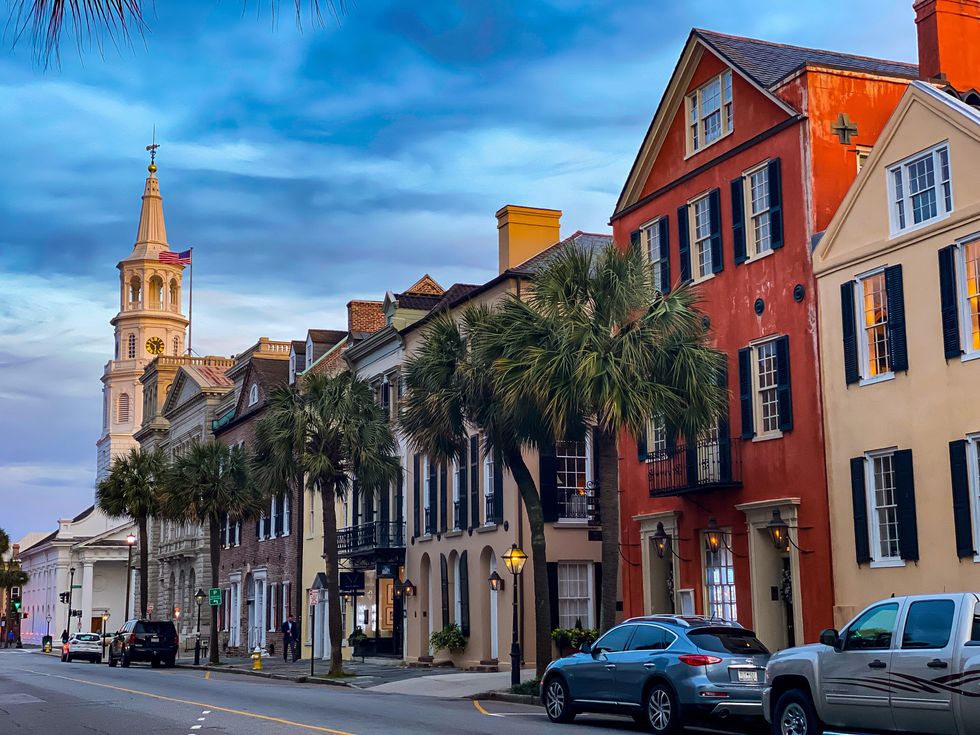
South Carolina has been trying to push anti-ESG protections since August 2022. One of the state lawmakers promoting this legislation, state Senator Josh Kimbrell, said, "(ESG) scores represent a great threat to free speech and free enterprise in South Carolina and across America." If you're a South Carolina resident, contact your local Congressional office to help push this legislation through.

13. Utah
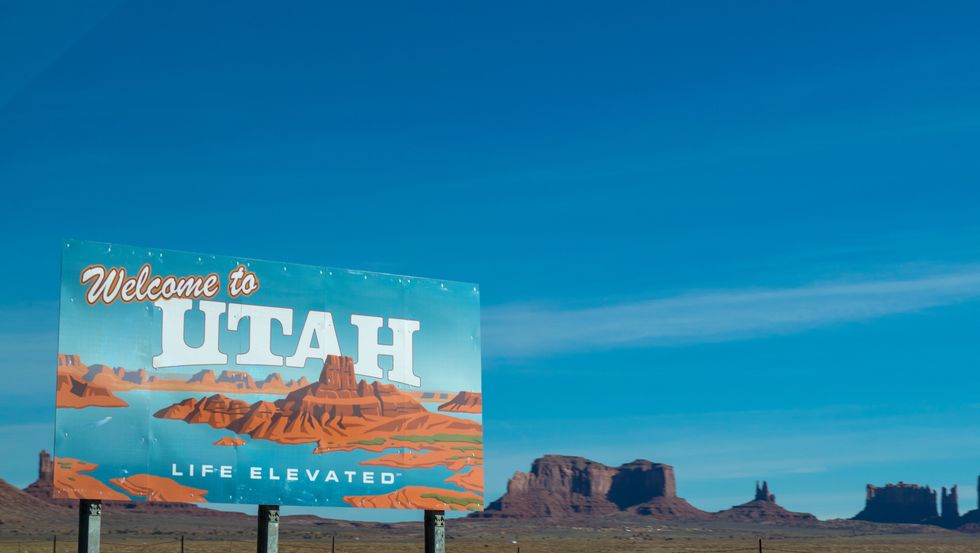
Utah's state government is currently pushing anti-ESG legislation, arguing that ESG violates antitrust laws. Rep. Ken Ivory, who is one of the bill's sponsors, calls ESG the "weaponization of capitol." If you are a Utah resident, contact your Congressional office to help push this legislation through.

14. West Virginia

In late July, West Virginia became the first state to punish banks that abide to ESG standards and the first state to divest their funds from BlackRock, inspiring other states like Louisiana to follow suit. Now, they are expanding their anti-ESG protections to include pensions fund managers.

Why do Americans feel so empty?

Mario Tama / Staff | Getty Images

Anxiety, anger, and chronic dissatisfaction signal a country searching for meaning. Without truth and purpose, politics becomes a dangerous substitute for identity.

We have built a world overflowing with noise, convenience, and endless choice, yet something essential has slipped out of reach. You can sense it in the restless mood of the country, the anxiety among young people who cannot explain why they feel empty, in the angry confusion that dominates our politics.

We have more wealth than any nation in history, but the heart of the culture feels strangely malnourished. Before we can debate debt or elections, we must confront the reality that we created a world of things, but not a world of purpose.

You cannot survive a crisis you refuse to name, and you cannot rebuild a world whose foundations you no longer understand.

What we are living through is not just economic or political dysfunction. It is the vacuum that appears when a civilization mistakes abundance for meaning.

Modern life is stuffed with everything except what the human soul actually needs. We built systems to make life faster, easier, and more efficient — and then wondered why those systems cannot teach our children who they are, why they matter, or what is worth living for.

We tell the next generation to chase success, influence, and wealth, turning childhood into branding. We ask kids what they want to do, not who they want to be. We build a world wired for dopamine rather than dignity, and then we wonder why so many people feel unmoored.

When everything is curated, optimized, and delivered at the push of a button, the question “what is my life for?” gets lost in the static.

The crisis beneath the headlines

It is not just the young who feel this crisis. Every part of our society is straining under the weight of meaninglessness.

Look at the debt cycle — the mathematical fate no civilization has ever escaped once it crosses a threshold that we seem to have already blown by. While ordinary families feel the pressure, our leaders respond with distraction, with denial, or by rewriting the very history that could have warned us.

You cannot survive a crisis you refuse to name, and you cannot rebuild a world whose foundations you no longer understand.

We have entered a cultural moment where the noise is so loud that it drowns out the simplest truths. We are living in a country that no longer knows how to hear itself think.

So people go searching. Some drift toward the false promise of socialism, some toward the empty thrill of rebellion. Some simply check out. When a culture forgets what gives life meaning, it becomes vulnerable to every ideology that offers a quick answer.

The quiet return of meaning

And yet, quietly, something else is happening. Beneath the frustration and cynicism, many Americans are recognizing that meaning does not come from what we own, but from what we honor. It does not rise from success, but from virtue. It does not emerge from noise, but from the small, sacred things that modern life has pushed to the margins — the home, the table, the duty you fulfill, the person you help when no one is watching.

The danger is assuming that this rediscovery happens on its own. It does not.

Reorientation requires intention. It requires rebuilding the habits and virtues that once held us together. It requires telling the truth about our history instead of rewriting it to fit today’s narratives. And it requires acknowledging what has been erased: that meaning is inseparable from God’s presence in a nation’s life.

Harold M. Lambert / Contributor | Getty Images


Where renewal begins

We have built a world without stillness, and then we wondered why no one can hear the questions that matter. Those questions remain, whether we acknowledge them or not. They do not disappear just because we drown them in entertainment or noise. They wait for us, and the longer we ignore them, the more disoriented we become.

Meaning is still available. It is found in rebuilding the smallest, most human spaces — the places that cannot be digitized, globalized, or automated. The home. The family. The community.

These are the daily virtues that do not trend on social media, but that hold a civilization upright. If we want to repair this country, we begin there, exactly where every durable civilization has always begun: one virtue at a time, one tradition at a time, one generation at a time.

This article originally appeared on TheBlaze.com.

The Bubba Effect erupts as America’s power brokers go rogue

Gary Hershorn / Contributor | Getty Images

When institutions betray the public’s trust, the country splits, and the spiral is hard to stop.

Something drastic is happening in American life. Headlines that should leave us stunned barely register anymore. Stories that once would have united the country instead dissolve into silence or shrugs.

It is not apathy exactly. It is something deeper — a growing belief that the people in charge either cannot or will not fix what is broken.

When people feel ignored or betrayed, they will align with anyone who appears willing to fight on their behalf.

I call this response the Bubba effect. It describes what happens when institutions lose so much public trust that “Bubba,” the average American minding his own business, finally throws his hands up and says, “Fine. I will handle it myself.” Not because he wants to, but because the system that was supposed to protect him now feels indifferent, corrupt, or openly hostile.

The Bubba effect is not a political movement. It is a survival instinct.

What triggers the Bubba effect

We are watching the triggers unfold in real time. When members of Congress publicly encourage active duty troops to disregard orders from the commander in chief, that is not a political squabble. When a federal judge quietly rewrites the rules so one branch of government can secretly surveil another, that is not normal. That is how republics fall. Yet these stories glided across the news cycle without urgency, without consequence, without explanation.

When the American people see the leadership class shrug, they conclude — correctly — that no one is steering the ship.

This is how the Bubba effect spreads. It is not just individuals resisting authority. It is sheriffs refusing to enforce new policies, school boards ignoring state mandates, entire communities saying, “We do not believe you anymore.” It becomes institutional, cultural, national.

A country cracking from the inside

This effect can be seen in Dearborn, Michigan. In the rise of fringe voices like Nick Fuentes. In the Epstein scandal, where powerful people could not seem to locate a single accountable adult. These stories are different in content but identical in message: The system protects itself, not you.

When people feel ignored or betrayed, they will align with anyone who appears willing to fight on their behalf. That does not mean they suddenly agree with everything that person says. It means they feel abandoned by the institutions that were supposed to be trustworthy.

The Bubba effect is what fills that vacuum.

The dangers of a faithless system

A republic cannot survive without credibility. Congress cannot oversee intelligence agencies if it refuses to discipline its own members. The military cannot remain apolitical if its chain of command becomes optional. The judiciary cannot defend the Constitution while inventing loopholes that erase the separation of powers.

History shows that once a nation militarizes politics, normalizes constitutional shortcuts, or allows government agencies to operate without scrutiny, it does not return to equilibrium peacefully. Something will give.

The question is what — and when.

The responsibility now belongs to us

In a healthy country, this is where the media steps in. This is where universities, pastors, journalists, and cultural leaders pause the outrage machine and explain what is at stake. But today, too many see themselves not as guardians of the republic, but of ideology. Their first loyalty is to narrative, not truth.

The founders never trusted the press more than the public. They trusted citizens who understood their rights, lived their responsibilities, and demanded accountability. That is the antidote to the Bubba effect — not rage, but citizenship.

How to respond without breaking ourselves

Do not riot. Do not withdraw. Do not cheer on destruction just because you dislike the target. That is how nations lose themselves. Instead, demand transparency. Call your representatives. Insist on consequences. Refuse to normalize constitutional violations simply because “everyone does it.” If you expect nothing, you will get nothing.

Do not hand your voice to the loudest warrior simply because he is swinging a bat at the establishment. You do not beat corruption by joining a different version of it. You beat it by modeling the country you want to preserve: principled, accountable, rooted in truth.

Adam Gray / Stringer | Getty Images

Every republic reaches a moment when historians will later say, “That was the warning.” We are living in ours. But warnings are gifts if they are recognized. Institutions bend. People fail. The Constitution can recover — if enough Americans still know and cherish it.

It does not take a majority. Twenty percent of the country — awake, educated, and courageous — can reset the system. It has happened before. It can happen again.

Wake up. Stand up. Demand integrity — from leaders, from institutions, and from yourself. Because the Bubba effect will not end until Americans reclaim the duty that has always belonged to them: preserving the republic for the next generation.

This article originally appeared on TheBlaze.com.

Grim warning: Bad-faith Israel critics duck REAL questions

Spencer Platt / Staff | Getty Images

Bad-faith attacks on Israel and AIPAC warp every debate. Real answers emerge only when people set aside scripts and ask what serves America’s long-term interests.

The search for truth has always required something very much in short supply these days: honesty. Not performative questions, not scripted outrage, not whatever happens to be trending on TikTok, but real curiosity.

Some issues, often focused on foreign aid, AIPAC, or Israel, have become hotbeds of debate and disagreement. Before we jump into those debates, however, we must return to a simpler, more important issue: honest questioning. Without it, nothing in these debates matters.

Ask questions because you want the truth, not because you want a target.

The phrase “just asking questions” has re-entered the zeitgeist, and that’s fine. We should always question power. But too many of those questions feel preloaded with someone else’s answer. If the goal is truth, then the questions should come from a sincere desire to understand, not from a hunt for a villain.

Honest desire for truth is the only foundation that can support a real conversation about these issues.

Truth-seeking is real work

Right now, plenty of people are not seeking the truth at all. They are repeating something they heard from a politician on cable news or from a stranger on TikTok who has never opened a history book. That is not a search for answers. That is simply outsourcing your own thought.

If you want the truth, you need to work for it. You cannot treat the world like a Marvel movie where the good guy appears in a cape and the villain hisses on command. Real life does not give you a neat script with the moral wrapped up in two hours.

But that is how people are approaching politics now. They want the oppressed and the oppressor, the heroic underdog and the cartoon villain. They embrace this fantastical framing because it is easier than wrestling with reality.

This framing took root in the 1960s when the left rebuilt its worldview around colonizers and the colonized. Overnight, Zionism was recast as imperialism. Suddenly, every conflict had to fit the same script. Today’s young activists are just recycling the same narrative with updated graphics. Everything becomes a morality play. No nuance, no context, just the comforting clarity of heroes and villains.

Bad-faith questions

This same mindset is fueling the sudden obsession with Israel, and the American Israel Public Affairs Committee in particular. You hear it from members of Congress and activists alike: AIPAC pulls the strings, AIPAC controls the government, AIPAC should register as a foreign agent under the Foreign Agents Registration Act. The questions are dramatic, but are they being asked in good faith?

FARA is clear. The standard is whether an individual or group acts under the direction or control of a foreign government. AIPAC simply does not qualify.

Here is a detail conveniently left out of these arguments: Dozens of domestic organizations — Armenian, Cuban, Irish, Turkish — lobby Congress on behalf of other countries. None of them registers under FARA because — like AIPAC — they are independent, domestic organizations.

If someone has a sincere problem with the structure of foreign lobbying, fair enough. Let us have that conversation. But singling out AIPAC alone is not a search for truth. It is bias dressed up as bravery.

Anadolu / Contributor | Getty Images

If someone wants to question foreign aid to Israel, fine. Let’s have that debate. But let’s ask the right questions. The issue is not the size of the package but whether the aid advances our interests. What does the United States gain? Does the investment strengthen our position in the region? How does it compare to what we give other nations? And do we examine those countries with the same intensity?

The real target

These questions reflect good-faith scrutiny. But narrowing the entire argument to one country or one dollar amount misses the larger problem. If someone objects to the way America handles foreign aid, the target is not Israel. The target is the system itself — an entrenched bureaucracy, poor transparency, and decades-old commitments that have never been re-examined. Those problems run through programs around the world.

If you want answers, you need to broaden the lens. You have to be willing to put aside the movie script and confront reality. You have to hold yourself to a simple rule: Ask questions because you want the truth, not because you want a target.

That is the only way this country ever gets clarity on foreign aid, influence, alliances, and our place in the world. Questioning is not just allowed. It is essential. But only if it is honest.

This article originally appeared on TheBlaze.com.

A nation unravels when its shared culture is the first thing to go

Spencer Platt / Staff | Getty Images

Texas now hosts Quran-first academies, Sharia-compliant housing schemes, and rapidly multiplying mosques — all part of a movement building a self-contained society apart from the country around it.

It is time to talk honestly about what is happening inside America’s rapidly growing Muslim communities. In city after city, large pockets of newcomers are choosing to build insulated enclaves rather than enter the broader American culture.

That trend is accelerating, and the longer we ignore it, the harder it becomes to address.

As Texas goes, so goes America. And as America goes, so goes the free world.

America has always welcomed people of every faith and people from every corner of the world, but the deal has never changed: You come here and you join the American family. You are free to honor your traditions, keep your faith, but you must embrace the Constitution as the supreme law of the land. You melt into the shared culture that allows all of us to live side by side.

Across the country, this bargain is being rejected by Islamist communities that insist on building a parallel society with its own rules, its own boundaries, and its own vision for how life should be lived.

Texas illustrates the trend. The state now has roughly 330 mosques. At least 48 of them were built in just the last 24 months. The Dallas-Fort Worth metroplex alone has around 200 Islamic centers. Houston has another hundred or so. Many of these communities have no interest in blending into American life.

This is not the same as past waves of immigration. Irish, Italian, Korean, Mexican, and every other group arrived with pride in their heritage. Still, they also raised American flags and wanted their children to be part of the country’s future. They became doctors, small-business owners, teachers, and soldiers. They wanted to be Americans.

What we are watching now is not the melting pot. It is isolation by design.

Parallel societies do not end well

More than 300 fundamentalist Islamic schools now operate full-time across the country. Many use Quran-first curricula that require students to spend hours memorizing religious texts before they ever reach math or science. In Dallas, Brighter Horizons Academy enrolls more than 1,700 students and draws federal support while operating on a social model that keeps children culturally isolated.

Then there is the Epic City project in Collin and Hunt counties — 402 acres originally designated only for Muslim buyers, with Sharia-compliant financing and a mega-mosque at the center. After public outcry and state investigations, the developers renamed it “The Meadows,” but a new sign does not erase the original intent. It is not a neighborhood. It is a parallel society.

Americans should not hesitate to say that parallel societies are dangerous. Europe tried this experiment, and the results could not be clearer. In Germany, France, and the United Kingdom, entire neighborhoods now operate under their own cultural rules, some openly hostile to Western norms. When citizens speak up, they are branded bigots for asserting a basic right: the ability to live safely in their own communities.

A crisis of confidence

While this separation widens, another crisis is unfolding at home. A recent Gallup survey shows that about 40% of American women ages 18 to 39 would leave the country permanently if given the chance. Nearly half of a rising generation — daughters, sisters, soon-to-be mothers — no longer believe this nation is worth building a future in.

And who shapes the worldview of young boys? Their mothers. If a mother no longer believes America is home, why would her child grow up ready to defend it?

As Texas goes, so goes America. And as America goes, so goes the free world. If we lose confidence in our own national identity at the same time that we allow separatist enclaves to spread unchecked, the outcome is predictable. Europe is already showing us what comes next: cultural fracture, political radicalization, and the slow death of national unity.

Brandon Bell / Staff | Getty Images

Stand up and tell the truth

America welcomes Muslims. America defends their right to worship freely. A Muslim who loves the Constitution, respects the rule of law, and wants to raise a family in peace is more than welcome in America.

But an Islamist movement that rejects assimilation, builds enclaves governed by its own religious framework, and treats American law as optional is not simply another participant in our melting pot. It is a direct challenge to it. If we refuse to call this problem out out of fear of being called names, we will bear the consequences.

Europe is already feeling those consequences — rising conflict and a political class too paralyzed to admit the obvious. When people feel their culture, safety, and freedoms slipping away, they will follow anyone who promises to defend them. History has shown that over and over again.

Stand up. Speak plainly. Be unafraid. You can practice any faith in this country, but the supremacy of the Constitution and the Judeo-Christian moral framework that shaped it is non-negotiable. It is what guarantees your freedom in the first place.

If you come here and honor that foundation, welcome. If you come here to undermine it, you do not belong here.

Wake up to what is unfolding before the consequences arrive. Because when a nation refuses to say what is true, the truth eventually forces its way in — and by then, it is always too late.

This article originally appeared on TheBlaze.com.