Kevin Ryan: America, country versus city

Photo by Kevin Ryan

Imagine a prairie, red in bloodshot light, swollen with corn.

You're in a rocking chair, on a porch, looking out at fields of grain, surrounded by friends and family. Now imagine an urban sprawl, a landscape of fog and metal and sidewalk and car horns. From the patio of your high-rise apartment, you look out at the city, as a dinner party churns.

One thing I hear repeatedly from people in rural areas is, "I cannot believe the amount of hatred Trump faces. It's unprecedented."

If you measure public opinion via mainstream media — excluding Fox News, which is definitely part of the so-called mainstream media — you'd understandably assume that most Americans hate Trump's guts.

Yet nearly 63 million people voted for him in 2016. Still fewer than Hillary Clinton, although Trump nabbed the electoral vote by a far larger margin.

When I talk to people in cities, they often have a gauzy idea about Trump supporters. To them, Trump supporters are faraway anomalies. The obverse is true in smaller towns, especially in the countryside — and not just the South or in Middle America, you'll find tons of Trump flags along the backroads of Oregon and California, same for the East coast.

Earlier this summer, I was at a gun range in Clear Lake, Texas and a half-dozen people were wearing MAGA hats, including one of the Ranger Officers. Drive an hour north on the Gulf Freeway, into the Montrose neighborhood of Houston, and you'll find a much different dynamic.

And Clear Lake is by no means a small town, not compared to all those towns throughout Texas with 200 people and a gas station.

Because the divide is multifold. And impressively, nearly all of the separate attributes at play are polarized.

Probably because liberals and conservatives literally don't even live in the same places. Rarely cross paths.

There are two America's, same as ever. The countryside and the city. I've lived in both. And as I travel around America for this series, I see the delicate kingdoms of each.

So as I travel around from state to state, through all the different towns and cities, I feel the presence of Walt Whitman's great poem "America."

Centre of equal daughters, equal sons,
All, all alike endear'd, grown, ungrown, young or old,
Strong, ample, fair, enduring, capable, rich,Perennial with the Earth, with Freedom, Law and Love,
A grand, sane, towering, seated Mother,
Chair'd in the adamant of Time

*

In 2016, a paltry 12 percent of Trump voters lived in urban areas, compared to Clinton's 32 percent. The numbers were basically flipped, with 35 percent of Trump voters in rural areas, compared to 19 percent of Clinton voters in rural areas.

This divide was even more dramatic along partisan lines.

As noted by Pew Research Center,

Virtually all validated voters with consistently liberal values voted for Clinton over Trump (95% to 2%), while nearly all those with consistently conservative values went for Trump (98% to less than 1% for Clinton).

So it makes sense that neither side would understand the other. Especially when you toss in a dose of American combativeness.

*

In the words of Aristotle, "It is the mark of an educated mind to be able to entertain a thought without accepting it."

Which is not to say that Americans aren't of an educated mind, although it is something we have historically been sensitive about, particularly in relation to art and literature.

Rather, my point is that there are gradations of ignorance.

A continuum.

Some forms of ignorance are more forgivable than others. And a certain type of ignorance is not forgivable at all.

*

Our hindrance, as Americans, is that we are — well, we are stubborn people. I've lived outside America, and traveled extensively. My father is Irish, and I have dual citizenship.

I will say that every country has problems. Unique problems.

As Americans, we tend to lean on convenience, even if we don't see it as a luxury. Which, let's be real, it totally is.

We take for granted that, when you're in public and you need to use a toilet, there's one nearby. And it's free. And clean.

Or showers. How often are we forced to take cold showers?

I know I'm doing a lot of generalizing here, but I've thought about it a lot, and it's all based on my desire to see Americans get along better. To rouse the humanity in all of us.

We Americans will always thrive with a pioneer spirit. A wildness. Rebels.

And Americans are undoubtedly some of the kindest, most generous people on earth.

*

But we also tend to focus exclusively on ourselves, our country, our city, our town, our yard, our skyline. Which happens everywhere, yes, but not like here. More often, we can't even imagine the other worlds within our own country.

*

Here's an exercise, if you're a born-and-bred American.

Name a dozen living world leaders. Now a dozen more.

Describe the Croatian flag, or the flag of any African country. Can you tell the difference between the Salvadorian flag and the flag of Argentina?

Sing a few national Anthems.

Revolutions or uprisings are currently taking place in the following countries or regions: Chile, Iran, Yemen, Egypt, Sudan, Hong Kong, Libya, Niger, Lebanon, Iraq, France, Puerto Rico, Haiti, you get the idea.

Because people in other countries know far more about America than we know about them. Which, at times, can be heart-breaking:

Protesters singing the American national anthem

Don't get me wrong, I probably got the same score on that little quiz as you did.

Probably lower, actually, as the folks who contact me about my stories have the most astute and insightful observations.

*

Want to know the one thing we can all agree on as Americans? Cutting in line is unforgivable. Any sort of line. We learn this from a young age. Internalize it, collectively. If you ask us, we say that line-cutters deserve the great heat of an eternal hell!

*

Real talk here. We're spoiled, and occasionally we act like it. Although, most of the time — say, while traveling abroad — we're so kind that we come off as naïve, which is charming when you think of it.

And most of all, we are big, in mind and heart and spirit. In the words of the great American poet Walt Whitman, we contain multitudes.

You'd never know it, but Americans comprise a mere 4 percent of the world's population.

And, look, I'm not here to trash America. I love our country.

And I find much of the criticisms of our country to be rooted in cowardice, even when they are legitimate.

More than a few times, in Spain or Germany, I listened to locals excoriate the States. While drinking a Coca-Cola, and wearing Levi's Jeans, and nodding their head to Bruce Springsteen, as the Simpsons plays on the TV and a Cormac McCarthy novel rests on their bookshelf.

Most people I've met abroad like America. And they love Americans.

They admire our weird, endless spirit.

Poet Theodore Roethke wrote, "What's freedom for?"

In readings of the poem, he lets the question hang in the air for a moment, then answers it with a bellow.

"To know eternity."

*

Not only are we heartedly multicultural, our diversity is natural.

With regard to race and ethnicity, the U.S. usually occupies the middle of the chart.

But what's unique about the U.S. is that an American can be any race, ethnicity, sex, gender, age, color.

And this is our golden age.

You'd never know it, but Americans comprise a mere 4 percent of the world's population. Because, most of all, we are big, in mind and heart and spirit. To paraphrase Walt Whitman, we contain multitudes.

*

Ask liberals to describe conservatives, and vice versa, and you'll find that both sides tend to depict the other in a ghoulishly inaccurate and unflattering way. Conservatives often see liberals as elitist, intolerant, self-important, and out-of-touch.

Whereas liberals see conservatives as dumb, intolerant, backwards, and out-of-touch.

Either way, it's a pretty bad way to start a conversation.

*

We know the statistics by now. White voters accounted for 88 percent of the Trump vote. And far fewer Trump supporters were non-college whites.

More white women voted for Trump than for Clinton.

Of all the groups, Black women accounted for the fewest Trump votes, so few that its nearly statistically insignificant. In total, Trump got 6 percent of the Black vote.

A few things have changed since then. Specifically, Candace Owens and Kanye West.

I'll profile Owens in a later installment, for the last six months or so, I've been reporting on it. The vociferous, charming, and unbelievable 30-year-old woman at the helm of a strange new countercultural movement re-shaping America. She wears her MAGA hat when she travels, and she travels most days of the year.

She has led #Blexit, a movement geared at empowering the black community to vote Republican.

Kanye West, who was emboldened by Owen's unflinching style and bold words, regularly defends his support of Trump.

Those two events alone are bound to increase the number of Black Americans who vote for Trump in 2020.

I'll be at Kanye's performance in Houston on Sunday, at Joel Osteen's mega-church. And, about the time this story publishes, I'll be en route to Bossier City, Louisiana for my third Trump rally in as many weeks. And everywhere I travel for this series, I see the recurring qualities unique to our country.

Those two events alone are bound to increase the number of Black Americans who vote for Trump in 2020.

We Americans are generally honest people. We are straightforward yet empathetic. Just contrast general American English with general British English. We are cowboys and roughshod poets, they are royalty and cautious essayists.

In the introduction to this series, I described today's America, our America, as "a country that is — everywhere, secretly — hurting."

My aim, along the way, has been to scour for remedies. To posit whatever positivity I can. Like prayer in public, to tens of thousands of people every week.

As I see it, we will fix America by living out our most American ideals. By speaking from our spirit, no gimmickry or slogans or con men in the way.

We need truth. Its function is to guide us to redemption.

*

The most insidious criticism of America comes from inside. It is much different than protest. Because America is a free country. We can express our beliefs and opinions how we like. That includes kneeling athletes and flag-defiling musicians. Dissent is allowed and patriotism is by no means required.

What I'm talking about is subtler. It can arise from any point on the political spectrum. Left, right, center. Even be apolitical. It embodies the unforgivable ignorance I mentioned above. People who spit at the world around them, lacking self-awareness, unaware of the privilege that comes with living in America. They've never left, never even tried. Yet they remain certain, until their opinions mutate into hatred, and only want to destroy. They deny humanity, they choose nihilism.

It's easy to be cynical about something you don't understand. Humanity is the realization that all of this has meaning. That every moment of life is charged with an existential purpose. That death is a life with no meaning.

This video makes the rounds every once in a while. It's meant to denounce the spirit of our country, to drain it of meaning, but just comes off as snotty and high-minded, which, to be fair, are trademarks of a quality Aaron Sorkin monologue.

All my life, my father, an immigrant, has told me that America is the greatest country in the world. Just look at the Democratic Presidential candidates. Andrew Yang's parents emigrated from Taiwan, he flourished, now he's running for President. Bernie Sanders, son of a man who fled Poland as a teenage high school drop-out with a poor grasp of English, is now also running for President. Or Pete Buttigieg, whose father emigrated from Malta in 1979. Kamala Harris' mother emigrated from India, her father from Jamaica.

In other words, seven immigrants, all from different continents, traveled to America with hope and their eyes, and now their children have a realistic chance of being the President of the country. From the bottom to the top, in one generation.That would be like if your parents emigrated to America from another country, worked hard, then you went on to become a realistic candidate for the most important job in the entire world. Now do that three more times.

Because there is nothing to compare it to.

It becomes all the more impressive the farther you zoom out.

Imagine taking a time machine back to Ancient Egypt and trying to make your way up the ladder so that your son could become Pharaoh. You'd zap into the sand and straight into slavery. Immediately. And your kids? Assuming you even had time for love, on account of all the pyramid building, slaves, also.

And even if you were somehow able to maneuver to the top, you could still die at any moment of some horrific, now-curable disease.

Or be poisoned by Cleopatra.

Or be "suicided" by Romans, never to be found.

Or just vanish, despite your being the Pharaoh.

Or be decapitated by your own father.

Or drown in the Nile.

Or lose your firstborn in a Biblical plague.

All of which were fates that Pharaohs actually suffered. And even the lucky Pharaohs, they didn't have air conditioning or cars or pizza delivery.

New installments of this series come out every Monday and Thursday morning. Check out my Twitter or email me at kryan@mercurystudios.com
A Sharia enclave is quietly taking root in America. It's time to wake up.

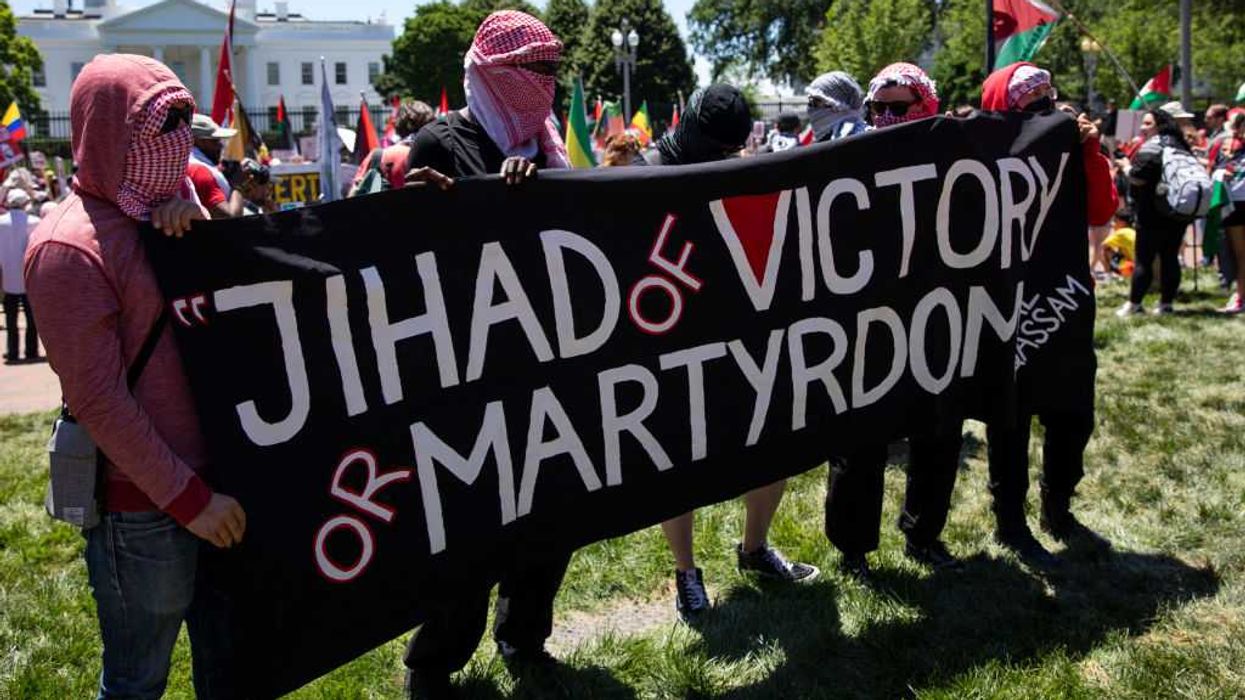
NOVA SAFO / Staff | Getty Images

Sharia-based projects like the Meadow in Texas show how political Islam grows quietly, counting on Americans to stay silent while an incompatible legal system takes root.

Apolitical system completely incompatible with the Constitution is gaining ground in the United States, and we are pretending it is not happening.

Sharia — the legal and political framework of Islam — is being woven into developments, institutions, and neighborhoods, including a massive project in Texas. And the consequences will be enormous if we continue to look the other way.

This is the contradiction at the heart of political Islam: It claims universal authority while insisting its harshest rules will never be enforced here. That promise does not stand up to scrutiny. It never has.

Before we can have an honest debate, we’d better understand what Sharia represents. Sharia is not simply a set of religious rules about prayer or diet. It is a comprehensive legal and political structure that governs marriage, finance, criminal penalties, and civic life. It is a parallel system that claims supremacy wherever it takes hold.

This is where the distinction matters. Many Muslims in America want nothing to do with Sharia governance. They came here precisely because they lived under it. But political Islam — the movement that seeks to implement Sharia as law — is not the same as personal religious belief.

It is a political ideology with global ambitions, much like communism. Secretary of State Marco Rubio recently warned that Islamist movements do not seek peaceful coexistence with the West. They seek dominance. History backs him up.

How Sharia arrives

Political Islam does not begin with dramatic declarations. It starts quietly, through enclaves that operate by their own rules. That is why the development once called EPIC City — now rebranded as the Meadow — is so concerning. Early plans framed it as a Muslim-only community built around a mega-mosque and governed by Sharia-compliant financing. After state investigations were conducted, the branding changed, but the underlying intent remained the same.

Developers have openly described practices designed to keep non-Muslims out, using fees and ownership structures to create de facto religious exclusivity. This is not assimilation. It is the construction of a parallel society within a constitutional republic.

The warning from those who have lived under it

Years ago, local imams in Texas told me, without hesitation, that certain Sharia punishments “just work.” They spoke about cutting off hands for theft, stoning adulterers, and maintaining separate standards of testimony for men and women. They insisted it was logical and effective while insisting they would never attempt to implement it in Texas.

But when pressed, they could not explain why a system they consider divinely mandated would suddenly stop applying once someone crossed a border.

This is the contradiction at the heart of political Islam: It claims universal authority while insisting its harshest rules will never be enforced here. That promise does not stand up to scrutiny. It never has.

AASHISH KIPHAYET / Contributor | Getty Images

America is vulnerable

Europe is already showing us where this road leads. No-go zones, parallel courts, political intimidation, and clerics preaching supremacy have taken root across major cities.

America’s strength has always come from its melting pot, but assimilation requires boundaries. It requires insisting that the Constitution, not religious law, is the supreme authority on this soil.

Yet we are becoming complacent, even fearful, about saying so. We mistake silence for tolerance. We mistake avoidance for fairness. Meanwhile, political Islam views this hesitation as weakness.

Religious freedom is one of America’s greatest gifts. Muslims may worship freely here, as they should. But political Islam must not be permitted to plant a flag on American soil. The Constitution cannot coexist with a system that denies equal rights, restricts speech, subordinates women, and places clerical authority above civil law.

Wake up before it is too late

Projects like the Meadow are not isolated. They are test runs, footholds, proofs of concept. Political Islam operates with patience. It advances through demographic growth, legal ambiguity, and cultural hesitation — and it counts on Americans being too polite, too distracted, or too afraid to confront it.

We cannot afford that luxury. If we fail to defend the principles that make this country free, we will one day find ourselves asking how a parallel system gained power right in front of us. The answer will be simple: We looked away.

The time to draw boundaries and to speak honestly is now. The time to defend the Constitution as the supreme law of the land is now. Act while there is still time.

This article originally appeared on TheBlaze.com.

Why do Americans feel so empty?

Mario Tama / Staff | Getty Images

Anxiety, anger, and chronic dissatisfaction signal a country searching for meaning. Without truth and purpose, politics becomes a dangerous substitute for identity.

We have built a world overflowing with noise, convenience, and endless choice, yet something essential has slipped out of reach. You can sense it in the restless mood of the country, the anxiety among young people who cannot explain why they feel empty, in the angry confusion that dominates our politics.

We have more wealth than any nation in history, but the heart of the culture feels strangely malnourished. Before we can debate debt or elections, we must confront the reality that we created a world of things, but not a world of purpose.

You cannot survive a crisis you refuse to name, and you cannot rebuild a world whose foundations you no longer understand.

What we are living through is not just economic or political dysfunction. It is the vacuum that appears when a civilization mistakes abundance for meaning.

Modern life is stuffed with everything except what the human soul actually needs. We built systems to make life faster, easier, and more efficient — and then wondered why those systems cannot teach our children who they are, why they matter, or what is worth living for.

We tell the next generation to chase success, influence, and wealth, turning childhood into branding. We ask kids what they want to do, not who they want to be. We build a world wired for dopamine rather than dignity, and then we wonder why so many people feel unmoored.

When everything is curated, optimized, and delivered at the push of a button, the question “what is my life for?” gets lost in the static.

The crisis beneath the headlines

It is not just the young who feel this crisis. Every part of our society is straining under the weight of meaninglessness.

Look at the debt cycle — the mathematical fate no civilization has ever escaped once it crosses a threshold that we seem to have already blown by. While ordinary families feel the pressure, our leaders respond with distraction, with denial, or by rewriting the very history that could have warned us.

You cannot survive a crisis you refuse to name, and you cannot rebuild a world whose foundations you no longer understand.

We have entered a cultural moment where the noise is so loud that it drowns out the simplest truths. We are living in a country that no longer knows how to hear itself think.

So people go searching. Some drift toward the false promise of socialism, some toward the empty thrill of rebellion. Some simply check out. When a culture forgets what gives life meaning, it becomes vulnerable to every ideology that offers a quick answer.

The quiet return of meaning

And yet, quietly, something else is happening. Beneath the frustration and cynicism, many Americans are recognizing that meaning does not come from what we own, but from what we honor. It does not rise from success, but from virtue. It does not emerge from noise, but from the small, sacred things that modern life has pushed to the margins — the home, the table, the duty you fulfill, the person you help when no one is watching.

The danger is assuming that this rediscovery happens on its own. It does not.

Reorientation requires intention. It requires rebuilding the habits and virtues that once held us together. It requires telling the truth about our history instead of rewriting it to fit today’s narratives. And it requires acknowledging what has been erased: that meaning is inseparable from God’s presence in a nation’s life.

Harold M. Lambert / Contributor | Getty Images
Where renewal begins

We have built a world without stillness, and then we wondered why no one can hear the questions that matter. Those questions remain, whether we acknowledge them or not. They do not disappear just because we drown them in entertainment or noise. They wait for us, and the longer we ignore them, the more disoriented we become.

Meaning is still available. It is found in rebuilding the smallest, most human spaces — the places that cannot be digitized, globalized, or automated. The home. The family. The community.

These are the daily virtues that do not trend on social media, but that hold a civilization upright. If we want to repair this country, we begin there, exactly where every durable civilization has always begun: one virtue at a time, one tradition at a time, one generation at a time.

This article originally appeared on TheBlaze.com.

A break in trust: A NEW Watergate is brewing in plain sight

Gary Hershorn / Contributor | Getty Images

When institutions betray the public’s trust, the country splits, and the spiral is hard to stop.

Something drastic is happening in American life. Headlines that should leave us stunned barely register anymore. Stories that once would have united the country instead dissolve into silence or shrugs.

It is not apathy exactly. It is something deeper — a growing belief that the people in charge either cannot or will not fix what is broken.

When people feel ignored or betrayed, they will align with anyone who appears willing to fight on their behalf.

I call this response the Bubba effect. It describes what happens when institutions lose so much public trust that “Bubba,” the average American minding his own business, finally throws his hands up and says, “Fine. I will handle it myself.” Not because he wants to, but because the system that was supposed to protect him now feels indifferent, corrupt, or openly hostile.

The Bubba effect is not a political movement. It is a survival instinct.

What triggers the Bubba effect

We are watching the triggers unfold in real time. When members of Congress publicly encourage active duty troops to disregard orders from the commander in chief, that is not a political squabble. When a federal judge quietly rewrites the rules so one branch of government can secretly surveil another, that is not normal. That is how republics fall. Yet these stories glided across the news cycle without urgency, without consequence, without explanation.

When the American people see the leadership class shrug, they conclude — correctly — that no one is steering the ship.

This is how the Bubba effect spreads. It is not just individuals resisting authority. It is sheriffs refusing to enforce new policies, school boards ignoring state mandates, entire communities saying, “We do not believe you anymore.” It becomes institutional, cultural, national.

A country cracking from the inside

This effect can be seen in Dearborn, Michigan. In the rise of fringe voices like Nick Fuentes. In the Epstein scandal, where powerful people could not seem to locate a single accountable adult. These stories are different in content but identical in message: The system protects itself, not you.

When people feel ignored or betrayed, they will align with anyone who appears willing to fight on their behalf. That does not mean they suddenly agree with everything that person says. It means they feel abandoned by the institutions that were supposed to be trustworthy.

The Bubba effect is what fills that vacuum.

The dangers of a faithless system

A republic cannot survive without credibility. Congress cannot oversee intelligence agencies if it refuses to discipline its own members. The military cannot remain apolitical if its chain of command becomes optional. The judiciary cannot defend the Constitution while inventing loopholes that erase the separation of powers.

History shows that once a nation militarizes politics, normalizes constitutional shortcuts, or allows government agencies to operate without scrutiny, it does not return to equilibrium peacefully. Something will give.

The question is what — and when.

The responsibility now belongs to us

In a healthy country, this is where the media steps in. This is where universities, pastors, journalists, and cultural leaders pause the outrage machine and explain what is at stake. But today, too many see themselves not as guardians of the republic, but of ideology. Their first loyalty is to narrative, not truth.

The founders never trusted the press more than the public. They trusted citizens who understood their rights, lived their responsibilities, and demanded accountability. That is the antidote to the Bubba effect — not rage, but citizenship.

How to respond without breaking ourselves

Do not riot. Do not withdraw. Do not cheer on destruction just because you dislike the target. That is how nations lose themselves. Instead, demand transparency. Call your representatives. Insist on consequences. Refuse to normalize constitutional violations simply because “everyone does it.” If you expect nothing, you will get nothing.

Do not hand your voice to the loudest warrior simply because he is swinging a bat at the establishment. You do not beat corruption by joining a different version of it. You beat it by modeling the country you want to preserve: principled, accountable, rooted in truth.

Adam Gray / Stringer | Getty Images

Every republic reaches a moment when historians will later say, “That was the warning.” We are living in ours. But warnings are gifts if they are recognized. Institutions bend. People fail. The Constitution can recover — if enough Americans still know and cherish it.

It does not take a majority. Twenty percent of the country — awake, educated, and courageous — can reset the system. It has happened before. It can happen again.

Wake up. Stand up. Demand integrity — from leaders, from institutions, and from yourself. Because the Bubba effect will not end until Americans reclaim the duty that has always belonged to them: preserving the republic for the next generation.

This article originally appeared on TheBlaze.com.

Warning: Stop letting TikTok activists think for you

Spencer Platt / Staff | Getty Images

Bad-faith attacks on Israel and AIPAC warp every debate. Real answers emerge only when people set aside scripts and ask what serves America’s long-term interests.

The search for truth has always required something very much in short supply these days: honesty. Not performative questions, not scripted outrage, not whatever happens to be trending on TikTok, but real curiosity.

Some issues, often focused on foreign aid, AIPAC, or Israel, have become hotbeds of debate and disagreement. Before we jump into those debates, however, we must return to a simpler, more important issue: honest questioning. Without it, nothing in these debates matters.

Ask questions because you want the truth, not because you want a target.

The phrase “just asking questions” has re-entered the zeitgeist, and that’s fine. We should always question power. But too many of those questions feel preloaded with someone else’s answer. If the goal is truth, then the questions should come from a sincere desire to understand, not from a hunt for a villain.

Honest desire for truth is the only foundation that can support a real conversation about these issues.

Truth-seeking is real work

Right now, plenty of people are not seeking the truth at all. They are repeating something they heard from a politician on cable news or from a stranger on TikTok who has never opened a history book. That is not a search for answers. That is simply outsourcing your own thought.

If you want the truth, you need to work for it. You cannot treat the world like a Marvel movie where the good guy appears in a cape and the villain hisses on command. Real life does not give you a neat script with the moral wrapped up in two hours.

But that is how people are approaching politics now. They want the oppressed and the oppressor, the heroic underdog and the cartoon villain. They embrace this fantastical framing because it is easier than wrestling with reality.

This framing took root in the 1960s when the left rebuilt its worldview around colonizers and the colonized. Overnight, Zionism was recast as imperialism. Suddenly, every conflict had to fit the same script. Today’s young activists are just recycling the same narrative with updated graphics. Everything becomes a morality play. No nuance, no context, just the comforting clarity of heroes and villains.

Bad-faith questions

This same mindset is fueling the sudden obsession with Israel, and the American Israel Public Affairs Committee in particular. You hear it from members of Congress and activists alike: AIPAC pulls the strings, AIPAC controls the government, AIPAC should register as a foreign agent under the Foreign Agents Registration Act. The questions are dramatic, but are they being asked in good faith?

FARA is clear. The standard is whether an individual or group acts under the direction or control of a foreign government. AIPAC simply does not qualify.

Here is a detail conveniently left out of these arguments: Dozens of domestic organizations — Armenian, Cuban, Irish, Turkish — lobby Congress on behalf of other countries. None of them registers under FARA because — like AIPAC — they are independent, domestic organizations.

If someone has a sincere problem with the structure of foreign lobbying, fair enough. Let us have that conversation. But singling out AIPAC alone is not a search for truth. It is bias dressed up as bravery.

Anadolu / Contributor | Getty Images

If someone wants to question foreign aid to Israel, fine. Let’s have that debate. But let’s ask the right questions. The issue is not the size of the package but whether the aid advances our interests. What does the United States gain? Does the investment strengthen our position in the region? How does it compare to what we give other nations? And do we examine those countries with the same intensity?

The real target

These questions reflect good-faith scrutiny. But narrowing the entire argument to one country or one dollar amount misses the larger problem. If someone objects to the way America handles foreign aid, the target is not Israel. The target is the system itself — an entrenched bureaucracy, poor transparency, and decades-old commitments that have never been re-examined. Those problems run through programs around the world.

If you want answers, you need to broaden the lens. You have to be willing to put aside the movie script and confront reality. You have to hold yourself to a simple rule: Ask questions because you want the truth, not because you want a target.

That is the only way this country ever gets clarity on foreign aid, influence, alliances, and our place in the world. Questioning is not just allowed. It is essential. But only if it is honest.

This article originally appeared on TheBlaze.com.