GLENN

Will the Real Pat Gray Please Step Forward? (The One Who DOESN'T Like Movie Musicals)

Hell hath done froze over. Pat Gray, beloved co-host of The Glenn Beck Program and hardened 70s and 80s music buff, has gone soft.

"I've known Pat since 1989. Never saw this coming," Glenn said Tuesday on radio.

What happened that shocked Glenn so much?

"I said I liked La La Land," Pat admitted.

Gulp. Glenn was right about everything. There will be a time when nothing makes sense, when up is down and left is right. God help us.

Enjoy the complimentary clip above or read the transcript below for details.

GLENN: I've known Pat since 1989. Never saw this coming. Right before we went on the air, he said...

Go ahead, Pat.

PAT: I forget what I said.

GLENN: Oh, no. No, no. No, it's seared in all of our memories.

PAT: I said I liked La La Land.

GLENN: What the hell has happened?

PAT: We went. It's going on two weeks ago because I got sick after. We haven't talked about it yet.

GLENN: Yeah.

JEFFY: "You know, we never talked about that musical we saw, Glenn."

GLENN: That's what he said. That's what he said beforehand. "You know, we haven't talked about that musical we went to see." And I'm like, musical that we went to see? What are you talking about?

PAT: Well, we didn't go alone. It wasn't like -- we weren't holding hands as dates. We actually had our wives with us.

But it -- I thought it was a really good movie. I thought that was a --

GLENN: What has happened?

PAT: I liked it.

GLENN: You leave for two days. You come back. Is this the same Pat?

STU: I'm in another dimension. I've entered another world. Because my wife saw it, and she did not really like it.

PAT: Really? Why?

STU: I don't know. I mean -- honestly, once I heard the word "musical," I stopped listening to conversations about it. But I am shocked -- because I'm not surprised to hear Glenn likes it.

JEFFY: Right, of course.

STU: Obviously, right up his alley. Makes perfect sense.

JEFFY: Yes, it sure does.

STU: But Pat Gray, what has occurred?

PAT: I'm a well-rounded individual.

GLENN: No, you're not.

PAT: I have very good tastes.

GLENN: No. No, you do not. No, you do not.

He was in here yesterday while you were gone, Stu, and he was ranting off the air, something about Boston and how they went wrong in like the 1970s.

STU: Every time -- because we'll go out to lunch sometimes after the show, and every single time I get into his car, the first thing that happens is Boston blaring through the speakers, until he awkwardly like reaches over and turns it down really fast because he turns the car off with Boston at full --

PAT: It may not be Boston. It could be Foreigner. Or Styx.

STU: It could be Foreigner.

PAT: You know.

GLENN: Right. Or strangely now, La La Land.

PAT: The soundtrack, yes. The soundtrack of La La Land.

I thought it was enjoyable. It wasn't -- you know, it wasn't so musical, it was an opera.

GLENN: Well, those are different. But I'm going to give that to you. I know what you mean.

PAT: Because like, what was it? Was it Les Mis, the movie that was just non-stop singing? It was like, okay. I've had enough. I've had enough.

GLENN: Yes. That's what Les Mis is.

PAT: I know, right. And I've had enough, by about five minutes in it.

But this was enjoyable, except they didn't want -- well, actually I don't want to spoil it for anybody, but the ending is sad.

GLENN: I think the ending is beautiful. I think the ending is great. I think it's perfect.

JEFFY: Yeah, Glenn has already blown that I think on the show.

GLENN: No, I don't think I have.

PAT: I don't remember him blowing that.

GLENN: What, that she gets can- -- oh, no. Now I've said it. She gets canned goods.

So my daughter went to see Manchester By The Sea.

STU: That's really sad too.

PAT: What is that anyway?

GLENN: I don't know.

And she said, "Dad, have you seen Manchester -- I said, "No." And she said, "Oh, my gosh." And she tears up, "You have to see it." And I said, "You just gave it the kiss of death. I am not going to see it." And she's like, "No, Dad, you have to. It's so beautiful. It's so beautiful. You will just love it." And I said, "It's sad, isn't it?"

And she said, tears welling up, "Yes. It's really sad. I cry every time I think about it. I stood outside of the theater, and I cried for ten minutes."

PAT: Ringing endorsement for a movie.

GLENN: And I'm like, "Why would I go? Why would I go?"

STU: Yeah. I don't want that anymore in my life anymore than it is.

GLENN: I know. Everything in my life is like that. I want to go and escape.

STU: Right.

What was that movie a few years ago? Marley & Me? Do you remember that stupid movie?

JEFFY: Yes. Oh, my gosh.

PAT: With the dog?

STU: And I remember walking out of the theater, like why did I do that to myself? It was like the saddest --

GLENN: Especially for like a dog movie.

PAT: I know.

STU: Exactly.

GLENN: That is just saying to you: Look, guys, we got around the table. We said, how can we play on people's emotions? Somebody said, let's do a cat movie. Somebody said, no. Let's kill a dog.

STU: What about a hamster? The dog won.

GLENN: The dog won. And all we've done is just built a script around playing on your emotions.

STU: Right. I mean, you know, if you're going to go see Schindler's List. Okay. You know it's going to be sad, but there's a real reason to see it. You want to see the history and all that other stuff.

JEFFY: There's some uplifting moments.

GLENN: In Schindler's List? I don't recall those.

STU: Yeah, no.

JEFFY: Really?

GLENN: Yeah. Even when he's on the railroad tracks, he's bummed. He's like, "I could have done more." I mean, it's still bad.

STU: No, it's not -- not a lot. Maybe in the previews, you're remembering. I don't know.

GLENN: Right. I think you might be thinking Life Is Beautiful, where you realize, "No, not so much."

STU: We've lied to you in the title of this movie.

GLENN: Life is not beautiful. It's a concentration camp.

STU: Right.

PAT: Has anybody seen legacy -- or 24 Legacy yet?

STU: I have DVRed it. I haven't seen it yet.

GLENN: I have not. Is it good?

PAT: It's pretty compelling just like --

STU: Well, we watched -- we were kind of thinking like, "Oh, they're making another one without Kiefer Sutherland. It sounds stupid."

PAT: Yeah, it did.

STU: And then one day on Pat & Stu, we played the trailer for it.

PAT: It looked awesome.

STU: And in a minute and a half, we were back into it.

PAT: Yeah. Definitely. I will tell you this, there might be a problem at CTU. There might be a problem in the government.

STU: It looks pretty good.

No.

GLENN: No! No!

PAT: Yeah. And there might be a problem with some American traitors.

GLENN: Oh, gee, I wonder if they're big oil companies. They're definitely not Islamic. That was the problem -- you just turned me off, I'm not interested.

PAT: Well, after eight seasons of that, with the original, I was pretty done with that. But, hey, I must be ready for it again.

GLENN: That went eight seasons?

PAT: I think more than that, didn't it?

STU: Seven or eight.

GLENN: No. Really? Wow.

PAT: Yeah. Yeah. I think the --

GLENN: We made it all the way through.

PAT: I didn't, but many did. I made it to season six.

GLENN: Have you guys -- has anybody seen the new pope -- or, The Young Pope?

PAT: No, is that the --

JEFFY: The Young Pope.

PAT: I have not.

GLENN: It's on HBO. I started watching it the other day. And I'm like, oh, I don't like this at all. Because it seems like this young pope is -- you immediately think he's really a bad guy, like really, really a bad guy. And the more you watch it, the more you think, "Now, wait a minute, maybe he's the really, really good guy, who is taking down all of the trappings and the -- you know -- it's really weird."

PAT: Is it a modern day setting?

GLENN: Yeah, yeah, modern day setting. Jude Law. And if you're a Catholic, you can't watch it because it will just set your hair on fire. It's the typical --

STU: It's not friendly to Catholicism?

GLENN: No. It's the typical not friendly to Catholicism thing. But if you're not Catholic, you don't have that automatic barrier against -- but you're still like, "I'm not sure exactly what's happening."

So it's one of those things -- I'm like three episodes into it, and I'm like -- I'm starting to get invested in this. And if it turns out that he's really -- all this is, is a Catholic bash, I'm really going to be more pissed than even the Catholics.

(chuckling)

JEFFY: It might be.

GLENN: And it might be.

PAT: Yeah. That's what it usually is.

GLENN: I know. This is just so bizarre. It's just so strange that I'm not sure how I feel about it yet.

PAT: And you said it's HBO?

GLENN: HBO. And so, I mean, it's got all the earmarks of let's just bash the church or bash religious people.

PAT: It sure does. Does it center around the priest scandal?

GLENN: No, it's got part of it in there. But he keeps pushing it off. And that's why you're like, "Wait a minute. Why does he keep pushing the priest scandal off?" And I kind of get the feeling that he's hunting for bigger fish.

He'll say things that are crazy. Remember the Last Temptation of Christ?

STU: Yeah.

GLENN: And it set everybody's hair on fire because the last temptation happened on the cross. This was the idea that the last temptation happened on the cross. And, you know, Jesus had children and a normal life. But that was just what Satan was showing him.

Satan was showing him, "Hey, you could have all this." And in the end, all that happened -- you know, the whole movie happened in just a fraction of a second on the cross. And that was what Satan was showing him. Hey, right now, you can -- you can end this, and you can have all of that. And his last temptation, Jesus said no.

STU: That was really controversial at the time, yeah?

GLENN: Yeah, and it shouldn't have been. Because the point is, that's what Satan showed him, and Jesus said no.

And I think it might be going in that direction, that this guy is saying things and doing things that look really bad on the outset, but it's only because he's rooting out real bad stuff.

PAT: HBO. Jude Law.

GLENN: Yeah, I know. I know. I know. I know.

STU: Oh, it will come around.

PAT: I'm sure it's going to be fine. It's going to be good for the Catholic church.

GLENN: No. Or faith in general. Faith in general.

PAT: Yes.

GLENN: So I've been having -- I've been having a problem I want to talk to you about.

I'm losing touch with people more and more every day.

STU: We started a segment with La La Land. Of course, you're losing touch with people.

GLENN: I know. I know. And that was only -- that was only deflection. I was only trying to deflect some of the stuff I wanted to talk about.

I'm not understanding the self-imposed ignorance of people right now.

For instance, so somebody -- I tweeted -- somebody said, "Oh, Glenn Beck, grow a spine. You know, we have to defeat evil." And I said, "My spine is getting stronger and stronger every day. You don't defeat evil with evil or hate with hate. Only light and love defeat hatred, evil, and error."

Now, what does that mean to you, Stu? Do we ever pick up a gun against Hitler?

STU: I'm going to say yes. It's funny, I -- you know, what? ISIS. You're going to talk about the worst groups on earth -- is love the key? Obviously, there is an element of that long-term, which is really more on their side in that they need to find it. But, I mean, you wrote a book called It Is About Islam. This is not -- this is not something that you've taken lightly over the years.

GLENN: So listen to some of the comments: Okay, chubby.

STU: Well, that's true.

(laughter)

GLENN: And I wrote back, I said, "Hey, that's easy. I get it. I get it. My weight."

Listen to this one: Try waving that Christmas Sweater at the Berkeley mob and tell us how it goes for you.

STU: Oh, so they remember The Christmas Sweater book, but not the much more recent It Is About Islam book or Liars?

GLENN: But not even that. They know The Christmas Sweater, so they know that's about redemption. They know that's the Christmas Story. That's obviously a listener. That you know the Christmas Sweater, and you don't understand or you're mocking the meaning of the Christmas sweater behind that. I mean, it was stunning to me.

Glenn, you've officially lost your F-ing mind.

That's from a guy who has the blue line police shield as his avatar.

Then some stuff I can't really repeat. Start a search to find Glenn Beck sometimes. It seems he's written to a sandal robe-wearing door-to-door dribble salesman.

Read up. God destroyed evil many, many times.

Okay. Got that one.

I would suggest reading up on yourself and getting the log from your own eye. I'm trying to do that.

STU: I think he has better information than he needs to read articles about himself to know about himself. He was there for all the things.

GLENN: Right. Thank you. Thank you.

Your spine is strong only because men stronger and braver than you are willing to defend the principles that you only pay lip service to.

Bonhoeffer was killed by the Nazis. Men with guns defeated them. The left aren't the English, and Gandhi or US, and MLK, and you know it.

I think that one is actually advocating guns against the left.

PAT: It sounds like it.

GLENN: There are so many people -- I tweeted on -- this is a continuation from Sunday. Because I tweeted, "We have to take the hate out of our own hearts."

Now, that's not saying that about you. That's saying that about me. I got to take the hate out of my own heart. I have to find a way to love the people who absolutely hate me. And that is really hard.

And I'm really -- I'm struggling with these things because I think it's self-imposed ignorance. I think these people, many of them, they know better. They know better. They know that we're not talking about defeating the Nazis or ISIS.

We're not talking about that. I am talking about, "How are you going to -- let me ask you this: For those on the right and the left -- I heard Maxine Waters. And we want to play this in a second. She's now mentioning impeachment. What is that going to do? That's going to inoculate Donald Trump for all time on impeachment. That's all that's going to do. And it's going to drive the wedge between the left and the again. Now, it's Maxine Waters, so I get it.

Let me ask the protesters. You're going out and protesting, what, exactly? You're protesting the week he was elected. What do you think that's going to do? Does that make you look like you're a reasonable person, at least to half the country? You don't even have anything to protest at least that time? You didn't have anything to protest. You were just out protesting.

You're setting Starbucks on fire. Do you think that's going to win anybody over?

More importantly, what have we learned about Donald Trump?

Donald Trump punches back. It's why a lot of people like him. He punches back. And what does he say, "If you punch me, I punch back twice as hard."

STU: Twice as hard.

GLENN: So we know every time you punch him, he will escalate. He will punch you back twice as hard.

So you're going to riot. You're going to do these things. You're going to threaten impeachment. And what do you think he's going to do? Roll over?

He's going to punch you back twice as hard. And then for you to survive, you have to punch him back. And then what is he going to do? He's going to punch back twice as hard again? I mean, where does this end?

I don't think people are realizing -- you know, it's like the woman told me in Poland. The righteous didn't suddenly become righteous, they just refused to go over the cliff with everyone else. Look at the cliff you're headed towards. Where does it end?

If you're punching on both sides and you're claiming that we have to hate the other side and the other side is an enemy that must be destroyed, there's no place, except civil war. There's no place to go.

And I don't think the vast majority of people who are listening, the people who are not listening, the people who are for Trump, and the people who are against Trump, are really seriously wanting a civil war.

I think most people want this to end. Stop it.

RADIO

Why Biden's Corrupt Pardons CANNOT Stand... And Why it STILL Matters!

A new wave of sweeping “pardons” has triggered one of the most urgent constitutional alarms Glenn Beck has ever raised — not because the individuals involved are controversial, but because the actions themselves may not even qualify as pardons at all. Glenn Beck breaks down how these broad, immunity-style declarations can bypass investigations, rewrite laws by fiat, and push executive power into territory the Founders explicitly warned against. With mass clemency increasingly used as a political shield and executive actions replacing the legislative process, America is drifting toward a model of governance that no longer resembles a constitutional republic. This episode exposes how the pardon power is being stretched beyond recognition, why Congress has surrendered its role as a check, and what must happen before the nation crosses a point of no return. The question now is unavoidable: Who will stop this before the Constitution becomes optional?

Transcript

Below is a rush transcript that may contain errors

CALLER: I wanted to talk about the pardons. Hunter's pardon was legitimate. He was actually accused of a crime. I know you're plugged in with the president. I haven't heard anybody say this anywhere. I have been watching everything.

These pardons. Forget the auto-pen. The auto-pen doesn't even matter. Because these were immunity deals. These were not pardons. None of these people were under investigation. None of these people had any crimes they were accused of.

So you can't pardon somebody for something they may have or may not have done. That's an immunity deal.

Again, I've watched everything. I don't hear anybody bring that stuff -- I don't think the auto-pen matters. I just think those things are null and void from the jump.

GLENN: Who --

CALLER: Like I said.

GLENN: Who do we have besides Mike Lee? Because Mike is always hard to get a hold of at this time. He's like, I'm working on Senate stuff, Glenn.

Who do we have that is a Constitutional scholar that we can call real quick, and see if we can get an answer on that before the end of the show? At least put a call out to Mike Lee, will you?

But I would like to know that happen at that. Because the president has. And Stu and I have talked about this for a while. This has gotten out of control. These pardons are out of control. Out of control.

It's something Constitutional. It's been there since George Washington. The President has always had this right, and it's a privilege of his. But you're right.

These things where, wait. I can't investigate this? What that does is if you're as a president doing something that you shouldn't be doing, all you have to do then is say, I pardon everyone in my administration for anything that they might have done wrong.

That can't stand. You're absolutely right on that.

STU: Yeah. You have the immunity deal. Which again, I think is -- I don't see -- I don't see how a pre-pardon is even possibly covered.
Like, it's just such an insane concept.

The way that Biden. He's right that Hunter Biden actually committed a crime and pardoning him from that in theory, obviously, outside the family interest was the way that that was supposed to work.

But they also pardoned him for multiple years of question marks, whether he committed crimes or not. Right? That was all included on that.

To go a step farther on this, I am on a bit of a personal jihad against the pardon. I'm done with it. I'm done with it personally. There's reasons the Founders were very, very smart. But the Founders were smart enough to also have a process for Constitutional amendments. And I would support one, getting rid of the part in power completely. I'm done with it.

GLENN: Wait, may I just interrupt for a second. I just want to point out. We now have verification, not only is Stu a Canadian spy, but he's also a hidden Nazi. Noticed the word he used, jihad, which translates to my struggle. Hitler's book, My Struggle, Mein Kampf. I just want to point it out.

JASON: Exposed.

STU: Just to be clear, I'm not planning a genocide on the power of pardons.

But I'm against it, strongly. But the other part I would say that I think is every worse and is never discussed, are these types of pardons where they say, you know, all marijuana crimes. They're -- everyone -- there are 17,000 people.

That is just you legislating. If I wanted to New Jersey and say, hey.

I think marijuana should be legal. I could theoretically be president.

Saying, everyone convicted of a marijuana-related crime is now pardoned.

And that's just you making laws. It's you going completely around Congress. And the entire process we have there.

At the very least. It should be massively restricted from the way it's being utilized. Not only -- several presidents in a row, I would argue.

But it's -- it should just -- I think it should just go away completely. It's the most king-like power the president has. And it doesn't make any sense to me.

GLENN: Yes. Yes.

So I'm looking this up here.

Barack Obama did this.

He gave clemency for anybody who was convicted of a non-violent federal drug crime.

With no significant criminal history, while serving extraordinarily long sentences. And anybody who was a violent offender was not eligible.

And it was -- it wasn't a -- a true mass pardon. But it was pretty close to it. You know, it was -- it was mass in scale, but not blanketed.

STU: Right.

GLENN: And I think there were like 2,000 people that he parted on that.

STU: It was a law. Creating a new law.

GLENN: Yeah. You're saying, oh, by the way. That law that I personally disagree with.

We're not going to -- it's gone.

STU: The whole law doesn't count at him. We have a whole process to make laws. When someone -- when they pass a law, you can't say, eh. And shrug your shoulders. And say, I don't particularly like it.

And for some reason, that's the way the pardon power has been translated.

GLENN: The problem is the President can. The President has just always had the restraint not to do that.

STU: Right.

GLENN: Because it was bad for the country. And bad for laws.

You know, you don't just -- you don't do this. We're becoming more and more of a king. In our administration.

And it's not Donald Trump.

This has been about to go for a long time.

Barack Obama I think got really, really bad.

But this was going on before him. Obviously.

But Barack Obama kind of set something off.

And then because we couldn't get any legislation passed. We had Donald Trump try to do executive orders, to combat Barack Obama's executive orders.

Then Biden did it. And Trump. It's got to stop.

Because here's the problem. One of the things I said in our special on Wednesday.

Which was, biggest stories of the year.

And predictions for next year. I said, you will start to see rolling brownouts in places like Texas in 2026. Texans, wake up. Wake up.

But you're going to start to see rolling brownouts. But I also made another prediction. And I've just lost what I was going to say was the prediction.

Oh!

This massive swing. We're getting whiplash.

You can't -- you can't run a country like this.

You can't run a country where it's all being done by executive order.

Because look, we were all the way over to one side. When Trump was here. Then we swung way farther than that. With Biden.

Now Trump is bringing us back this way. If you don't pass laws, it's just going to swing.

And you can't -- you can't run a country like that.

This has got to stop!

We have to pass laws. Congress must do its job.

RADIO

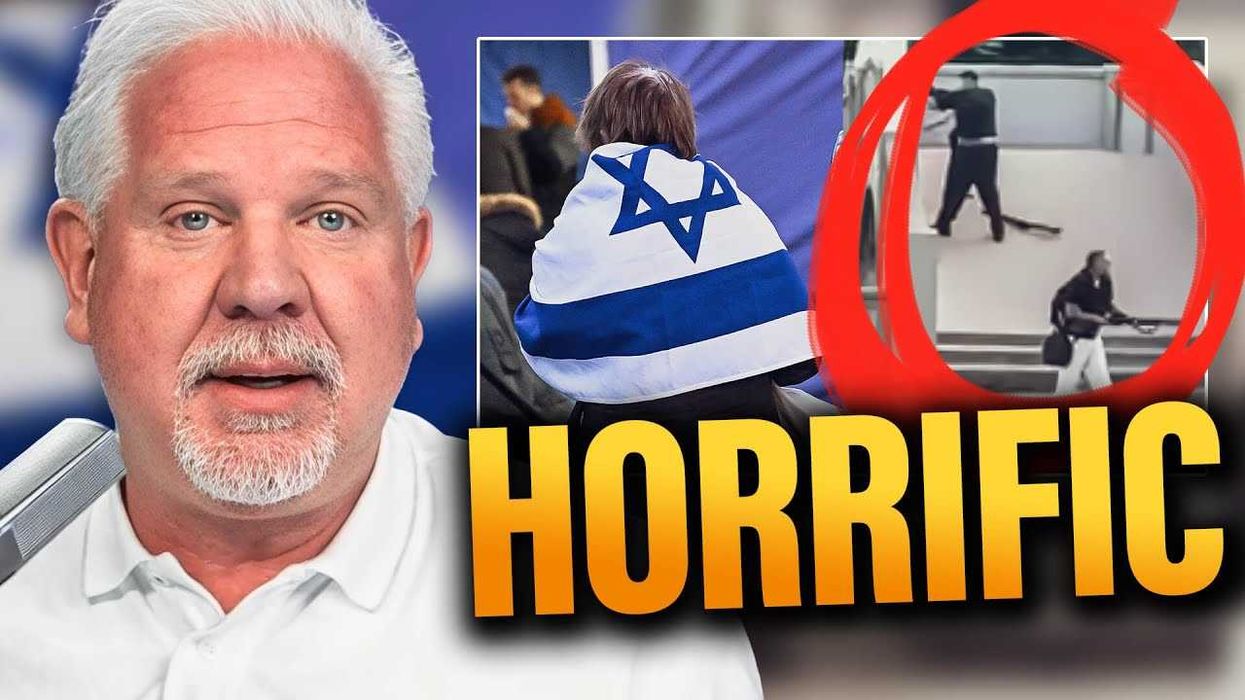
Why the Australia beach shooting should terrify EVERYONE

Two shooters opened fire on Bondi beach at a Jewish Hanukkah celebration. Glenn Beck reacts to this horiffic act of evil and also to the heroic act of a man who tackled one of the shooters.

Transcript

Below is a rush transcript that may contain errors

GLENN: So let me just cover the headlines really quickly: Brown University, yesterday, there was a shooter. Two are dead. The only one that has been named so far is the Republican Club Vice President Alec Cook. There have been nine that have been injured. They thought they had the shooter. But turns out, it's not him. He has been released. And there's just some questions on this one that are weird.

Also, al-Qaeda struck and killed US soldiers over the weekend in Syria. There will be a military response to that, I am sure. And yesterday -- yesterday, on the beach, Sydney's eastern suburbs. Sydney, Australia, it's summer there. There's locals. There are people that are coming from all over the country, all over the world, for the warmth of summer and the community celebration of the first night of Hanukkah. The rest of the world is the darkest days of winter. On the other side of the globe, it is still sunlight because it is in the middle of sunlight. But it was a dark, dark day yesterday despite the sun being up.

There were families with children. They were chasing the waves. The smell of grilled food that was drifting across the sand. Music, conversation, laughter in the air. And then around 7 o'clock, laughter was replaced with screams of terror. Two men dressed in black and armed with high-powered firearms positioned themselves atop a small concrete pedestrian bridge. It arched over the Campbell parade near the Bondi pavilion. They stood on top in the center of this bridge and rained bullets as they fired into the crowd. Shots rang out. Astonished the crowd.

VOICE: Get down. Get down. Boys, get down. Oh, my God.

GLENN: It just went on and on and on. Thousands had been gathered for Hanukkah by the Sea. They're now ducking for cover. Some trying to push children to safety, others frozen in disbelief as friends and strangers alike fell all around them.

The carnage was unbelievable. For ten minutes, these guys fired off this bridge. The beach, usually alive with surfers and sun seekers, just transformed instantly. Bodies were trampled. Frantic dash for some sort of shelter and protection, as the waves just continued to lap innocently at the shore while people were screaming for help.

Now, in the chaos, there were acts of individual courage. A fruit vendor, later named by the media as Ahmed al-Ahmed. He saw one of the gunmen firing his weapon. And in a moment of pure resolve, he vaulted from behind a nearby car, tackled the shooter from behind, and wrestled the rifle away. It was an unbelievable scene. Witnesses say -- and it was all captured on tape. There he is. Witnesses say, his bravery likely saved countless lives.

Police arrived, they started shooting at him. They shot at the two that were up on the bridge. They wounded both of them.

15 people had been killed by the time it was over. Dozens wounded. Young children to the elderly. Cherished members of the Jewish community, including Rabbi Eli Schlanger, a British-born assistant rabbi. He helped organize Hanukkah by the Sea.

The beach won't be looked at the same ever again. As the suspects went down, people from Australia just ran up on to the bridge.

And what I thought was an amazing, amazing moment that spoke volumes of our culture! The police were on top of these men, trying to administer care to keep them alive. While citizens, understandably, came up on the bridge and just started kicking them.
Police jumped on those people and pushed them away. And said, stop, stop, stop. And they did.

Because we're not a culture of death. First suspect, 50 year old, Sajid Akram, 50 years old. He's a dad. The second suspect is his 24-year-old son. Both in critical condition. Now in the hospital under police guard.

Let me ask you to imagine just for a minute, what it must feel like to be Jewish today. Not in theory. Because we -- we had an incident stopped in Amsterdam over the weekend, in Germany over the weekend, in LA, somebody, a drive-by just shot at a Jewish home with the Hanukkah candles in the window, screaming, "F the Jews." You want to know what -- you want to chant, "Bring the Intifada here," this is what it looks like.

It is here now. So what does it feel like to be Jewish today?

I don't know. I can't relate. But I want you to imagine, not as a talking point. But in quiet moments, when the phone would light up with another alert, another headline, another synagogue guarded by concrete barriers, armed police.

There's a particular fear that comes with memory. Jewish people carry history. Not as abstraction, but as inheritance. And it lives in names that are whispered at dinner tables, and photographs rescued from ash. And stories that begin with, "And we thought it would never happen here."

Europe told itself, that very thing once. So did Germany. So did France. So did polite society, everywhere, right before it happened.

And the world has been saying that for decades now. It would never happen here. And here we are again. And here we are, the worst we've seen in America.

Shadows that all of us hoped were buried forever. Hatred with organization, ideology. Hatred with teeth. Violence. Justification.

They're no longer whispers. They're shouting it now in our streets. They're shouting it in the streets of Australia. They're shouting it in the streets of Germany. And England and France. And Norway. They're burning flags. They're firing guns. They're chanting not only death to the Jew, but death to the West, death to Canada, death to the US. Death to Europe. This is no longer confined to the margins anymore. And the West is tolerating it. The west has explained it away. We have minimalized it. We have said it was a lone wolf. Sometimes we even excuse it.

Just for the day, let's just stop and look at Australia for a minute. For years, Jewish communities are warned the officials.

Anti-Semitism isn't theoretical. It's here. We're living it. We're seeing it. It's not just graffiti or angry words.

It's metastasizing into something ideological and organized and deadly. And in Australia, the officials told them, calm down.
Trust the institutions. We've got it.

Somehow or another, multi-cultural harmony would manage itself, but it didn't. Because it doesn't.

Ideology doesn't dissolve when it's ignored. It consolidates. It grows he has and it has across the Western world entirely. Europe, Britain, Australia. Canada. The United States. It's the same pattern!

Violent anti-Semitism rising Jewish schools like fortresses. Your families wondering whether visibility itself is now a liability.

And yet, all across the West, officials hesitate, to name the problem. Clearly!

So let me do it. Precisely. Precisely.

Truthfully.

Islamism.

Islamists. Not Islam. Not Muslim. If you're a Muslim, you want to live peacefully, worship freely. Raise children. Continue to, you know, live and contribute to a society. You know, and you're not an enemy of the West. I'm totally good with that. Look at the fruit cart guy. He apparently didn't hate Jews. He wasn't part of the culture of death.

He stopped it.

And millions do that every single day. But Islamism, Islamists, that's something entirely different.

Islamism is a political ideology.

It's not about faith. It is about power.

It's the belief that society has to be governed by religious law. Sharia law.

That freedom of conscience is illegitimate. That women are subordinate, that dissent is heresy, and that the world and everything in it has to submit. And it's very clear about all of this. It writes it down. It teaches it. It shouts it from the public square. For the love of Pete, it's everywhere. It chants it. It doesn't hide its ambitions. It doesn't hide behind anything. But here's what it doesn't do: It doesn't co-exist with open societies.

It replaces them and has been replacing open societies for centuries.

Any culture built on individual liberty, freedom of speech, equality before the law, it can't survive alongside an ideology that views all of those principles as sins or as an affront to Allah! In that scenario, one side must yield, or one side will be destroyed!

And history is very clear on which one does. You know, we're very different people. Even the difference between us and Canada. And us and Europe.

It might be seemingly starved. It might be we're very different. But when you look at us as a civilization, we're very different. Together, we're very different from the rest of the world.

We don't understand these things. Because we project our values, on everybody else.

We assume that everybody ultimately wants to live. And to compromise. Live side by side. We assume violence is accidental. We assume that it's a lone wolf. We assume that words like to do and dialogue mean the same thing to everybody.

But they don't! And so we tolerate politicians and newscasters and everything else that explain things away. They explain the stabbings and the truck attacks and the shootings and the riots. It's isolated incidents. They're not! We talk about finding the root cause. But we won't -- we won't name the root itself!

We call it extremism, as though it sprang out of nowhere, as though it was a weather event, instead of a worldview that's been around for centuries! I ask you to think about what it feels like to be Jewish today because of the Jewish people.
But also because, you're next. Jewish communities always pay the price first.

They always do. And believe me, you're on the list. You!

Your freedom. Your children are on the list!

And history shows this, with brutal consistency.

When a society begins to rot, from ideological cowardice.

The Jews are always the early-warning system.

They're the canary in the coal mine.

When they're targeted openly. And the state responds with hesitation.

That society is already sick and in the hospital.

It's already in trouble.

And make in mistakes.

The science is not far away.

It is already here.

Synagogues attached. Jewish students harassed on campus. Jewish neighborhoods guarded like war zones. Public celebrations requiring armed protection now. This is not normal, and it's not sustainable. And the West likes to believe and understands freedom.

But freedom is not a five! It's not a comfort. It's not the absence of conflict. Freedom is costly! And it requires moral clarity, and it requires the courage to draw a line and say, this doesn't belong here! And if we refuse to do that work now, our children will have to do it later under far worse conditions! They will have to fight, not to preserve freedom, but to recover it. And history always shows, that's much more costly. America, you're closer than you think to losing not only our country, but countries that took centuries to build!

Not through invasion. But through erosion. Through silence. Through the polite refusal to speak uncomfortable truths.

If not you, who?

If not now, when?

You're running out of time.

RADIO

"You're being PLAYED": Glenn Beck exposes the TRUTH about Illinois' new MAiD program

Illinois Governor JB Pritzker has signed a bill legalizing "medical assistance in dying" (MAiD) for certain terminally ill patients. Glenn Beck rages against this "culture of death" that is sweeping America, even after it ravaged Canada.

Transcript

Below is a rush transcript that may contain errors

GLENN: So JB Pritzker in Illinois signed into law a bill on Friday, that will allow doctors in Illinois to prescribe the deaths of their own patients. First, do no harm. I'm having a hard time with that, doctors. Maybe you can tell us how you're getting around this. First, do no harm.

That is a very important concept, that our doctors are to buy into. And that we all believe.

First, do no harm. If you don't have that, all kinds of things can follow. Especially when they're couched with compassion.

And that is exactly what this is always couched in. Compassion.

Okay. So this new law goes into effect in September of next year. Terminally ill patients over the age of 18 are going to be able to get a suicide drug from their doctor. This is the 12th state in the country, that is allowing assisted suicide. And there are about 25 others that are standing in line for it. What a surprise.

Illinois is the -- is the one -- the first of this -- this batch of them coming in to say, I want to kill people!

It is a culture of death. And we are -- that's what we are battling. No matter what anybody tells you, we're not battling the Republicans or the Democrats.

It's not politics.

It's not Marxism.

It is a culture of death, that we're battling. It is evil. It is evil. A culture of death.

When you look at -- when you look at what people are saying about global warming, what is the solution?

Fewer people. How do you do that? Well, culture of death takes care of that. Right?

When you look at -- when you look at, you know, just about anything now, health care, abortion, culture of death.

Islam, culture of death. Marxism, honestly, it is a culture of death. Why would I say that know.

Well, because it eliminates people who disagree with it. And first, it just pushes them off the sidelines.

But eventually it ends in camps. But also, look what's being taught to our kids. They are killing themselves, because they're so depressed. Because it has no meaning. It completely rejects the you human aspect of humanity.

Culture of death. That's really what we're fighting. Make no mistake.

Now, Illinois and Pritzker, they're saying, well, no. No, no, no. This is going to be -- we're going to be very, very careful. You have to have two doctors. Okay. That's good. That's good.

Germany had three doctors, to give you permission. You're not even up the line of Nazi Germany, but congratulations on that. And they have to be diagnosed with having six months or less to live.

Okay. Okay.

I want you to know, Illinois, America, Western world, you're being played. This is not compassion.

I'm going to be real clear with you.

This is preparation for when the system can no longer afford to fulfill its promises, that's what this is.

They are preparing the system to be able to have the way out. And they're preparing you, so you look at this as compassion and so when it gets worse and worse, up until the very end, you don't recognize it. I mean, they're beginning to a little bit in Canada, to see what's coming their way. And why is it happening? Because they can no longer afford socialized medicine. They can't afford to fulfill the promises.

Let me just say, can America afford to fulfill its promise, that it's made for generations on all of this socialized everything?

No. In fact, there are people now, trying to double down. We can't afford anything. They're trying to double down and expand those programs, which will only collapse us faster.

When they collapse, you know, nobody likes. Well, rich people can get surgery. And as I've said to you before, I don't like that either. I really don't like that. But how else do you do it? How else do you do it? Well, we have a committee. And we -- we ration things. Okay. Okay. Okay. Okay. Here's where you're not going to like that. You're not going to like that, because that's not the way humans work. When they ration things, either people with money or the people with power, always find a way to short-circuit so they can get to the top.

So the one that you're saying now is the poor, helpless waif that's not getting anything because of the rich people, when the system changes, that poor lonely waif is still not going to get any help because the powerful, the ones that are connected, they'll get the medical care, and the waif won't get medical care. People will find a way to short-circuit the system because people generally suck.

And when you give all the power to people, it's not good. It's usually not good. So you may not like the, you know, pay for it kind of system, but it is the best one out there. And you really don't want to give a bureaucracy the -- the ability to kill you if you become expensive or inconvenient.

Now, I know that's not what they're saying. That's not what we're doing. We're giving people out of compassion, help them end their lives. Uh-huh. Uh-huh. Uh-huh. That's exactly what happened in Canada. Let me just tell you. It was called C14. Let me just look up the facts here. C14 in Canada. It happened in 2016.

And it -- what it -- what it meant was, you could get compassionate care, if you had doctors. Three doctors approved.

You had a terminal, I don't remember what they called it.

But basically, you could see the end in sight. Okay?

There was -- there was no way for us to repair your body and heal you.

So we could see that.

Basically, you know, you were terminal.

We could see that.

In the future. Near future.

And three doctors agreed.

And then you had a waiting period after you requested it, the doctors would approve.

And then there were ten days, before you would administer. Ten days before you would back out.

That's what it started as, okay?

That's not what it's become. 2016, that's what it was. And you had to be 18 years or older.

And you had to have full capacity. So you couldn't listen to, you know, friends or family.

You had to make the decision. And you needed full capacity.

Okay.
Then things started to fall apart.

Then we had COVID. Then we had all these expenses. Then we had people move into the country.

This is Canada. Same thing happened here. COVID. Hospitals are overwhelmed.

Medical care goes to hell.

And then you start bringing in people from all over the world.

And now you don't have hospital care. Everybody is crowded. The doctors are overwhelmed.
And so in 2021, they decided the Quebec court decided, well, you know, death in the foreseeable future. Is that really necessary?

Excuse me?

I mean -- I mean, the reasonable foreseeable natural death requirement. Do we really need that?

The court said, no, we really don't.

There are two tracks! Those who have natural death in the foreseeable future. We're going to make it a little easier for them. So beyond the request, the three doctors and the ten-day waiting period. We're going to get rid of some of that because it's not necessary.

I mean, if you're in the reasonably foreseeable future, you don't need all those safeguards. And then people whose natural death is not reasonably foreseeable. Well, we're going to make them do all of those things. Oh, okay.

And, by the way, we're removing the ten-day waiting period too. Once the doctor says, you're good, you're good.

Okay. All right.

That wasn't far enough. Now, they have a new bill, C7.

Canada bill seven.

When they -- when that removed the foreseeable requirement, they added a temporary exclusion for people whose sole medical condition was a mental disorder.

Oh, wow. So now we're into mental illness.

So your death isn't in the foreseeable future.

But you really want to die.

So does this apply to mental.

People with mental problems?

Oh, no, no, no. No. We're not going to ban it. We're just going to put a temporary ban on that one?

Why would you put a temporary ban on that?

Why would you put a temporary ban on something like that?

Let me give you the answer and you tell you what else it's done and bring it home for you here in just a second.

Okay. So why would you -- why would you remove the restriction on the mentally ill?

Remember, the first thing was -- the first thing was, you've got to be -- you've got to be fully there.

You have to be competent and aware of what you're doing.

Then they said, well, the foreseeable future thing.

Your death is inevitable. We're going to take that away.

But we're going to put a temporary restriction on mental illness.

The only reason why you would make that a temporary restriction, is because you're just trying to get the rest of the society to catch up with what you're going to do.

That's the only reason.

And that's why, it has been extended.

Okay?

It was supposed to end in 2023.

Then it was extended to March 2024.

And now, it has been pushed to 2027.

Okay?

So you're not eligible for MAID until March 2027, if you have a mental illness.

Hmm.

Huh! Now, they may push it forward again, to give it more time to convince everybody that that's what they have to do.

And how do you convince people?

Well, you convince people, because there's shortages and be that person doesn't have the capability to think they're mentally ill. They might want to tie. They're very, very depressed. They're very depressed, and so they want to die anyway.

They want to die. I need the doctor. Okay?

That's what's going to happen. That's what's going to happen.

Unless we remember who we are. Unless all of a sudden, we -- we're like, you know what, that's -- you know, that's not who we are.

That's not the West. The West is not defined by its technology.

Even by its freedom or its wealth.

Everybody thinks, oh, the West. They're wealthy.

No. That's not it.

What makes us unique in the West. The entire West Canada, included. All of Europe. This radical idea that the individual has inherent value.

That nobody is expendable.

And not because they're useful, not because they're productive, not because they're convenient.
They have an inherent right to exist, to live.
If you look at the past, you look at Athens and Rome.
Oh. I mean, they just put you -- you this put babies that were not boys, that were girls. Where they were deforming.

They throw them on a garbage barge. These barges would go down the river. With screaming babies on them. They just let them die, okay?

That's the way it does. But West through Judeo Christian ethics taught us, that's not right!

And we build hospitals before skyscrapers.

We put limits on -- on force. We teach doctors to heal. Not to calculate.

When a society like ours stops choosing life, it does not become more compassion.

It becomes more efficient. Not compassionate! Efficient!

And efficiency has never given birth 20 moral virtue.

Efficiency kills it. If that's your goal. It kills it.

Fighting this culture of death, it is the most important thing we can focus on.

A lot of people will focus on politics and everything else.

And what JB Pritzker is doing here, there, and everywhere else.

I don't even care about politics.

We have to convince one another, we have to start standing up for the principles that made the West, the West.

Because without the choice to protect life at its most fragile, we are no longer a civilization worth saving! We're just another system deciding, eh, I don't know, is that worth the trouble? And history is very clear where that society ends. That's why, last week, to me, it was so personal, and so important.

To help this woman, not just because it's the right thing to do. And because every life matters. And this happened to be a life that came across my path.

And I'm like, we've got to stop that! But because, this goes to something bigger! And it is infecting us right now. And if we buy the lies, that this is for compassion. Look! I understand. I understand pain. I understand end of life. I don't want to be in that situation.

I know, you don't want to be.

I mean, I know what it feels like with my dog, putting my dog down. It kills me. It kills me to put my dog down. So I get it on the dog level, let alone, you know, a parent level or a spouse level. I get it.

But you cannot as a society go down this road. Because once you open this door, all the other doors just start to swing open. When there's trouble!
The first sign of shortage, all those doors open up. And guess what we're headed for. Shortages.