GLENN

Glenn and Riaz Patel Discuss Bridging the Divide to Find Common Ground

Glenn and Riaz Patel couldn't come from more different worlds. Yet, these strange bedfellows are modeling how people from different perspectives can still develops friendships and have conversations despite their differences.

"In general when I have conversations, I react to the way the question is asked. You know, I think so much of what people say is not being said, it's the way they're saying it," Patel said Friday on The Glenn Beck Program.

RELATED: Kindly Unfriend Me to My Face

Riaz, who was recently unfriended by a longtime friend on Facebook, shared great advice on how to handle relationships in our current combative political climate: Don't judge people based solely on what's happening now.

"Examine today, and the friendships and the history of people start from the past, work your way forward," he advised.

GLENN: Riaz Patel, recovering Hollywood addict.

[Laughter]

STU: Don't insult the guy.

RIAZ: I'm used to it. I'm used to it.

GLENN: So, Riaz.

RIAZ: Yeah.

GLENN: Your friend and a deep friend, not a Facebook friend, unfriended you, hasn't talked to you, unfriended you, wrote a story that said, you know, he's friends with Glenn Beck, who is a racist, blah, blah, blah, didn't talk to you. Tell me how you are A going to approach this and how you would if she would have come to you.

RIAZ: I mean, I think in general when I have conversations, I react the way the question is asked. You know, I think so much what people say is not being said, it's the way they're saying it. If they're talking about the president, they're getting roweled up, that's what they're saying. They're getting angry. If she asked me, I would notice she's angry. And I'll be honest. I am very concerned for the black community right now. I am. I do think there are real fears.

GLENN: I do too. And they're afraid -- I believe -- talking to some Black Lives Matter people, they are also afraid of their own millennials.

RIAZ: Yeah.

GLENN: They're afraid that there is a shift of values that they don't understand.

RIAZ: It's everywhere. And, to me, look, with someone like that, I would go from the past forward. Forward is now the past. The press conference last night. That's the past 12 hours. 24 hours. I would go back to the eight years, ten years, 15 years ago we met and be, like, remember this photo? Let's start there. And then with he work our way forward. Now today, which is only one one hundredth of our relationship, what do you want to talk about? Because it's really about today and then we talk about tomorrow. But what you discuss today does not design who you are. But I believe some people who voted for Trump, what they feel every day is infused with eight years of expectation, disappointment, frustration. So they're hearing things with the hope of what they believed would happen.

GLENN: There's a really interesting thing that said yesterday on my TV show in the audience. A guy said -- we were talking about the press conference, and he said it feels so good to have him wipe the press, their nose in it because they deserve it.

There's a big feeling for those who are on the out of the last eight years. You have this empathy because you were picked on in school all the time.

RIAZ: Picked on always.

GLENN: Right. So for every -- from every angle.

RIAZ: Every angle.

GLENN: So you have this great empathy.

RIAZ: Yeah.

GLENN: So you can also understand the feeling of I've been squashed for eight years.

RIAZ: Yes.

GLENN: I want somebody --

RIAZ: Can I just have a small window where my president can be president? Is what I am saying. Can I just get a couple months? And I would say, I hear that empathetically I hear that. What is going on today disturbs me separate from what the expectations of all of that two years of campaigning was. Two years of campaigning is like going on the longest blind date and then you're finally in a relationship, and then you're starting to get to know each other. This is what he's like as a president. Do I like him? Evaluating him every day. Not from the two years of expectations and then the eight years of disappointment. Examine today and the friendships and the history of people start from the past, work your way forward.

GLENN: Back in a minute.

[break]

GLENN: Welcome to the program. We're glad you're here. Riaz Patel is with us who was a new friend of the program. Has it been a year yet?

RIAZ: It was July. Our one-year anniversary is coming up.

GLENN: I say paper this year, isn't it? Riaz is a amazing guy and a searcher, and I think that's what this show is and needs to be. It's what I am, and I think that's why we get along so well. We don't believe -- and, you know, I said to somebody yesterday.

One of the things that caused problems for me or the reason why I could cause some problems is I was in a way arrogant over the last eight years or so. And not the way I was guarding against, you know? I wasn't -- I wasn't in it for the fame or the money. So I wasn't that kind of arrogant. I just really, truly believed that I knew the way to make the point.

RIAZ: Uh-huh.

GLENN: And that if I would just make the point, and I could make it an entertaining way, that people would hear it, and they would pick it up, and they would make that point in their own way, but I could get them to listen.

RIAZ: Yeah.

GLENN: And that arrogance stopped me from seeing so many Americans that didn't speak my language.

RIAZ: Yeah.

GLENN: You know what I mean?

RIAZ: Yeah.

GLENN: And it is the drop of the arrogance. Not the principles. Not even some of the policies. It's the dropping of the arrogance and saying "Okay. There's half of the country that I don't see eye to eye with."

RIAZ: Yeah.

GLENN: And that I've demonized.

Question for you. If you and I were sitting down, and we were talking about policies, and we would have to reach out for policies with each other. You and I even if we would disagree, you and I would walk away saying, well, he's not a bad guy. We just disagree. Not a bad guy. You can't do that with 330 million people.

RIAZ: No.

GLENN: And how do you bridge the gap to where when I look at the policies of the left, I do believe there's -- and let me give you a couple of examples.

RIAZ: Okay.

GLENN: I do believe that there are people both left and right who are just in it for the politics and so the things that they will compromise on, the things that they will do will be bad for people.

RIAZ: Yeah.

GLENN: Will be bad for the one.

IAZ: Because the win is important.

GLENN: Correct. I believe there are some really good, honest people who do not look at the constitution the way I do. They feel that it is an old, dusty document that is no longer relevant.

RIAZ: Yeah.

GLENN: And they want to, you know, this progressive, giant state can be a babysitter for everybody. I believe that is destructive to the soul because I believe that we are born to be responsible for ourselves. And if everybody is -- if mommy is a helicopter parent and lifting you up all the time, if we don't let the banks fail, that's bad for the bank, and it's bad for everybody else.

RIAZ: Yeah.

GLENN: So those who believe in the helicopter government --

RIAZ: Yeah.

GLENN: -- I think that is bad.

So when we talk about things, because there's people on the left thank the same thing, I'm callous and want children to starve, how do we talk to each other and get to a place to where we can understand each other when we really do believe that the policies will hurt people?

RIAZ: I think it starts -- we need to stop shoulding on each other. Should is a word we use in psychology when you think there is a moral right and wrong. There are moral rights and wrongs.

STU: Can you spell that real quick?

RIAZ: Should.

STU: Just for our facilitates who thought it was a different word.

RIAZ: It's controversial and easy to remember. But if you and I talk, you and I can disagree. But if I say Glenn, you should think this, we're not going to agree. If I tell you you should believe this, you conservatives should do this. The should implies a moral question. There are moral rights. Policy about banking is not a moral, necessarily. So everything becomes heightened to this moral level.

GLENN: So that's one of the issues that liberals have with conservatives that conservatives do look at things in a moral. Okay? Because generally speaking, conservatives are the ones that believe in God and hard fast rules with God.

RIAZ: But liberals will say their morally superior in ways because they're understanding of systems and humanity is superior. Because both sides -- and that's where I'm, like, it's a lock head. If you're both morally thinking you're superior, morally thinking you are right, it's very hard to move.

GLENN: Right. So let's take this. I think morally, I believe in Ben Franklin, and I don't know if you founded the history of Ben Franklin.

RIAZ: He founded the universe.

GLENN: He invented a patent and then won't take the own patent on his stuff because he said this is good for all man. But that was an individual choice. He started the patent and then individually said, no, I don't want to do that and set the example. We believe -- I believe -- that man must be free to fail and succeed. He must be free to be a bad guy, should he choose in my eyes. Not a bad guy legally. But a bad guy in my eyes. A greedy SOB that takes his money and blows it all in Vegas, if he wants to or uses it to build strip clubs or whatever. I don't have a right to tell him "no." Okay? Unless he breaks the law.

RIAZ: Yeah.

GLENN: And you have a moral responsibility to stand up for people's right to fail.

RIAZ: Yeah.

GLENN: There are a lot of people who believe I've got to take the pain away from the world. Ben Franklin said "The best way to make -- to assist the poor is to make them uncomfortable in their poverty. The more the government tries to help, he said, the more I find that they fail longer and are -- dig themselves into even more misery."

RIAZ: Yeah.

GLENN: People on the left see that as cold and callous.

RIAZ: It's funny this friend I reached out to from middle school. He is in Seattle, liberal -- he's the one I called who works in grassroots poverty. He's one of the first policies in the country, and he said to me capitalism works. And I thought how funny. You need to talk to my new friend Glenn.

GLENN: Who is he?

RIAZ: His name is Jeff. He was actually someone who picked on me in middle school, and we've reconnected because he saw some of the work I've done with you, and he said I just wanted to say I love some of the work you're doing, and we reconnected. And he started this way of giving loans, and he says the incentive of the capitalism. And he's doing it through his grassroots organization, Democrat. But he says it's interesting. Capitalism seems to be working.

GLENN: Oh, I know.

RIAZ: So I think everyone has to be allowed to learn. And I appreciate that. Do we spotlight that? Do we show that too? Because gray. It's all gray now, people. It cannot be binary black and white.

GLENN: It's funny. I was asked to speak at a very leftist organization. I can't even say that -- yes, I can. Some of the things they go for are really -- they pushed for the $15 minimum wage in Seattle. And so they're very, very leftist on some things. But they reached out and wanted me to talk to the group because there are many that we see do agree on.

RIAZ: Yeah.

GLENN: That I was shocked. And as I was talking to him, I said, "You live in Seattle. Do you tell people that point of view in Seattle?"

And there is this weird hybrid coming out where some of these things are true like capitalism works. Some of these things are true and the older marxist lies are being shed while other new things are being brought in, you know what I mean?

RIAZ: It's evolving, and I think we want to get to a point. Any good can come out of all of this chaos where we don't even know what party system means. In that let it be gray. Let people define for themselves what they believe. And if this guy think so that this community, this works great. But show that it's, you know, a liberal who traditionally would go one way seeing an implementation, look at this new information we have. I love information. I love new information by experience. Not just data. What did they say? What did they guy feel when they got this loan for the first time? What did they do? Let's track him. That's the stuff that will change. Not the statistics. You said to me one of the first time you're in a post fact world, and it shocked me. How can we ever get that point? It was like a year ago, and I'm, like, oh, my god. I did not see it coming. Did not see it coming. Post fact world. I was, like, what does he mean? Who? You see things. You shared. That's how we'll move forward. This guy in Seattle, Jeff. He shared. We move forward. Or we can sit and say, well, you used to believe this, and I believe -- and six years ago and eight years ago -- we can do that until the cows come home. But at some point, we have to grow up and be adults.

GLENN: The number one thing that I get from people is nobody on the left is going to change. Nobody on the left wants to reason. Nobody on the left wants to work together.

RIAZ: Hello. Here I am, you know? And there are more of me.

GLENN: Yes.

RIAZ: But I think they're afraid to come out. I think everyone's afraid because they could be unfriended by a real friend. I think people are talking -- the professor yesterday. I'm sure in academia halls --

GLENN: I'm going to ask him if he has the time because I want to get his moral foundation theories. Have you read it yet?

RIAZ: I haven't.

GLENN: He's going to explain it here in a few minutes. But, yeah, I would like to know. I mean, being a professor at NYU, a liberal professor and then flipping -- doing his own homework and then going out and saying wow wait a minute. I see the world a totally different way. It's interesting to me, and I wonder how his life has been at NYU.

RIAZ: Yeah. I mean, that has to be -- we're all feeling fish out of water. I don't know a single person you would ask today and say did you have a good day? Are you happy? Like, everyone is in this rage mode all day because suddenly --

STU: Is that true?

RIAZ: I will say liberal. Sorry. Definitely liberal. It's all rage all day. And, to me, they're terrified, and I get it. But at some point, we've got to bring it down from DEFCON 5 to be effective. I look at trump and the press, and they're these weird bizarre frenemies. It's, like, I love you, but I hate you. I love you, but I hate you.

GLENN: I keep asking the question every time I watch the press conferences, how does this end? How does this end? Because the other one will punch twice as hard, escalate, punch twice as hard, where does that end? It doesn't work.

RIAZ: I think eventually information comes out. There are no secrets anymore, apparently. So is that a better era that we move where we now based on all of this hacking, you can't do this anymore. Like, that's off the table.

GLENN: Yeah, total transparency. Radical transparency.

RIAZ: That would be really interesting.

GLENN: Thank you so much. Thank you so much, Riaz.

RIAZ: Happy to be here always.

GLENN: Appreciate it.

RADIO

Could Trump’s “warrior dividends” CHANGE the economy?

President Trump has announced he is giving our troops “warrior dividends” of $1,776 each from the money raised by his tariffs. Glenn and Stu debate whether this is a good idea. Also…what are the odds that the Republicans will cave on Obamacare subsidies?

Transcript

Below is a rush transcript that may contain errors

GLENN: So something the president said yesterday, that I thought was really, really good. Because it will make a difference. And it's not a redistribution of wealth. He talked about his warrior dividend.

He said, every -- the 1.45 million military personnel are going to receive $1,776 before Christmas. And he says, it's recognition for their service and sacrifice.

He says, it's one time. It's coming from tariffs because of the big, beautiful bill. Tonight, I'm proud to announce, more than 1.45 million service members will receive a special we call warrior dividend. Warrior dividend in honor of our nation's founding in 1776. We're sending every soldier $1,776. The checks are already on the way.

I think this is better than choosing another group of people. You know, who is poor? And let's give them the money. I don't like when the government hands out money. But if anybody -- I mean, they're already on the payroll, and they're underpaid. And if anybody can use it, it's the military. $1,700 is a huge amount for most people in the military. Gigantic amount. That will make an actual impact in the people's lives, who I think actually deserve. You know, we -- we don't do enough for our military. And so it's the best kind of -- I don't know. Stimulus package I've ever seen. Although, this isn't a stimulus package, I don't think. Even though, these people are going to pump it into -- I can guarantee you, they will get it, and they will use it on their family for Christmas. Which, you know, will stimulate the economy so much.
Warrior Dividends. How did you feel about that, Stu?

STU: A bit conflicted for a few reason. I obviously 100 percent agree with you that our military members deserve more money, and I'm excited they're going to get it. And I have no -- my feeling on that from a general perspective is very, very positive. Like, if we're going to give money to anybody.
GLENN: Likewise.

STU: Our military is great.

GLENN: Yep.

STU: So that's obvious.

But I had a couple of concerns. One being, you know, we're not exactly at a place where we just have tons of extra money lying around to -- you know, to throw around to people.

I know the argument is with tariffs that we have enough. But, of course, that only pays for a slight amount of our deficit, right know

So we still -- this is all money that we don't actually have. Number one. And number two, my -- I don't really understand. Maybe you have a better understandings of this. But like my understanding of the mechanism of how we spent money as the government is that Congress passes a bill to allocate money.

When you're talking about a policy like this. And I think the president's heart.

GLENN: You got rid of that under Obama.

STU: I don't think.

Well, I didn't get rid of it.

GLENN: You did. Congress. I know. It's still the law of the land.

But nobody is paying attention to it anymore.

Congress doesn't even pay attention to it anymore.

They don't seem to care.

STU: And the other thing with this part of it, particularly, Glenn. Is quite obviously, there would be very little resistence to a bill that did this.

If you put a bill in front of Congress that said, we're going to give a bonus of $1,776 to all our military members. I would love to do it, just to dare the Democrats to vote against it.

Take all the concerns out about spending. This obviously would pass. Because no one would have the balls to vote against it. Outside of Rand Paul, and Thomas Massie.

Like, there would be a couple people. But it would be pretty limiteds.

GLENN: Right.

GLENN: So it could have gone through the normal processes. I don't know if Trump is saying, I want to be -- I want to dare someone to try to stop me here.

Or if it's just, look, there's a pile of money in a military budget somewhere. That he can move around. And he has control of it, because he's commander-in-chief.

I don't really understand the mechanisms.

So I have some questions of that. Generally speaking, when you're thinking of the most offensive things that the government does, giving our military more money is nowhere near the top of that list.

GLENN: It's not one. It's not it. Not it. Not it. They deserve it. They deserve it.

Now, the Republicans pass something. I love this. They just passed their health care plan.
Which is just staying with Obamacare without re-upping the insurance part of it. So they're not for the subsidies. It's not going to pass. It's not going to pass.

This is just something that they pass in the House. It will not be passed in the Senate. Not going to go to the President's desk.

Here's what's going to happen: You're going to see the House and the Senate. No. No, no. Let me rephrase that.

I started that with a lie. While you're not paying attention this Christmas, you will not see, but it will happen, anyway, the House and the Senate will re-up the insurance subsidies, and they will pass this health care thing while nobody is paying attention. And then it will be over.

I mean, that's exactly what's going to happen. There's not a chance we come back and on January 5th, and we say, oh, my gosh. Look! Wow. They're going to close down the government. Because they didn't pass this health care thing.

Well, good for the Republicans for having a spine and standing up!

No! Not going to happen. Not going to happen

STU: It does appear, the chance of the Republicans folding here, is approaching 1 trillion percent.

I don't know. We're having major inflation numbers.

GLENN: I would say 38 trillion. 38 trillion percent.

Yeah.

STU: There you go. I don't know. Because basically what has happened is enough Republicans have already folded on this, for a three-year extension of the subsidies. Which again, is a giveaway on top of the normal Obamacare to make it Obamacare turbo and lock in even higher subsidies because the old Obamacare plan failed. So that's what we're talking about here. So going back to Obamacare as passed is now the worst thing in the world to even the Democrats. Fascinating!

But they have enough Republicans who have changed sides on this. And they are now -- the Democrats have enough votes to force a vote on this bill, which almost definitely will pass the House. Because they already have the votes, and others Republicans will want to now change sides, if there's a public vote. So it will likely pass there.

It's the possible, obviously, that they stop it in the Senate. They could stop it in the Senate.

I don't know. I don't think there's much appetite to stop this, honestly, at the end of the day.

You know, you probably will have a chance of doing it, at the Senate. That's the best chance.

My guess is, what happens. Once the pressure is there, they find a way to maybe adjust it and do a year or something like that, that gets them past the election.

But, of course, what happens this a year. We all know what happens in a year. It's the same thing that will happen this year.It the same thing that happened four years ago, when the first part of this bill went away.

In 2022. Or 2021. They came in and said, okay. Let's extend it for four more years. My guess is, there will probably be some adjustments to this plan. I don't expect at all, for Republicans to hold the line this. Not only do they not want to get rid of Obamacare. They don't even want to get rid of Obamacare turbo. They passed this thing yesterday, which does give them the argument to say, hey. We did pass some of it.

We do have a plan, it's right here. But that's all of it.

GLENN: Stu. Understand the reality. Understand the reality.

We can't get things done unless we have the House and the Senate and the White House and the Supreme Court.

So we just have to wait until we have a time when -- what?

STU: Glenn, I have breaking news.
We've got all that! We've got all of that right now.
GLENN: Well, but it's not. Yeah. It's not as big as we need it, really.

STU: Oh, yeah.

GLENN: We have to have the House, the Senate, the White House, and the Supreme Court. But we have to have more than what we said, when we said those things.

We just need those -- you know, all three branches of government. We need all three branches of government, but more.

It's like we need -- we need that turbo, kind of like Obamacare turbo.

It's never quite enough to get the job done.

STU: Never is, Glenn.

I really do expect, if we have a nine-zero Supreme Court, the presidency, and 534 combined Congress men and senators, we can't do this with this guy over here. There's one Democrat in Congress. We can't do this! That's exactly what I would expect.

GLENN: Stand in the way.

STU: It's pathetic. But it reminds you that your goals are not their goals.

You know, that's what -- I keep coming back to. Forever, Glenn when we started this show. I started the show very young. I was in my early 20s. Didn't really understand lots of things. I was unfortunately running from you, which obviously turned into a catastrophe.

But, you know, as I learned here, at the beginning, my thought was, us as conservatives, as Republicans, as the right, agree on a lot of different things. And there are disagreements as to how we get there, right?

There are sometimes people think we need to kind of fold, or we need to compromise. And we have to move slowly.

And some other people there, saying, we have to go all the way right now.

And there's that disagreement. You remember this from going back in history. Right? Slavery was like this.

There were some people who were like, abolish, abolish, abolish. And others were like, gosh, I don't think we can do that. We have to finagle. We have to work around the edges.

Every big debate has had that.

What I've learned is that actually the goals are the same. When we are saying, hey, we need to make sure government is more -- is smaller, more limited. That's not the goal of most of the people. On, quote, unquote, our side in Washington.

GLENN: Nope.

STU: They don't share those goals. So they're working for something completely different.

They're not going to what we want, as -- as a typical American conservative.

We're inching towards some of those goals.

But also, when we need to give up on them. They go the opposite direction to keep these guys in office for a couple of years. Fine!

And that's what's really frustrating here.

GLENN: So let me give you some good news. And then I'll -- and I'll spoil it for you.

But some good news. The House has just passed legislation that makes performing transgender surgeries on minors a felony. Now, here's the bad news: It passed 216 to 211.

That means, really, there are 211 Democrats that actually in their heart of hearts think that cutting into minors, cutting the breasts off. At this point, now that we have all the data that we have gathered over, you know, five years of doing this to children. At this point, there's 211 that firmly believe, yeah, no. Damn it. We should cut off the breasts. The healthy breasts off of a healthy minor. We've got to make those -- we've got to make those decisions. And a 12-year-old make that decision. A 15-year-old should make that decision.

Really? No!

It's just politics. And if they do think they believe it, they believe it because they've been party brainwashed. You know, how many of us, on any -- on any and all sides, how many of us actually believe something and have thought it through, and how many of us are just kind of zombie following the crowd?

I contend most people are just zombies following the crowd.

Whether -- that might be a crowd now of, you know what, Charlie Kirk was killed by his wife!

There's all kinds of zombie crowds. And they don't require you to think at all.
They just require you to sign up for the team. And that's -- that's my biggest problem with the Republicans. Is I'm not on a team.

You know, when I left Fox, Roger Ailes said to me, you know what your problem is? And I said, no. But I know you're going to tell me.

What's my problem?

He said, you won't play the game. He said, you know, there's -- there are well-established rules. If you need a pound of flesh, you take a pound of flesh from me.

But then you owe me a pound of flesh. So when I need a pound of flesh, I'm going to come and take it out of you. And then we go out, and we have dinner with each other.

And I was just astounded that that was actually spoken out loud. And I said, see, here's the problem: I don't believe it is a game.

I actually believe in something. And -- and I thought more people believed in something.

Don't you feel like you just want somebody to go in, like Mr. Smith Goes to Washington, and actually believe in something!

And then when they find out, wait a minute. I've been duped like Mr. Smith Goes to Washington.

They stand up and say, this is wrong!

And I'm not playing that game. And I don't want to play that game. And you kind of, again, there's so many hoops you have to jump through, for this to happen.

Then you actually have to believe that there are other people in the Congress and the Senate, that are like, you know what, he's brave enough to say it. I'm going to stand up next to him.

I mean,, oh, I remember when I was young and naive. And I believed those things would happen.

I still believe they can happen.

But only when the American people return to common sense and demand it.

RADIO

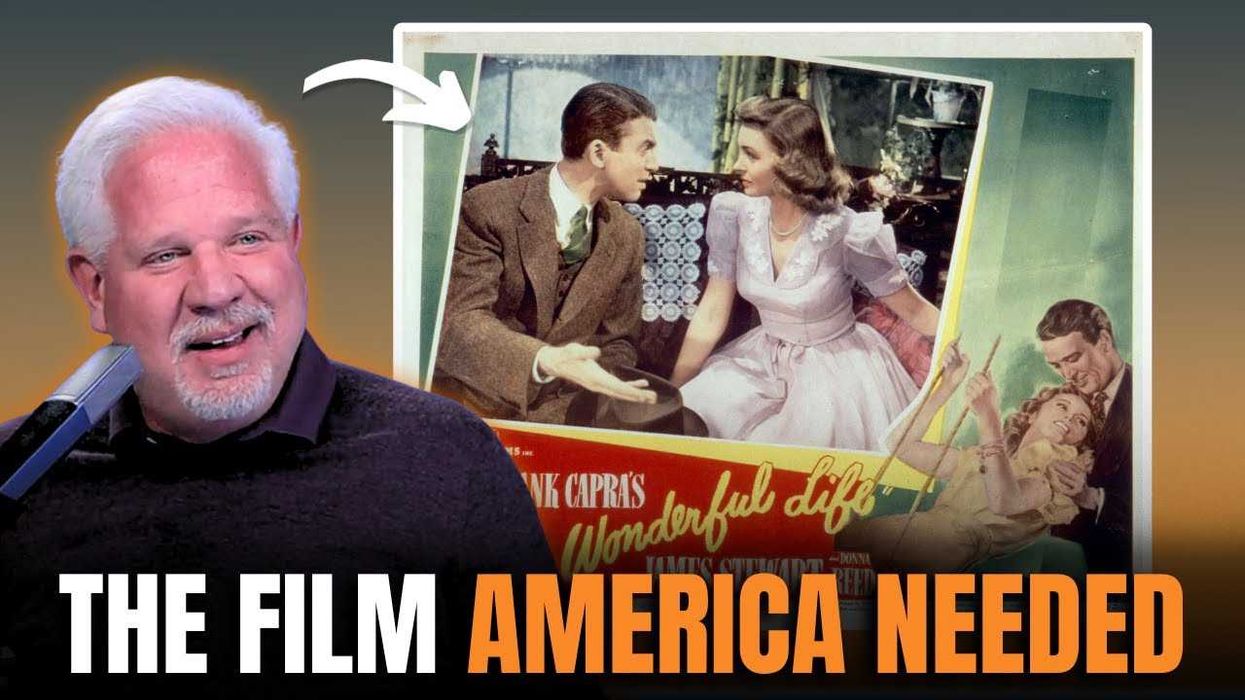
"It’s a Wonderful Life" - The Amazing UNTOLD Story of the Classic Christmas Movie

It’s a Wonderful Life wasn’t always a beloved classic — in fact, it was a complete failure that nearly destroyed the careers of Frank Capra and Jimmy Stewart. Glenn Beck reveals how a forgotten film, resurrected only because its copyright lapsed, became one of the most meaningful stories in American culture. Through George Bailey’s quiet sacrifices, the movie teaches us that the true measure of a life is often invisible, discovered only through the small acts of faithfulness and love we give along the way. This timeless reminder — that ordinary people can change the world without ever seeing the ripples — is why the film still breaks our hearts, heals our spirits, and reassures us that we mattered.

Transcript

Below is a rush transcript that may contain errors

GLENN: Let me tell you a story that you think you already know. It's about a movie that feels like it's been there our whole lives. It's like a tree in the town square and the hymn. You don't remember learning, but somehow you know it by heart. But this particular movie hasn't been around forever, it just seems like it. It was actually born out of failure. It was born out of exhaustion.

And it was born out of people who felt just like its lead character, George Bailey.

It's a Wonderful Life has a fascinating story behind it. And it speaks volumes about us, our hopes, our fears, our desires.

The movie was made by Frank Capra, and it was right after World War II. Frank Capra had just come back. He didn't come home triumphant. He came home a changed man.

He had spent the war making film for the United States government. The war department.

About why the west is worth saving. This film series. They're fantastic. It's called Why We Fight.

And when he returned, his old style of doing things, the old machinery just didn't fit Hollywood anymore. So he started his own studio. He bet absolutely everything on it.

And It's a Wonderful Life was supposed to be the movie, that proved Frank Capra is still Frank Capra. And it nearly ruined him. The movie lost money. Critics really didn't like it. They mocked how schmaltzy it was. Audiences stayed home.

Jimmy Stewart, this was his first movie that he made, when he came back home from the war. And this was his start. And between Frank Capra and Jimmy Stewart. Oh, my gosh, you've got a massive hit, right?

Nobody came. Nobody watched it. Jimmy Stewart, the most beloved man in America gave a really raw, shaken, almost too real performance for people at the time. He wasn't the cheerful hero that is coming out of war as a victory.

This was a man that was cracking under the weight of responsibility. A man who did everything right, but he still felt like he was a failure.

Any of this sound familiar?

It was a story about what happened during the Depression and the crash of '29. Well, America had been living that forever!

They had been living that since '29. They went through the long Depression.

Then they went through the war. The first thing, out of war, they don't want to watch a movie about how depressing life can be. Okay?

So it was a total failure. Film disappears. Goes into a vault. It's a noble misfire.

Good idea. It just didn't land. Maybe wrong time. Eh. Maybe too schmaltzy. Then something weird happened, everybody forgot about it. And so the rights lapsed. There was no grand relaunch. There was no marketing genius, just a legal oversight that let the rights lapse.

Enter Ted Turner.

Ted Turner and Super Station TBS. Remember Super Station TBS when he bought a bunch of stations across the country, and he tied them all together.

And then cable came in, and Super Station TBS became TBS. Turner, while he was looking on super station TBS. They needed some holiday programming. And they needed it cheap. And when I say cheap, what they -- what Ted really meant was tree. We need a bunch of free programming, that we can run all Christmas.

Okay?

No rights. No royalties.

What is out there?

The vaults opened up, and lo and behold, they find It's a Wonderful Life.

Suddenly, it appears in our life, and I don't know about you. I always thought it had been around forever. It did seem like it was a new relaunch.
It was like, hey, did you hear about this new movie?

It was just there and on. We thought everybody knew about it. Nobody knew about it. Our grandparents probably didn't know we knew about it, because it was a massive failure. It's on afternoons, late nights. It's on mornings.

It's everywhere. It's everywhere. Black and white snow flickering on the living rooms. As we are playing on the floor. We as the adults are half listening, half watching. And slowly, slowly, its message found us.

It found us this time, because America had changed.

We weren't fresh from it despair. And we weren't fresh from victory anymore.

We weren't those people. It wasn't so close to us, that we didn't want to look at us!
Yes, we were tired. We were busy. We were stretched thin.

But we were also a group now that measured our lives in promotions. And in square footage. And bank balances.

We were starting to become a little Mr. Potter-like. And we didn't want to be Mr. Potter.

And there on the screen is George Bailey, standing on the bridge, wondering, would the world be better without me? He's not a villain. He's not a loser.

He's actually a really good man.
He's the best of us. And that's why it still works.

Think of all the happy endings and all we have, and everything else. And all of the stories that we tell ourselves.

This movie doesn't tell you, that life will turn out the way you planned.

This one tells you something much, much harder. That the measure of your life is probably going to be invisible to you, while you're living your life.

Because Clarence ain't coming down in his 1800s clothing, and having a hot toddy with you.

So you probably won't know the real measure of your life. And the biggest victories in your life don't come with applause. And the sacrifice, it usually doesn't feel heroic at the moment. It just feels like sacrifice. And crap. Why me. Why me?
Why don't I ever get the adventure that I planned my whole life? Remember, George never left Bedford Falls. He never becomes famous. He just stays. And he shows up. And he keeps his promises. And he holds people together.

What is the real -- what's the real miracle of the film?

Because it's not Clarence. It's not the bells.

It's not him getting his life back. The real miracle is the ledger. That's the miracle. The names, the faces, the small kindness, you all stacked you up, one on top of each other, until you realize, oh, my gosh. All of those little acts, they amount to a life that actually mattered. We're all looking for the big splashy -- he didn't get any of those. He didn't get that.

And that's why he felt like he was a failure. That's why when the town shows up in the end, and they're all giving just a few dollars, it breaks us every single time. Because deep down, we're not watching George Bailey. Deep down, we're checking our own books, our own ledger. Did I? Do I matter to anybody? Would I be missed? Do the things I gave up -- the things I really wanted to do in life, but because something else came up. I had to serve, I had to do this for my kids. Or I had to do this -- the things I gave up, does it mean anything?

This film answers it with a whisper. It doesn't shout it. It whispers.

You'll never fully know the good you've done. I can't give you an answer. You'll never know it. You'll never see the ripples while you're standing in the water.

But they're there. Believe me, they're there.

So this year, when you either just have it running, while you're all in the kitchen. And you're watching time to time. Oh, I love this part. I love this part.

And everybody gets quiet and you just curl on the couch and watch it again, remember, you're not watching a Christmas movie.

What you're watching is a reminder that life doesn't have to be loud to be important.

That staying can be braver than leaving. That loving your family and your neighbors and your town, imperfect as it is, that's not settling.

It's choosing. And whether Ted Turner knew it or not, I can guarantee you, that Jimmy Stewart did. And Frank Capra certainly did.

That every time you see that, why we, year after year, when the snow starts falling in that old piano theme play as we comes back. Not for the nostalgia. But for the reassurance.

Because every once in a while, all of us need somebody just to look us in the eye and say, you're here!

You mattered.

And it is a wonderful life.

RADIO

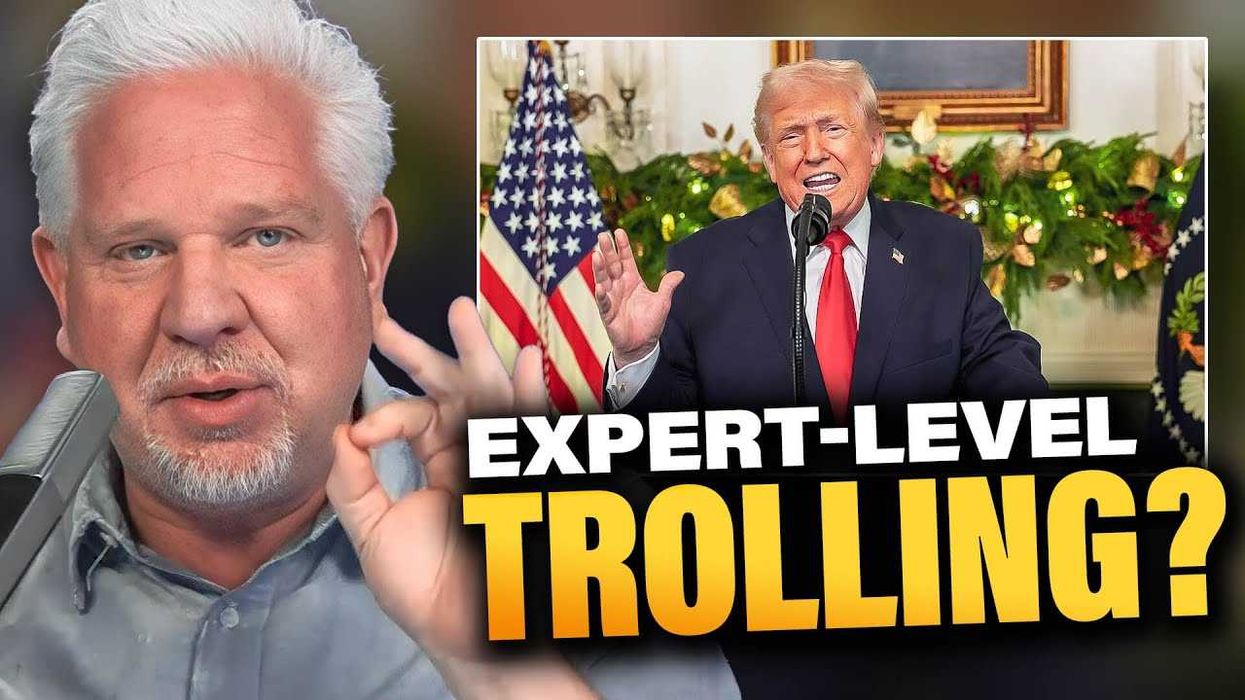
How Trump TRICKED the media with his presidential address

President Trump recently addressed the nation about his administration’s many accomplishments over its first year. Glenn Beck reviews the best moments of the speech, as well as some moments he doesn’t believe will age well. Plus…did Trump trick the media into playing his highlight reel by making them think he would declare war with Venezuela?

Transcript

Below is a rush transcript that may contain errors

GLENN: So last night, the President spoke, and, you know, he started out.

It was -- it was -- let me give you the overall first. I've never seen him more disciplined.

I think the speech was like, I don't know. It was over by 20 minutes after. And I think he ran six minutes late. I mean, I've never seen -- he doesn't say hello in less than 20 minutes.

He stayed on script the whole time. He was extraordinarily disciplined. He was forceful with it. And he explained what has been done in the last year. And he started out saying, a year ago, our country was dead. Now we're the hottest country. We're the hottest country in the world right now. Nobody has ever seen anything like it.

He said, you know, when he took -- when he took over, inflation was the worst in 48 years.

Caused prices to be higher than ever. Making life unaffordable for millions of Americans. And he said, over the past 11 months, we brought more positive change to Washington than any administration in American history.

Never been anything like it.

He talked about successfully negotiating $18 trillion of investments into the country.

And he said, but the real problem for most Americans was under Biden, car prices rose 22 percent in many states. He said, 30 percent or more. Gasoline rose 30 to 50 percent.

Hotel rates raised 37 percent. Airfare rose 31 percent. And he said, they're all coming down. They're coming down fast. Faster than anybody expected. Drugs, brought by ocean and sea are now down by 94 percent. He said, we broke the grip of sinister woke radicals in our schools.

I restored American strength, settled eight wars in ten months, destroyed the Iran nuclear threat. And ended a war in Gaza, bringing for the first time in 3,000 years, peace to the Middle East.
Then he talked about, you know, what's coming next!

Now, here are my thoughts on this: You know, everybody was speculating, he's going to say we're going to war. What would give you that impression?

I mean, he doesn't -- that is the very last resort. And we are not out of tricks with Venezuela.

I don't think we're going to war with Venezuela.

I think he's making it look like we're going to war, to freak Venezuela out.

And to get Maduro out.

I don't think we're going into war.

I hope we're not. I could be wrong.

But I just don't think that's his deal.

Everybody is speculating, he will announce we're going to war.

No. He's not.

However, is it possible that they were leaking this?

Because I saw this as the kickoff of the campaign. I saw this as okay. This is the message for 2026 for the Republicans.

And it was so disciplined and -- and so tight. You know, he gets -- when the president calls a speech at night and says, he wants to address the nation be, the networks are asked to carry it.

Sometimes they don't. They don't have to. But if he said, look, I only need 20 minutes, I'm sure that everybody at NBC. I mean, I did. Rolled my eyes. Yeah. It will be 20 minutes.

It will be an hour and 20 minutes. But it was tight and focused in 20 minutes.

I wonder if the war thing wasn't a way to get them to cover this.

If -- if it wasn't a leak from the White House. You know, I think he might. I think he might announce war tonight. Then everybody will cover it. I don't know.

Maybe that's me being too sinal. I don't know. Can you be too cynical at this point?

Here's the thing. He said a couple of things that I didn't think will serve him well. And it's only because -- and I think you feel the same way.

I know I'm sick of it. And I've been reporting on it since the beginning of Obama.

And I hated it when Obama was doing it. And he did it for eight years. Biden did it for four years.

And here's the line: I inherited a mess. I inherited trouble. I'm cleaning up somebody else's mess.

True. It's absolutely true. It wasn't with Biden.

It kind of was with Obama, at the beginning.

But, you know, when you're seven years into it. You haven't cleaned that up yet?

I mean, you've got to get a bigger mop. But it's definitely true under Donald Trump. However, people have heard that now from the last three presidents.

And they're tired of it. It has no meaning anymore. Even though it's true.

And I want to go back to truth here in a second. The other thing that I don't think will serve him well is the economy is doing better than ever.

You're going to love it. It's great. People are not -- that might be true!

In my opinion, it's not. It is doing much, much better.

I mean, you know, you -- you had -- what was it?

Twenty-five percent. Thirty percent inflation added to everything? You've got to go into negative inflation to be able to get those prices down. They're going to be up there. And what's happening is, we still are adding 2 percent inflation. And that's the target. I don't know why we put up with that target, but that's the target.

So you'll have 2 percent price increases every year. Now, we're at 3 percent. We get the numbers out today.

It might go into the twos. Are they out yet?

STU: Yeah. 2.7, the number out today.

GLENN: 2.7 that's great.

STU: Yeah, it's better. It's going the right direction. They say part of that might be because the government shutdown, so we're not sure how long that lasts, but positive movement anyway.

GLENN: Yeah, so that's fantastic! So coming down to 2.7. Remember, we were at 9, and it was compounding year after year after year.

So he is bringing things down. And the price of some things like gasoline and eggs. And some of the stuff you get at the grocery, are way down. They're not back to where they were in 2016. Or 2020.

Because, I mean, he's just trying to stop the inflation.
So what's happening, and this is what I say, will serve him well is, there was this great marketing book out in the '80s called Positioning the Battlefields of Your Mind -- or, Battleground of Your Mind.

And it was a book that led to the Cola Wars. It was the understanding of the Cola Wars and how Pepsi could beat Coca-Cola.

They had to change the perception. And the perception was, that Coca-Cola was it!

And Pepsi had to change it, and that's why they became the choice of a new generation. And for a while, Pepsi was -- it may have even beaten Coke.

But there was this real Cola War back and forth the whole time. They didn't change the flavors. They didn't change anything.

Pepsi was what Pepsi always had been. Coca-Cola was what Coca-Cola had always been.

They needed to change the perception, okay? Because perception, whether it's true or not, perception is reality.

Whatever people perceive, and feel, is their reality.

So it's the reality that you have to deal with.

People don't feel the relief yet. They see the prices coming down. But they're still paying out the same amount of money that they were paying out under Joe Biden.

It's not getting worse. Except, by 2.7 percent overall.

But it's -- it's not getting better to them. You know, certain categories are.

But overall, you're still struggling with your rent and everything else!

And so people's perception is: It -- it's not what I expected. Because what I expected was 2019!

I expected to have jobs and the economy rolling. And the price of housing coming down. And everything else.

And it's not.

So what's not going to serve him well is saying, "Your perception is wrong." He might be right! It doesn't matter! You can't tell people their perception is wrong. You have to change that perception.

And the only way to really change it is to demonstrate it, or through ads, you know, back in the Cola War era, they just changed slogans and do ads and everything else. But people don't buy slogans anymore. They don't buy ads anymore. They don't even trust logos anymore. So that won't work.

You actually have to change people's lives to change their perception. Now, 25 percent last month said that they felt that their personal finances were doing better. That was last month. Or the month before last.

This last month, it's up to 27 percent.

So he's moving that in the right direction. But to win, you've got to be over 40 percent.

Easy over 40 percent have to feel like their personal finances are getting better. 27 percent is not enough. But it is moving in the right direction.

So when the president says he's got to relate to the people who steal -- who have defended him, liked him, and believe in him, he's got to say, I know you're feeling the pinch.

You know, one of the things he said last night. But I don't think it's connected yet to people.

And it's because it's absolutely true. Why do you think that you are spending more every month for your rent?

Why?

You're spending more on rent, because there's too many people chasing too few houses and apartments.

You cannot add ten to 15 million people in four years, while you're not building things. You can't add 10 million people into your country and say, oh, by the way. Go get housing.

Where are they going to get the housing?

The housing, you're going to have a shortage, which will cause the prices to go up.

So until you get rid of those 10 million people. You're not going to lower the price.

And especially if the government is subsidizing them.

Because, I mean, look at the NGOs. If people know, the government will pay. They will keep the price up. What would happen with NGOs. Look what's happening with universities. Why do you think universities are so expensive?

They weren't like that. Until the government said, we will guarantee the loans. Once the government said, we'll guarantee the loans, prices went true the roof because everybody could get a loan!

That's the problem. He's got to connect this, and I think he started last night. He's done it a few times. But somewhere or another, it's really got to connect with the American people.
You cannot solve the housing crisis and not solve the immigration crisis. You have to send people back home, or you're going to have to wait five years, as we build new apartment complexes and new buildings. And we stabilize under these ten million new homes that were needed.

That's not popular. And nobody is going to wait that long. Somehow or another, he's got to make that point. And it's got to connect with people, to give him more time to turn things around, on the housing.

Now, he also was really strong in saying that he was appointing -- wait until you meet the guy to appoint the head of the Fed.

Well, I would like to meet that person too. I would like to know who that is. He said he will do it right after the first of the year. Because our Fed chair is leaving, after the first of the year in February. And he said he's a guy who understands low interest rates. And, you know, low mortgage rates, looser money. That could be really dangerous with -- with inflation, but we'll see.

But that could be a turning point, one way or the other, a new Fed chair will be a new turning point.

And hopefully, Trump and this new Fed chair know what they're doing, and it won't make things worse.

But I don't know how you can with the Fed. I mean, they've already made everything so bad.

BLOG

Brand new show takes you backstage with Glenn

Everything changes January 5th

Hey, it’s Jason Buttrill, Glenn’s head writer and chief researcher.

Have you ever wondered what’s going on behind the scenes of Glenn’s radio show?

What’s happening right before he starts the show? How do he and his staff get ready? Is it chaotic during the show as Glenn adapts to breaking news?

Glenn has decided to bring you all in on the action. Introducing the Torch Insider Feed—a new segment running throughout the daily radio program. I’ll be your guide during the entire show, popping in just before it starts and at other times when non-Insiders typically see commercials.

I’m going to give you a behind-the-scenes inside look that hasn’t been seen before.

But beyond that, we’re going even deeper. We’ll use Glenn’s new content tools to rapidly access the information he’s shared with you over the past two decades—all the dots connected, all the history explained… EVERYTHING. And we’ll—somehow—fit it all in before Glenn returns from commercial.

As an Insider, while Glenn does his daily radio program, you and I will push the boundaries of what we can learn and experience during his show. You’ll be able to comment on everything we’re talking about, and I’ll respond in real time. It truly is a one-of-a-kind experience that I don’t believe has ever been attempted before.

Coming January 2026.