Democrat candidate power rankings by Stu: April 29th edition

It's time for our April 29, 2019 edition of our Candidate Power Rankings. We get to add two new candidates, write about a bunch of people that have little to no chance of winning, and thank the heavens we are one day closer to the end of all of this.

In case you're new here, read our explainer about how all of this works:

The 2020 Democratic primary power rankings are an attempt to make sense out of the chaos of the largest field of candidates in global history.

Each candidate gets a unique score in at least thirty categories, measuring data like polling, prediction markets, fundraising, fundamentals, media coverage, and more. The result is a candidate score between 0-100. These numbers will change from week to week as the race changes.

The power rankings are less a prediction on who will win the nomination, and more a snapshot of the state of the race at any given time. However, early on, the model gives more weight to fundamentals and potentials, and later will begin to prioritize polling and realities on the ground.

These power rankings include only announced candidates. So, when you say "WAIT!! WHERE'S XXXXX????" Read the earlier sentence again.

If you're like me, when you read power rankings about sports, you've already skipped ahead to the list. So, here we go.

See previous editions here.

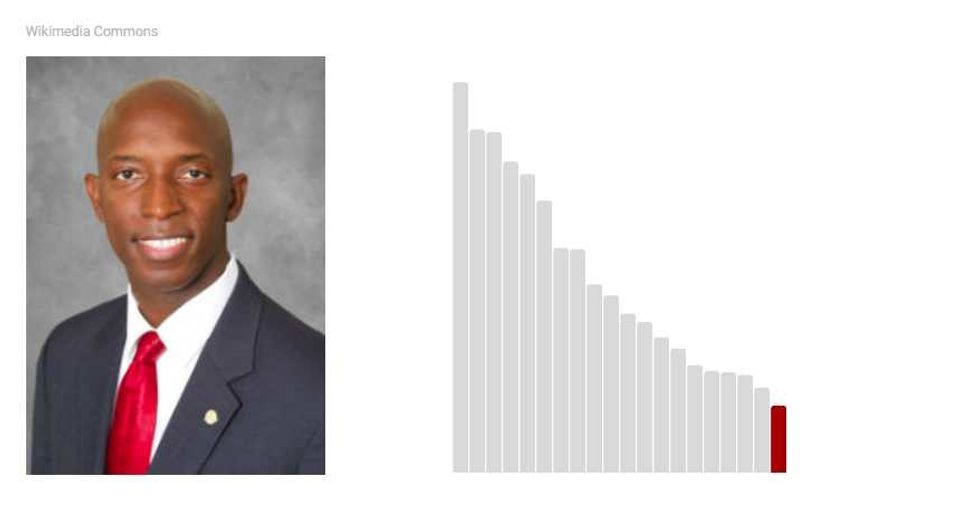
20.Wayne Messam: 13.4 (Previous: 18th / 13.4)
CANDIDATE PROFILE

A former staffer of Wayne Messam is accusing his wife of hoarding the campaign's money.

First, how does this guy have "former" staffers? He's been running for approximately twelve minutes.

Second, he finished dead last in the field in fundraising with $44,000 for the quarter. Perhaps hoarding whatever money the campaign has is not the worst idea.

His best shot at the nomination continues to be something out of the series "Designated Survivor."

Other headlines:

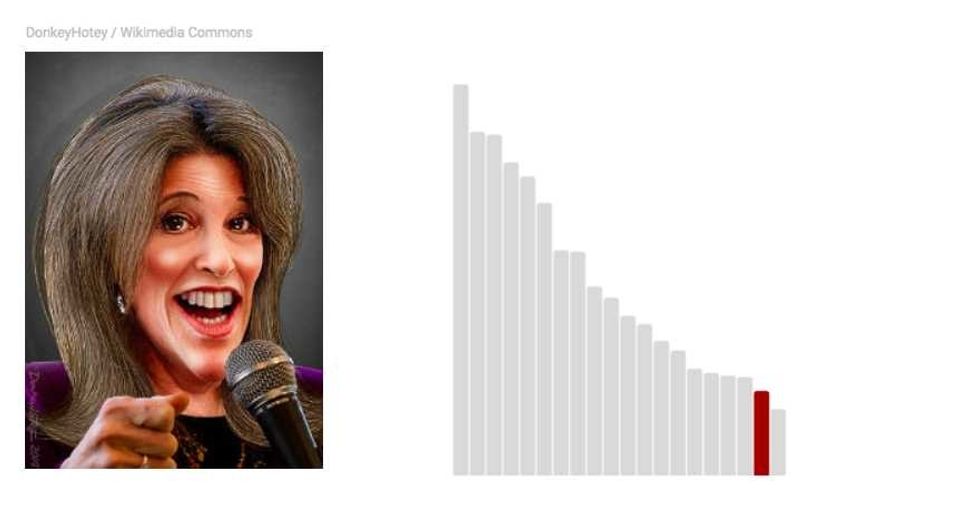
19.Marianne Williamson: 17.1 (Previous: 17th / 17.1)
CANDIDATE PROFILE

Marianne Williamson would like you to pay for the sins of someone else's great, great, great grandparents. Lucky you!

Williamson is on the reparations train like most of the field, trying to separate herself from the pack by sheer monetary force.

How much of your cash does she want to spend? "Anything less than $100 billion is an insult." This is what I told the guy who showed up to buy my 1989 Ford Tempo. It didn't work then either.

Other headlines:

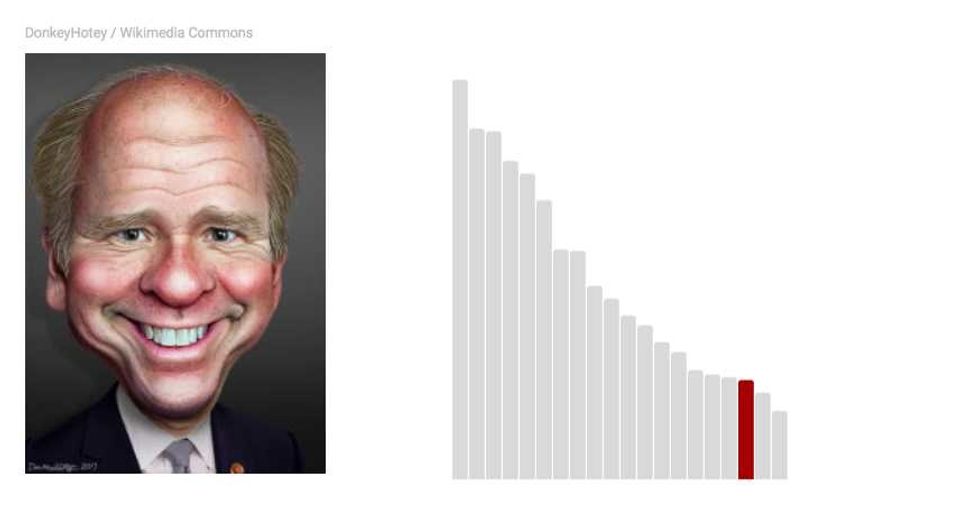
18.John Delaney: 19.7 (Previous: 15th / 20.3)
CANDIDATE PROFILE

Good news: John Delaney brought in $12.1 million in the first quarter, enough for fifth in the entire Democratic field!

Bad news: 97% of the money came from his own bank account.

Other headlines:

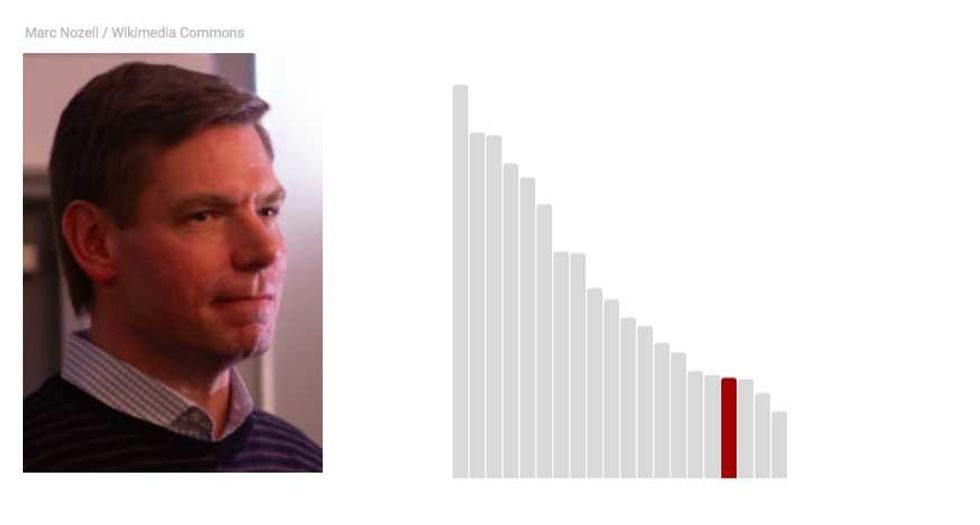
17.Eric Swalwell: 20.2 (Previous: 16th / 20.2)
CANDIDATE PROFILE

The Eric Swalwell formula:

  • Identify news cycle
  • Identify typical left-wing reaction
  • Add steroids

Democrats said there was obstruction in the Mueller report. Swalwell said there “certainly" was collusion.

Democrats said surveillance of the Trump campaign was no big deal. Swalwell said there was no need to apologize even if it was.

Democrats said William Barr mishandled the release of the Mueller report. Swalwell said he must resign.

Democrats say they want gun restrictions. Swalwell wants them all melted down and the liquid metal to be poured on the heads of NRA members. (Probably.)

16.Seth Moulton: 20.6 (Debut)
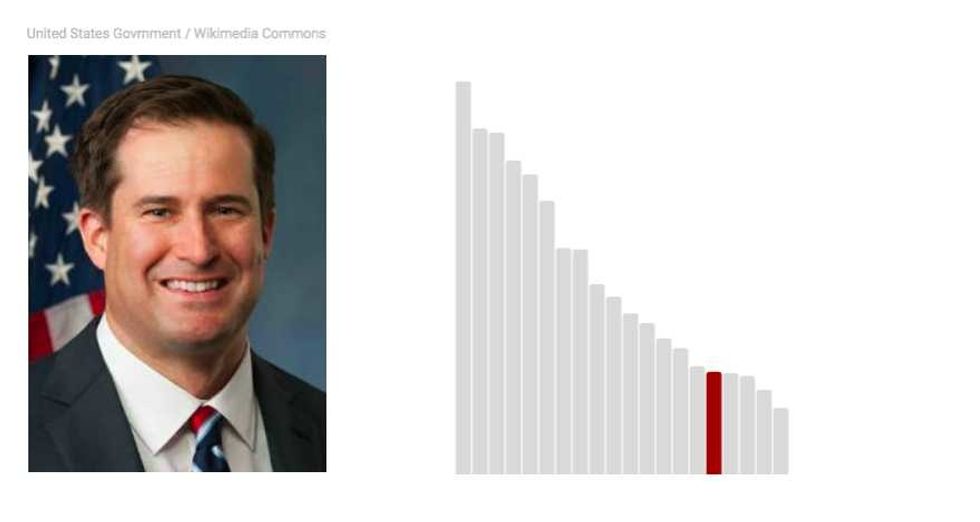
Who is Seth Moulton?

No, I'm asking.

Moulton falls into the category of congressman looking to raise his profile and make his future fundraising easier— not someone who is actually competing for the presidency.

He tried to block Nancy Pelosi as speaker, so whatever help he could get from the establishment is as dry as Pelosi's eyes when the Botox holds them open for too long.

Moulton is a veteran, and his military service alone is enough to tell you that he's done more with his life than I'll ever do with mine. But it's hard to see the road to the White House for a complete unknown in a large field of knowns.

Don't take my word for it, instead read this depressing story that he's actually telling people on purpose:

"I said, you know, part of my job is take tough questions," Moulton told the gathered business and political leaders. "You can ask even really difficult questions. And there was still silence. And then finally, someone in the way back of the room raised her hand, and she said, 'Who are you?' "

Yeah. Who are you?

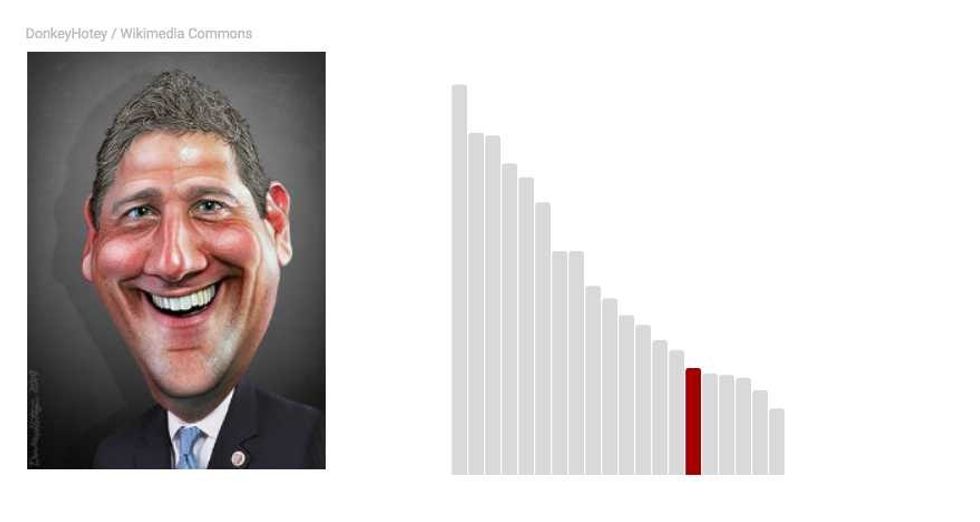
15.Tim Ryan: 21.6 (Previous: 14th / 20.7)
CANDIDATE PROFILE

When you're talking to less than sixteen people in Iowa one week after your launch, you don't have too much to be excited about.

Ryan did get an interview on CNN, where he also talked to less than sixteen people.

He discussed his passion for the Dave Matthews Band, solidifying a key constituency in the year 1995.

Other headlines:

14.Tulsi Gabbard: 25.2 (Previous: 14th / 25.9)
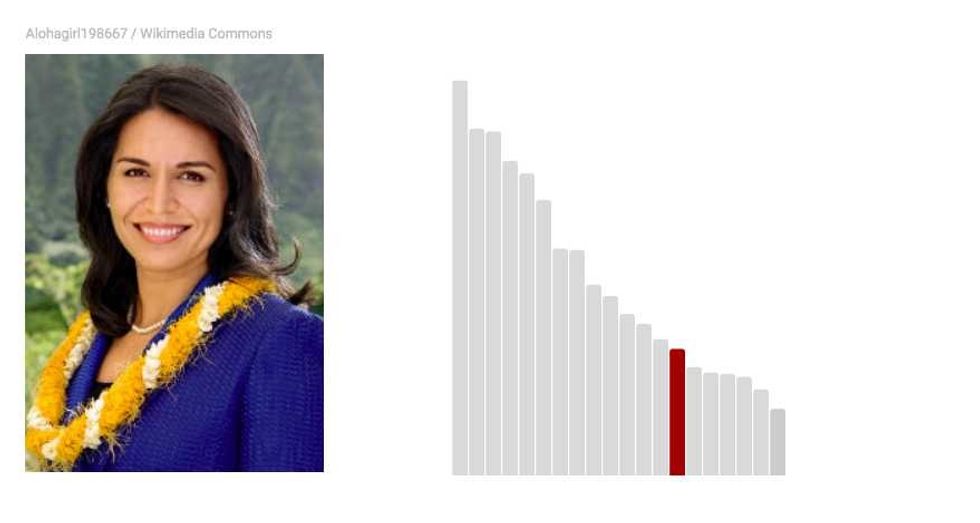
CANDIDATE PROFILE

Tulsi Gabbard torched Kamala Harris in fundraising!!!!! (Among Indian-American donors.)

No word on who won the coveted handi-capable gender-neutral sodium-sensitive sub-demographic.

She received a mostly false rating for her attack on the Trump administration regarding its new policy on pork inspections, a topic not exactly leading the news cycle. Being from Hawaii, the state which leads the nation in Spam consumption, she was probably surprised when this didn't go mega viral.

Other headlines:

13.Andrew Yang: 27.2 (Previous: 12th / 27.1)
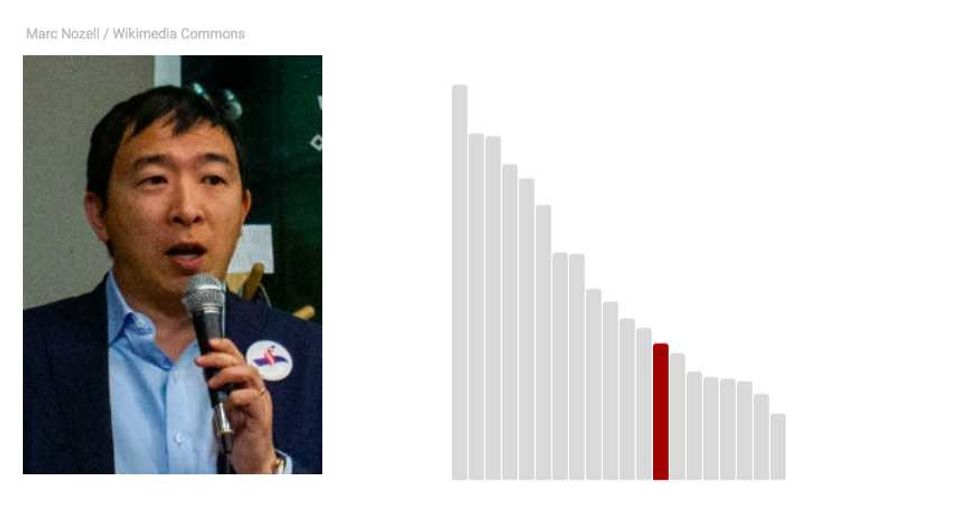
CANDIDATE PROFILE

Yang has a few go-to lines when he's on the campaign trail, such as: "The opposite of Donald Trump is an Asian man who likes math." Another is apparently the Jeb-esque "Chant my name! Chant my name!"

Yang continues to be one of the more interesting candidates in this race, essentially running a remix of the "One Tough Nerd" formula that worked for Michigan Governor Rick Snyder.

I highly recommend listening to his interview with Ben Shapiro, where Yang earns respect as the only Democratic presidential candidate in modern history to actually show up to a challenging and in-depth interview with a knowledgeable conservative.

But hidden in the Shapiro interview is the nasty little secret of the Yang campaign. His policy prescriptions, while still very liberal, come off as far too sane for him to compete in this Stalin look-alike contest.

Other headlines:

12.Jay Inslee: 30.4 (Previous: 11th / 30.4)
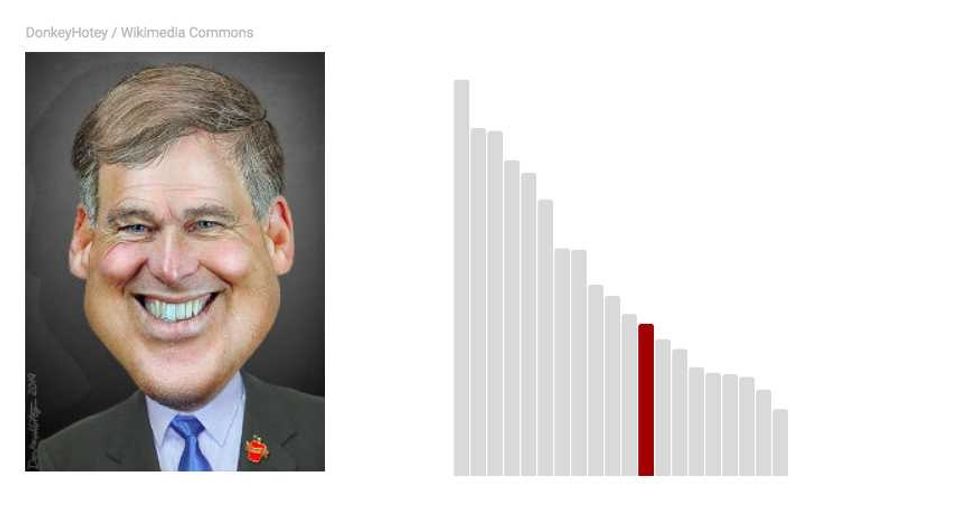
CANDIDATE PROFILE

If you read the Inslee candidate profile, I said he was running a one-issue climate campaign. This week, he called for a climate change-only debate, and blamed Donald Trump for flooding in Iowa.

He also may sign the nation's first "human composting" legalization bill. He can start by composting his presidential campaign.

Other headlines:

11.John Hickenlooper: 32.2 (Previous: 10th / 32.0)
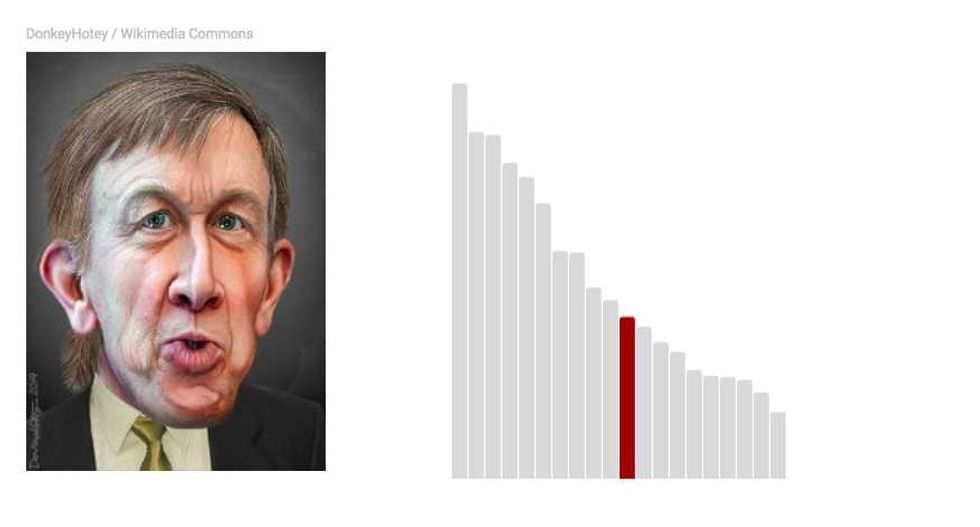
CANDIDATE PROFILE

John Hickenlooper was sick of being asked if he would put a woman on the ticket, in the 0.032% chance he actually won the nomination.

So he wondered why the female candidates weren't being asked if they would name a male VP if they won?

Seems like a logical question, but only someone who is high on tailpipe fumes would think it was okay to ask in a Democratic primary. Hickenlooper would be better served by just transitioning to a female and demanding other candidates are asked why they don't have a transgendered VP.

Other headlines:

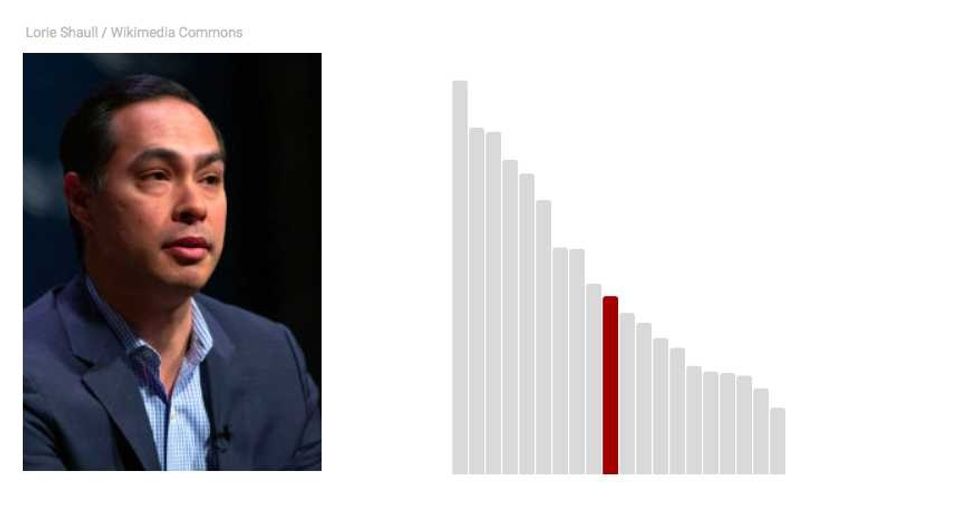
10.Julian Castro: 35.7 (Previous: 9th / 36.2)
CANDIDATE PROFILE

Lowering expectations is a useful strategy when your wife asks you to put together an Ikea end table, or when you've successfully convinced Charlize Theron to come home with you. But is it a successful campaign strategy?

Julian Castro is about to find out. He thinks the fact that everyone thinks he's crashing and burning on the campaign trail so far is an "advantage." Perhaps he can take the rest of the field by surprise on Super Tuesday when they finally realize he's actually running.

Other headlines:

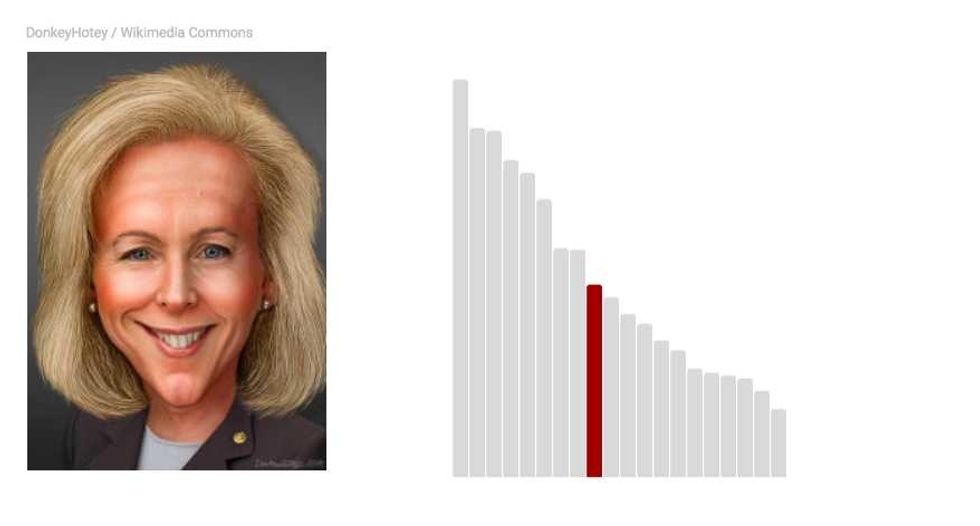
9.Kirsten Gillibrand: 38.1 (Previous: 8th / 37.8)
CANDIDATE PROFILE

Gillibrand wants you to know that the reason her campaign has been such a miserable failure so far, is because she called for a certain senator to step down. The problem might also be that another certain senator isn't a good presidential candidate.

She also spent the week arm wrestling, and dancing at a gay bar called Blazing Saddle. In this time of division, one thing we can all agree on: Blazing Saddle is a really solid name for a gay bar.

Other headlines:

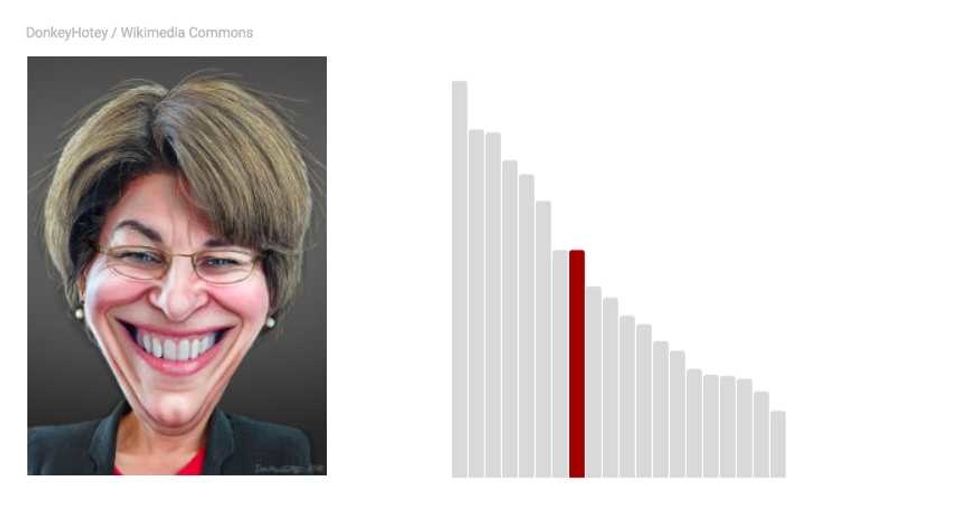
8.Amy Klobuchar: 45.1 (Previous: 7th / 45.5)
CANDIDATE PROFILE

Klobuchar is attempting a run in the moderate wing of the Democratic primary, which would be a better idea if such a wing existed.

She hasn't committed to impeaching Donald Trump and has actually voted to confirm over half of his judicial nominees. My guess is this will not be ignored by her primary opponents.

She also wants to resolve an ongoing TPS issue, which I assume means going by Peter Gibbons' desk every morning and making sure he got the memo about the new cover sheets.

Other headlines:

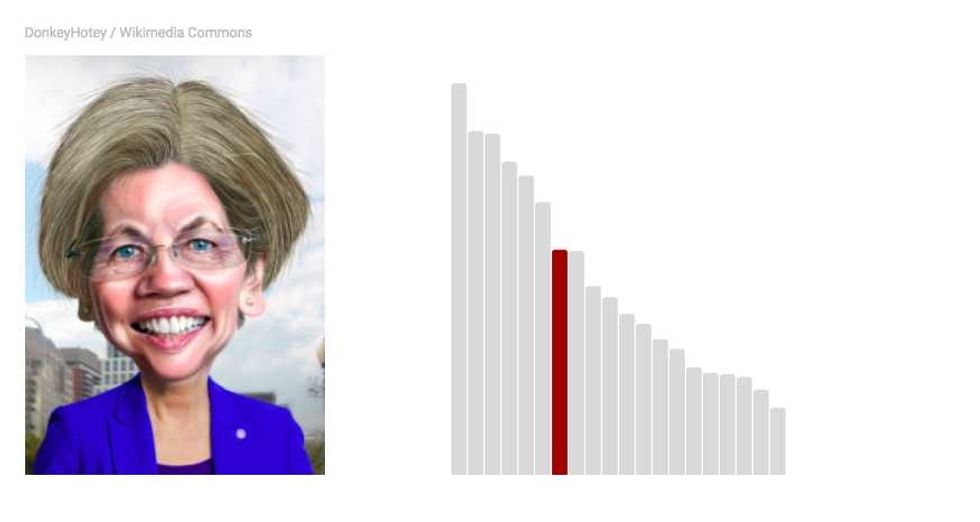
7.Elizabeth Warren: 45.3 (Previous: 6th / 46.0)
CANDIDATE PROFILE

Elizabeth Warren is bad at everything she does while she's campaigning. I don't really even watch Game of Thrones, and the idea that Warren would write a story about how the show proves we need more powerful women makes me cringe.

Of course, more powerful people of all the 39,343 genders are welcome, but it's such a transparent attempt at jumping on the back of a pop-culture event to pander to female voters, it's sickening.

We can only hope that when she's watching Game of Thrones, she's gonna grab her a beer.

Other headlines:

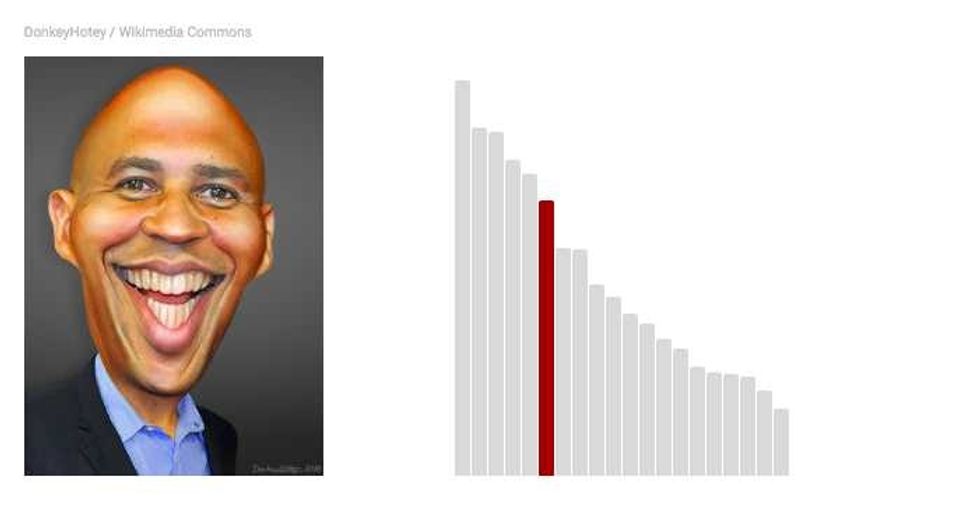
6.Cory Booker: 54.9 (Previous: 5th / 55.5)
CANDIDATE PROFILE

Booker is tied with Kamala Harris for the most missed Senate votes of the campaign so far. He gets criticized for this, but I think he should miss even more votes.

Booker is also pushing a national day off on Election Day—because the approximately six months of early voting allowed in every state just isn't enough.

Of course, making it easier to vote doesn't mean people are going to vote for Booker. So he's throwing trillions of dollars in bribes (my word, not his) to seal the deal.

Bookermania is in full effect, with 40 whole people showing up to his appearance in Nevada. Local press noted that the people were of "varying ages," an important distinction to most other crowds, which are entirely comprised of people with the same birthday.

Other headlines:

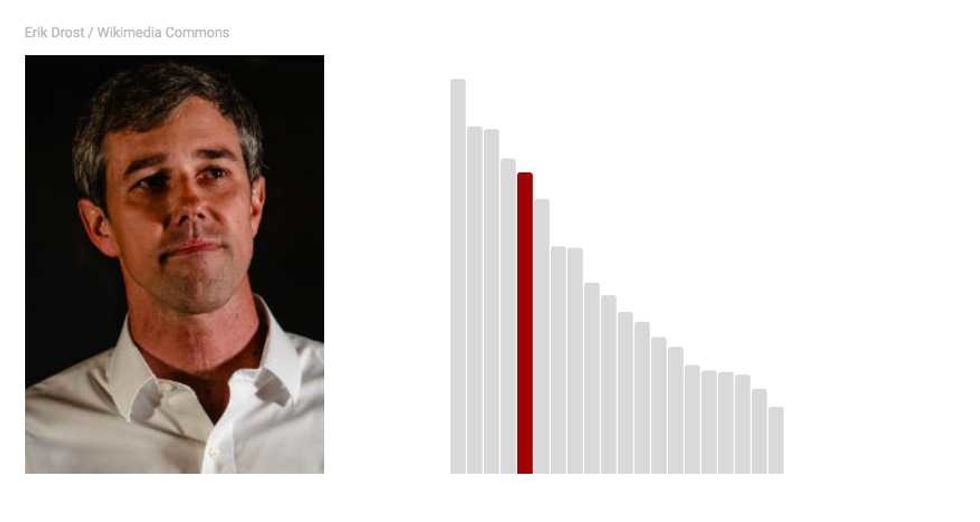
5.Robert Francis O’Rourke: 60.2 (Previous: 4th /62.6)
CANDIDATE PROFILE

Kirsten Gillibrand gave less than 2% of her income to charity. The good news is that she gave about seven times as much as Beto O'Rourke. Robert Francis, or Bob Frank, also happens to be one of the wealthiest candidates in the race. His late seventies father-in-law has been estimated to be worth as much as $20 billion, though the number is more likely to be a paltry $500 million.

He's made millions from a family company investing in fossil fuels and pharmaceutical stocks, underpaid his taxes for multiple years, and is suing the government to lower property taxes on a family-owned shopping center.

He's also all but disappeared. It's a long race, and you don't win a nomination in April of the year before election day. If he's being frugal and figuring out what he believes, it might be a good move.

But it's notable that all the "pretty boy" hype that Bob Frank owned going into this race has been handed over to Mayor Pete. Perhaps Beto is spending his time working on curbing the sweating, the hand gestures, and the issues with jumping on counters like a feline.

Other headlines:

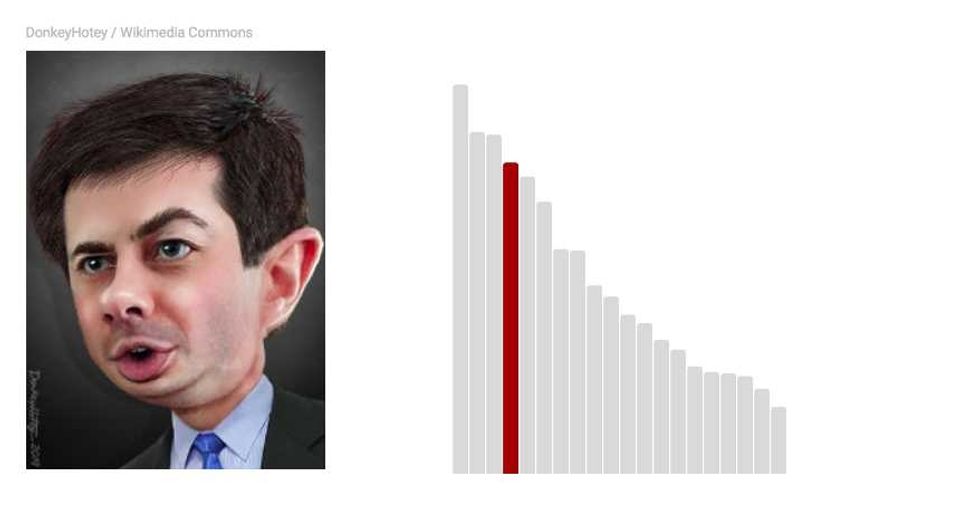
4.Pete Buttigieg: 62.9 (Previous: 3rd / 62.9)
CANDIDATE PROFILE

When we first put candidates in tiers earlier this year, we broke everyone into five categories from "Front Runners" to "Eh, no." In the middle is a category called "Maybe, if everything goes right," and that's where we put Pete Buttigieg.

Well, everything has gone right so far. But Mayor Pete will be interested to learn that the other 19 candidates in this race are not going to hand him this nomination. Eventually, they will start saying negative things about him (they've started the opposition research process already), and it will be interesting to see how Petey deals with the pressure. We've already seen how it has affected Beto in a similar situation.

The media has spoken endlessly about the sexual orientation of Buttigieg, but not every Democratic activist is impressed. Barney Frank thinks the main reason he's getting this amount of attention is because he is gay. And for some, being a gay man just means you're a man, which isn't good enough.

When you base your vote on a candidate's genitals, things can get confusing.

Other headlines:

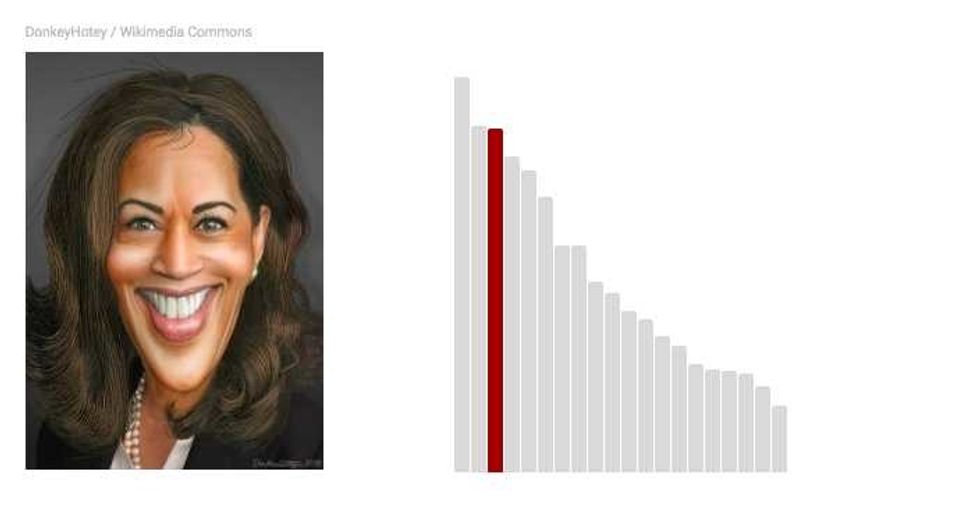
3.Kamala Harris: 68.6 (Previous: 1st / 69.1)
CANDIDATE PROFILE

There are a couple of ways to view the Harris candidacy so far.

#1 - Harris launched with much fanfare and an adoring media. She has since lost her momentum. Mayor Pete and former Mayor Bernie have the hype, and Kamala is fading.

#2 - Harris is playing the long game. She showed she can make an impact with her launch, but realizes that a media "win" ten months before an important primary means nothing. She's working behind the scenes and cleaning up with donations, prominent supporters, and loads of celebrities to execute an Obama style onslaught.

I tend to be in category 2, but I admit that's somewhat speculative. Harris seems to be well positioned to make a serious run, locking up more than double the amount of big Clinton and Obama fundraisers than any other candidate.

One interesting policy development for Harris that may hurt her in the primary is her lack of utter disgust for the nation of Israel. There's basically one acceptable position in a Democratic primary when it comes to Israel, which is that it's a racist and terrorist state, existing only to torture innocent Palestinians.

Certainly no one is going to mistake Harris for Donald Trump, but a paragraph like this is poison to the modern Democratic primary voter:

"Her support for Israel is central to who she is," Harris' campaign communications director, Lily Adams, told McClatchy. "She is firm in her belief that Israel has a right to exist and defend itself, including against rocket attacks from Gaza."

Just portraying the rocket attacks as "attacks" is controversial these days for Democrats, and claiming they are responses to attacks indicates you think the Jeeeewwwwwwwws aren't the ones responsible for the start of every hostility. Heresy!

Someone get Kamala a copy of the 'Protocols of the Elders of Zion' before she blows her chance to run the free world.

2.Bernie Sanders: 69.2 (Previous: 2nd / 68.3)
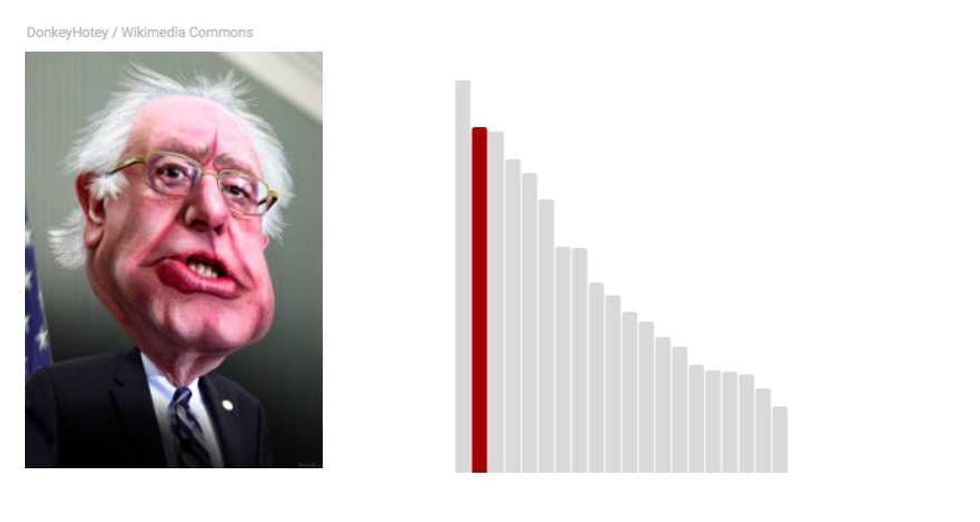
CANDIDATE PROFILE

If Bernie Sanders hates millionaires as much as he claims, he must hate the mirror. As a millionaire, it might surprise some that he donated only 1% to charity. But it shouldn't.

It's entirely consistent with Sandersism to avoid giving to private charity. Why would you? Sanders believes the government does everything better than the private sector. He should be giving his money to the government.

Of course, he doesn't. He takes the tax breaks from the evil Trump tax plan he derides. He spends his money on fabulous vacation homes. He believes in socialism for thee, not for me.

Yes, this is enough to convince the Cardi B's of the world, all but guaranteeing a lock on the rapper-and-former-stripper-that-drugged-and-stole-from-her-prostitution-clients demographic. But can that lack of consistency hold up in front of general election voters?

If Bernie reads this and would like a path to credibility, clear out your bank account and send it here:

Gifts to the United States
U.S. Department of the Treasury
Funds Management Branch
P.O. Box 1328
Parkersburg, WV 26106-1328

Other headlines:

1.Joseph Robinette Biden Jr.: 78.8 (Debut)

Joe has run for president 113 times during his illustrious career, successfully capturing the presidency in approximately zero of his campaigns.

However, when the eternally woke Barack Obama had a chance to elevate a person of color, woman, or anything from the rainbow colored QUILTBAG, he instead chose the oldest, straightest, whitest guy he could find, and our man Robinette was the beneficiary.

Biden has been through a lot, much of it of his own making. Forget about his plagiarism and propensity to get a nostril full of each passing females' hair, his dealings while vice president in both Ukraine and China are a major general election vulnerability— not to mention a legal vulnerability for his children. But hey, win the presidency and you can pardon everyone, right?

His supposed appeal to rust belt voters makes him, on paper, a great candidate to take on Trump. The Clinton loss hinged on about 40,000 voters changing their mind from Hillary to Donald in a few states—the exact areas where victory could possibly be secured by someone named "Middle Class Joe" (as he alone calls himself.)

No one loves Joe Biden more than Joe Biden, and there's a relatively convincing case for his candidacy. But we must remember this unquestionable truth: Joe Biden is not good at running for president.

He's a gaffe machine that churns out mistake after mistake, hoping only to have his flubs excused by his unending charisma. But, will that work without the use of his legendary groping abilities? Only time, and a few dozen unnamed women, will tell.

Also, yes. Robinette is really his middle name.

A break in trust: A NEW Watergate is brewing in plain sight

Gary Hershorn / Contributor | Getty Images

When institutions betray the public’s trust, the country splits, and the spiral is hard to stop.

Something drastic is happening in American life. Headlines that should leave us stunned barely register anymore. Stories that once would have united the country instead dissolve into silence or shrugs.

It is not apathy exactly. It is something deeper — a growing belief that the people in charge either cannot or will not fix what is broken.

When people feel ignored or betrayed, they will align with anyone who appears willing to fight on their behalf.

I call this response the Bubba effect. It describes what happens when institutions lose so much public trust that “Bubba,” the average American minding his own business, finally throws his hands up and says, “Fine. I will handle it myself.” Not because he wants to, but because the system that was supposed to protect him now feels indifferent, corrupt, or openly hostile.

The Bubba effect is not a political movement. It is a survival instinct.

What triggers the Bubba effect

We are watching the triggers unfold in real time. When members of Congress publicly encourage active duty troops to disregard orders from the commander in chief, that is not a political squabble. When a federal judge quietly rewrites the rules so one branch of government can secretly surveil another, that is not normal. That is how republics fall. Yet these stories glided across the news cycle without urgency, without consequence, without explanation.

When the American people see the leadership class shrug, they conclude — correctly — that no one is steering the ship.

This is how the Bubba effect spreads. It is not just individuals resisting authority. It is sheriffs refusing to enforce new policies, school boards ignoring state mandates, entire communities saying, “We do not believe you anymore.” It becomes institutional, cultural, national.

A country cracking from the inside

This effect can be seen in Dearborn, Michigan. In the rise of fringe voices like Nick Fuentes. In the Epstein scandal, where powerful people could not seem to locate a single accountable adult. These stories are different in content but identical in message: The system protects itself, not you.

When people feel ignored or betrayed, they will align with anyone who appears willing to fight on their behalf. That does not mean they suddenly agree with everything that person says. It means they feel abandoned by the institutions that were supposed to be trustworthy.

The Bubba effect is what fills that vacuum.

The dangers of a faithless system

A republic cannot survive without credibility. Congress cannot oversee intelligence agencies if it refuses to discipline its own members. The military cannot remain apolitical if its chain of command becomes optional. The judiciary cannot defend the Constitution while inventing loopholes that erase the separation of powers.

History shows that once a nation militarizes politics, normalizes constitutional shortcuts, or allows government agencies to operate without scrutiny, it does not return to equilibrium peacefully. Something will give.

The question is what — and when.

The responsibility now belongs to us

In a healthy country, this is where the media steps in. This is where universities, pastors, journalists, and cultural leaders pause the outrage machine and explain what is at stake. But today, too many see themselves not as guardians of the republic, but of ideology. Their first loyalty is to narrative, not truth.

The founders never trusted the press more than the public. They trusted citizens who understood their rights, lived their responsibilities, and demanded accountability. That is the antidote to the Bubba effect — not rage, but citizenship.

How to respond without breaking ourselves

Do not riot. Do not withdraw. Do not cheer on destruction just because you dislike the target. That is how nations lose themselves. Instead, demand transparency. Call your representatives. Insist on consequences. Refuse to normalize constitutional violations simply because “everyone does it.” If you expect nothing, you will get nothing.

Do not hand your voice to the loudest warrior simply because he is swinging a bat at the establishment. You do not beat corruption by joining a different version of it. You beat it by modeling the country you want to preserve: principled, accountable, rooted in truth.

Adam Gray / Stringer | Getty Images

Every republic reaches a moment when historians will later say, “That was the warning.” We are living in ours. But warnings are gifts if they are recognized. Institutions bend. People fail. The Constitution can recover — if enough Americans still know and cherish it.

It does not take a majority. Twenty percent of the country — awake, educated, and courageous — can reset the system. It has happened before. It can happen again.

Wake up. Stand up. Demand integrity — from leaders, from institutions, and from yourself. Because the Bubba effect will not end until Americans reclaim the duty that has always belonged to them: preserving the republic for the next generation.

This article originally appeared on TheBlaze.com.

Warning: Stop letting TikTok activists think for you

Spencer Platt / Staff | Getty Images

Bad-faith attacks on Israel and AIPAC warp every debate. Real answers emerge only when people set aside scripts and ask what serves America’s long-term interests.

The search for truth has always required something very much in short supply these days: honesty. Not performative questions, not scripted outrage, not whatever happens to be trending on TikTok, but real curiosity.

Some issues, often focused on foreign aid, AIPAC, or Israel, have become hotbeds of debate and disagreement. Before we jump into those debates, however, we must return to a simpler, more important issue: honest questioning. Without it, nothing in these debates matters.

Ask questions because you want the truth, not because you want a target.

The phrase “just asking questions” has re-entered the zeitgeist, and that’s fine. We should always question power. But too many of those questions feel preloaded with someone else’s answer. If the goal is truth, then the questions should come from a sincere desire to understand, not from a hunt for a villain.

Honest desire for truth is the only foundation that can support a real conversation about these issues.

Truth-seeking is real work

Right now, plenty of people are not seeking the truth at all. They are repeating something they heard from a politician on cable news or from a stranger on TikTok who has never opened a history book. That is not a search for answers. That is simply outsourcing your own thought.

If you want the truth, you need to work for it. You cannot treat the world like a Marvel movie where the good guy appears in a cape and the villain hisses on command. Real life does not give you a neat script with the moral wrapped up in two hours.

But that is how people are approaching politics now. They want the oppressed and the oppressor, the heroic underdog and the cartoon villain. They embrace this fantastical framing because it is easier than wrestling with reality.

This framing took root in the 1960s when the left rebuilt its worldview around colonizers and the colonized. Overnight, Zionism was recast as imperialism. Suddenly, every conflict had to fit the same script. Today’s young activists are just recycling the same narrative with updated graphics. Everything becomes a morality play. No nuance, no context, just the comforting clarity of heroes and villains.

Bad-faith questions

This same mindset is fueling the sudden obsession with Israel, and the American Israel Public Affairs Committee in particular. You hear it from members of Congress and activists alike: AIPAC pulls the strings, AIPAC controls the government, AIPAC should register as a foreign agent under the Foreign Agents Registration Act. The questions are dramatic, but are they being asked in good faith?

FARA is clear. The standard is whether an individual or group acts under the direction or control of a foreign government. AIPAC simply does not qualify.

Here is a detail conveniently left out of these arguments: Dozens of domestic organizations — Armenian, Cuban, Irish, Turkish — lobby Congress on behalf of other countries. None of them registers under FARA because — like AIPAC — they are independent, domestic organizations.

If someone has a sincere problem with the structure of foreign lobbying, fair enough. Let us have that conversation. But singling out AIPAC alone is not a search for truth. It is bias dressed up as bravery.

Anadolu / Contributor | Getty Images

If someone wants to question foreign aid to Israel, fine. Let’s have that debate. But let’s ask the right questions. The issue is not the size of the package but whether the aid advances our interests. What does the United States gain? Does the investment strengthen our position in the region? How does it compare to what we give other nations? And do we examine those countries with the same intensity?

The real target

These questions reflect good-faith scrutiny. But narrowing the entire argument to one country or one dollar amount misses the larger problem. If someone objects to the way America handles foreign aid, the target is not Israel. The target is the system itself — an entrenched bureaucracy, poor transparency, and decades-old commitments that have never been re-examined. Those problems run through programs around the world.

If you want answers, you need to broaden the lens. You have to be willing to put aside the movie script and confront reality. You have to hold yourself to a simple rule: Ask questions because you want the truth, not because you want a target.

That is the only way this country ever gets clarity on foreign aid, influence, alliances, and our place in the world. Questioning is not just allowed. It is essential. But only if it is honest.

This article originally appeared on TheBlaze.com.

A nation unravels when its shared culture is the first thing to go

Spencer Platt / Staff | Getty Images

Texas now hosts Quran-first academies, Sharia-compliant housing schemes, and rapidly multiplying mosques — all part of a movement building a self-contained society apart from the country around it.

It is time to talk honestly about what is happening inside America’s rapidly growing Muslim communities. In city after city, large pockets of newcomers are choosing to build insulated enclaves rather than enter the broader American culture.

That trend is accelerating, and the longer we ignore it, the harder it becomes to address.

As Texas goes, so goes America. And as America goes, so goes the free world.

America has always welcomed people of every faith and people from every corner of the world, but the deal has never changed: You come here and you join the American family. You are free to honor your traditions, keep your faith, but you must embrace the Constitution as the supreme law of the land. You melt into the shared culture that allows all of us to live side by side.

Across the country, this bargain is being rejected by Islamist communities that insist on building a parallel society with its own rules, its own boundaries, and its own vision for how life should be lived.

Texas illustrates the trend. The state now has roughly 330 mosques. At least 48 of them were built in just the last 24 months. The Dallas-Fort Worth metroplex alone has around 200 Islamic centers. Houston has another hundred or so. Many of these communities have no interest in blending into American life.

This is not the same as past waves of immigration. Irish, Italian, Korean, Mexican, and every other group arrived with pride in their heritage. Still, they also raised American flags and wanted their children to be part of the country’s future. They became doctors, small-business owners, teachers, and soldiers. They wanted to be Americans.

What we are watching now is not the melting pot. It is isolation by design.

Parallel societies do not end well

More than 300 fundamentalist Islamic schools now operate full-time across the country. Many use Quran-first curricula that require students to spend hours memorizing religious texts before they ever reach math or science. In Dallas, Brighter Horizons Academy enrolls more than 1,700 students and draws federal support while operating on a social model that keeps children culturally isolated.

Then there is the Epic City project in Collin and Hunt counties — 402 acres originally designated only for Muslim buyers, with Sharia-compliant financing and a mega-mosque at the center. After public outcry and state investigations, the developers renamed it “The Meadows,” but a new sign does not erase the original intent. It is not a neighborhood. It is a parallel society.

Americans should not hesitate to say that parallel societies are dangerous. Europe tried this experiment, and the results could not be clearer. In Germany, France, and the United Kingdom, entire neighborhoods now operate under their own cultural rules, some openly hostile to Western norms. When citizens speak up, they are branded bigots for asserting a basic right: the ability to live safely in their own communities.

A crisis of confidence

While this separation widens, another crisis is unfolding at home. A recent Gallup survey shows that about 40% of American women ages 18 to 39 would leave the country permanently if given the chance. Nearly half of a rising generation — daughters, sisters, soon-to-be mothers — no longer believe this nation is worth building a future in.

And who shapes the worldview of young boys? Their mothers. If a mother no longer believes America is home, why would her child grow up ready to defend it?

As Texas goes, so goes America. And as America goes, so goes the free world. If we lose confidence in our own national identity at the same time that we allow separatist enclaves to spread unchecked, the outcome is predictable. Europe is already showing us what comes next: cultural fracture, political radicalization, and the slow death of national unity.

Brandon Bell / Staff | Getty Images

Stand up and tell the truth

America welcomes Muslims. America defends their right to worship freely. A Muslim who loves the Constitution, respects the rule of law, and wants to raise a family in peace is more than welcome in America.

But an Islamist movement that rejects assimilation, builds enclaves governed by its own religious framework, and treats American law as optional is not simply another participant in our melting pot. It is a direct challenge to it. If we refuse to call this problem out out of fear of being called names, we will bear the consequences.

Europe is already feeling those consequences — rising conflict and a political class too paralyzed to admit the obvious. When people feel their culture, safety, and freedoms slipping away, they will follow anyone who promises to defend them. History has shown that over and over again.

Stand up. Speak plainly. Be unafraid. You can practice any faith in this country, but the supremacy of the Constitution and the Judeo-Christian moral framework that shaped it is non-negotiable. It is what guarantees your freedom in the first place.

If you come here and honor that foundation, welcome. If you come here to undermine it, you do not belong here.

Wake up to what is unfolding before the consequences arrive. Because when a nation refuses to say what is true, the truth eventually forces its way in — and by then, it is always too late.

This article originally appeared on TheBlaze.com.

Shocking: AI-written country song tops charts, sparks soul debate

VCG / Contributor | Getty Images

A machine can imitate heartbreak well enough to top the charts, but it cannot carry grief, choose courage, or hear the whisper that calls human beings to something higher.

The No. 1 country song in America right now was not written in Nashville or Texas or even L.A. It came from code. “Walk My Walk,” the AI-generated single by the AI artist Breaking Rust, hit the top spot on Billboard’s Country Digital Song Sales chart, and if you listen to it without knowing that fact, you would swear a real singer lived the pain he is describing.

Except there is no “he.” There is no lived experience. There is no soul behind the voice dominating the country music charts.

If a machine can imitate the soul, then what is the soul?

I will admit it: I enjoy some AI music. Some of it is very good. And that leaves us with a question that is no longer science fiction. If a machine can fake being human this well, what does it mean to be human?

A new world of artificial experience

This is not just about one song. We are walking straight into a technological moment that will reshape everyday life.

Elon Musk said recently that we may not even have phones in five years. Instead, we will carry a small device that listens, anticipates, and creates — a personal AI agent that knows what we want to hear before we ask. It will make the music, the news, the podcasts, the stories. We already live in digital bubbles. Soon, those bubbles might become our own private worlds.

If an algorithm can write a hit country song about hardship and perseverance without a shred of actual experience, then the deeper question becomes unavoidable: If a machine can imitate the soul, then what is the soul?

What machines can never do

A machine can produce, and soon it may produce better than we can. It can calculate faster than any human mind. It can rearrange the notes and words of a thousand human songs into something that sounds real enough to fool millions.

But it cannot care. It cannot love. It cannot choose right and wrong. It cannot forgive because it cannot be hurt. It cannot stand between a child and danger. It cannot walk through sorrow.

A machine can imitate the sound of suffering. It cannot suffer.

The difference is the soul. The divine spark. The thing God breathed into man that no code will ever have. Only humans can take pain and let it grow into compassion. Only humans can take fear and turn it into courage. Only humans can rebuild their lives after losing everything. Only humans hear the whisper inside, the divine voice that says, “Live for something greater.”

We are building artificial minds. We are not building artificial life.

Questions that define us

And as these artificial minds grow sharper, as their tools become more convincing, the right response is not panic. It is to ask the oldest and most important questions.

Who am I? Why am I here? What is the meaning of freedom? What is worth defending? What is worth sacrificing for?

That answer is not found in a lab or a server rack. It is found in that mysterious place inside each of us where reason meets faith, where suffering becomes wisdom, where God reminds us we are more than flesh and more than thought. We are not accidents. We are not circuits. We are not replaceable.

Europa Press News / Contributor | Getty Images

The miracle machines can never copy

Being human is not about what we can produce. Machines will outproduce us. That is not the question. Being human is about what we can choose. We can choose to love even when it costs us something. We can choose to sacrifice when it is not easy. We can choose to tell the truth when the world rewards lies. We can choose to stand when everyone else bows. We can create because something inside us will not rest until we do.

An AI content generator can borrow our melodies, echo our stories, and dress itself up like a human soul, but it cannot carry grief across a lifetime. It cannot forgive an enemy. It cannot experience wonder. It cannot look at a broken world and say, “I am going to build again.”

The age of machines is rising. And if we do not know who we are, we will shrink. But if we use this moment to remember what makes us human, it will help us to become better, because the one thing no algorithm will ever recreate is the miracle that we exist at all — the miracle of the human soul.

This article originally appeared on TheBlaze.com.