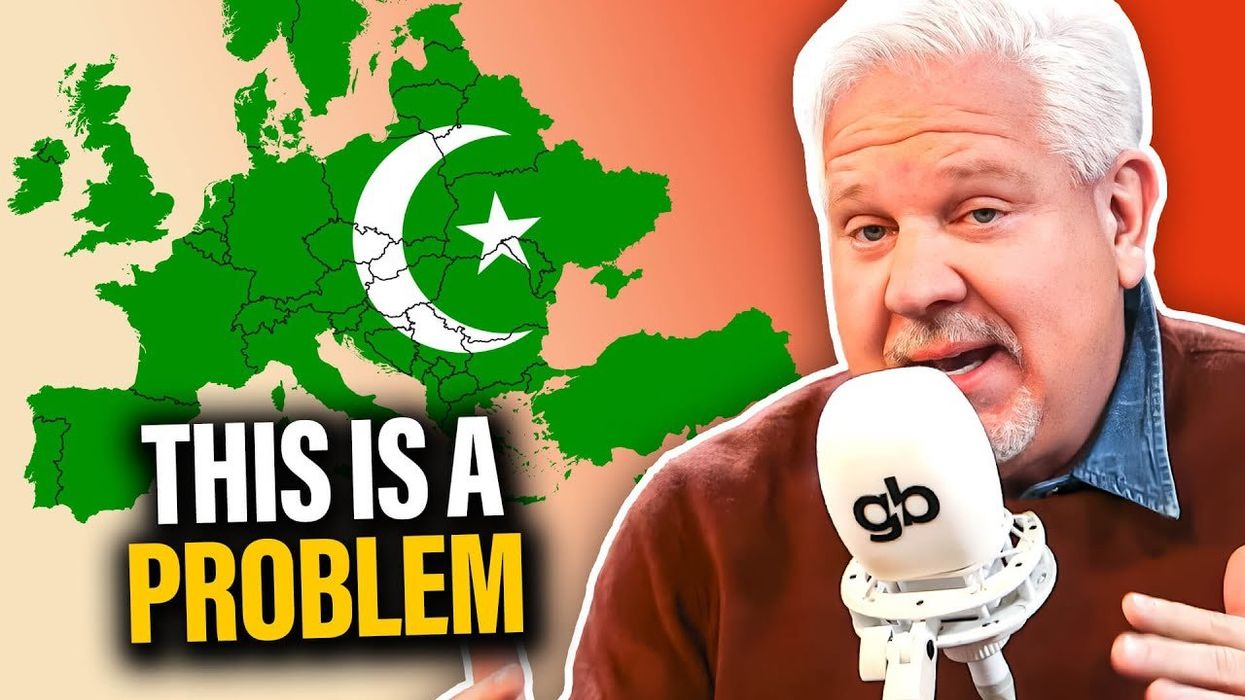
Hopefully, Donald Trump will fix our immigration crisis. Because if he doesn't, we have a good idea of what it could turn into. Glenn takes a look at Europe, which is a few years ahead of us. After years of opening their borders to migrants, especially from the Middle East, European countries are now at risk of eventually becoming Islamic strongholds. But it's the Islamists who are the most concerning. Glenn reviews how terrorist attacks and anti-Christian/anti-Jewish hate crimes are on the rise across Europe.

©2024 MERCURY RADIO ARTS.
ALL RIGHTS RESERVED.
RADIO
December 15, 2025
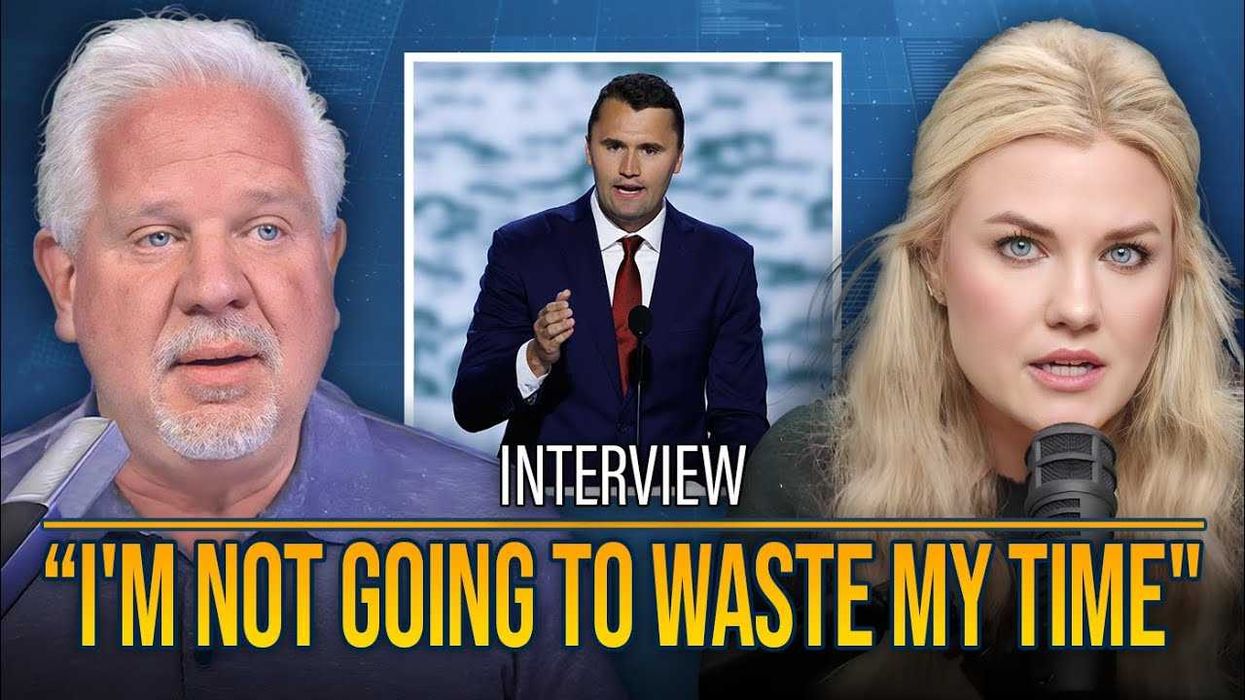
Erika Kirk's BIGGEST CONCERN as Charlie's alleged assassin heads to court
Erika Kirk joins Glenn Beck to address the conspiracy theories about the assassination of her husband, Charlie Kirk, as his alleged assassin heads to court. She also discusses Charlie's final book, "Stop, in the Name of God," and reveals what she believes Charlie's TRUE legacy will be.
Transcript
Below is a rush transcript that may contain errors
GLENN: Let me just say something that I -- I had to check with somebody. It can't be true. Yesterday was the three-month anniversary of Charlie's assassination. And here's why I had to check: It's only been three months? It feels like it was a year ago, almost!
Doesn't it? Is it just me?
So much has happened. So much has changed. And I have to tell you, I pray for the TP USA staff. And I think about them every day, because of the evil that they have been facing.
It's just absolute evil. And I want to talk to Erika. I mean, she addressed that yesterday. I -- we don't need to go into all of that. Because I really want to focus on Charlie's last message.
Welcome, Erika.
ERIKA: Good morning, sorry.
GLENN: No.
ERIKA: Just emotional. Good morning.
GLENN: It is -- gosh. Three months. And, you know, what you said yesterday -- and we don't have to go into this. I don't want to spend a lot of time on it. But it's -- it's evil what is happening.
ERIKA: I know.
GLENN: My wife and I -- I honestly have thought about my wife so much because God forbid something ever happens to me.
ERIKA: Yeah.
GLENN: I don't know how you handle this, Erika. I don't know how -- to be dragged into, you know, you were involved in the death and all of this crazy evil stuff.
ERIKA: Oh, it's sick.
GLENN: God bless you. God bless you.
ERIKA: It's sick.
GLENN: It is.
ERIKA: My family means everything to me. Turning Point USA has always been in our life and has always been so good to Charlie, and Charlie was so good to his team. Everyone loved Charlie!
GLENN: Yeah.
ERIKA: I get that everyone wants -- everyone wants an answer to this evil. And sometimes the answer is very clear.
GLENN: Yeah.
ERIKA: The truth is very clear.
GLENN: No. Are you worried -- one question, and then we'll go into what the real answer is. Are you concerned about his assassin is in court today? Are you concerned about being able to have a jury that's not been tainted?
ERIKA: No, it's -- it's a real thing, Glenn, and you get this: A lot of people don't.
And I think that we need to do a better job of educating our citizens about our court systems.
A lot of people don't know how an actual trial plays out. I am very curious about how the United Health Care case plays out. We are living in a day and age where social media can absolutely impact, I feel, it can. The reason I say that is because I don't want a attained jury pool. I want justice for my husband.
Any time we have leads. Any time we hear anything, we send it to the authorities. We're not messing around. None of us are involved in my husband's murder. None of us!
Turning Point USA, myself, any of these other crazy accusations, none of us!
And so, I want our team, who is on this case, to do what we hired them to do. And take care of this.
And the unfortunate part is that everyone is acting as if the case and the trial is going to be tomorrow!
It's not. Glenn, you know this.
The case is not going to be. I mean, in full transparency, we're looked at end of '26? Beginning of '27, probably. I -- I mean, this is not something that is going to be happening tomorrow.
Say that again.
GLENN: Well, it's -- I mean, how do you get a jury, with that much time, and what's happening.
And, quite honestly, I don't need you to comment on this happen. But I think mental illness is involved in -- in some of this stuff that is online. Honestly, I feel bad, it's mentally -- it's mental illness.
ERIKA: Yeah. Glenn, I'm not going to waste my time, combating people, going toe to toe, calling people names.
GLENN: Yeah.
ERIKA: I don't -- I don't -- that's just not me. That's not how Charlie operated. There's no reason for me to go down a dark place like that. I am so tired of the fracture. What drives me nuts is that Charlie -- he has worked and provided and has blessed us with so much -- like literally, his book. He's blessed us with so much wisdom.
So much -- he's just such a good thought leader.
He blessed us with laser focus on the mission! On saving this country!
But instead, we're so focused on who did what?
Yes. We will figure this out. Yes. This was a murder case. He did not die in a car crash.
Yes. That will be handled, but my husband's legacy is not about his murder. My husband's legacy is what he left behind.
GLENN: And it's -- it's -- it's -- you know, I just did an hour. I through out all the stuff that I was going to talk about. All the stuff in the country. The debt and Venezuela. And China all of this stuff.
And I went in a different direction. Just about the meaning of life.
Because we're losing touch with life has meaning and value. And the same thing, I think here. You know, we can talk about a million things.
But -- and I know this.
You know, he writes about the Sabbath and honoring the Sabbath.
And I have to tell you, if I didn't honor the Sabbath, I would have been dead a long time ago.
When I was at the apex of work. I used to have two staffs. One in the day, one at night.
Charlie was the same way. There's just not enough hours in the day to do everything. If I didn't shut down, and concentrate on God and my family for one day, total shutdown. I wouldn't have made it.
And -- and that's what Charlie talks about in this book, and I know you've talked to people, you know, you have -- you have broadened this. So you can get people who are not religious. But can you talk to people who are religious?
I know a lot of people that are religious, that do not honor the Sabbath. Why is it so important?
ERIKA: Right. So it's interesting, we live in a day and age, where people are trying to separate the Old Testament from the New Testament. You cannot pick and choose portions of the Bible. They -- they -- they -- the New Testament, like, everything is being fulfilled. You can't separate any of that.
GLENN: Yes.
ERIKA: The one thing Charlie would say is that it is one -- it is one of the only commandments where if you don't participate in it, you are the one who is missing out on the blessing, not God.
GLENN: True.
ERIKA: And for Charlie, just like you, you know how it is. Long days. Long hours.
Trying to balance it all. And, yes, you can to some extent. But there is going to come a point where you're on the verge of burnout.
And you have a decision to make. Are you going to blow through your adrenals, spike up all your cortisol levels forever, and just try to wear it as a badge of honor, like I'll sleep when I'm dead?
Or are you going to do what you are doing and what Charlie is doing, where you are literally so intentional about your time, down to the millisecond, because you know that that's all you have.
You don't know how long you'll be here. But that you know you have time. And you are in control of your time, and you are in control of how you use your time.
And he was very good of knowing, okay.
If I can just turn off my devices, turn off the noise, and honor the Lord, I can reset. I can reset my brain. Give myself a second to not have to be attached to this.
And whatever my virus is on the internet, and -- and the politics for that day. Like give yourself a break. And the thing is that if you think that you can't, and you're a Christian and you say, "Oh, well, I have this really important thing going on." You are proving right there that you are also breaking a commandment.
GLENN: Yeah, it does.
ERIKA: You are involving idols in your life. You're putting other gods before the one true God. And so obviously, there are caveats here. Meaning, if you're -- you know, if you see someone drowning, you're not going to just watch them drown.
There's caveats of preserving life.
There are common sense.
I know common sense is not common.
Work with me here!
Right.
So, you know, it's one of those things that Charlie was very intentional.
GLENN: I -- I blew out my adrenal glands.
And it was -- it's not a fun thing. And I still was honoring the Sabbath. But it's just go, go, go. Go.
Part -- I don't know. But there were times that Tania. And she was the key for me.
We would get sloppy. And I would say, honey, I have got to fly here. I've got to do this.
This is -- you know, and we would get sloppy for a while. And we would bring it back. Et cetera, et cetera.
Did you guys go through a period, where -- did you just nail this, or did you have periods where you were a little sloppy? And you're like, "Okay. I've got to pray?"
ERIKA: No, we had -- and that's the creative part. Charlie was never legalistic about this. He wasn't. If you can't get a full 24 hours, work it through your week. Maybe you sunset your device at 5:00 p.m. up until the next morning.
Back in the day, when we didn't have email, people knew they couldn't reach you. You did have a home line. I think we should bring back house phones. Make house phones great again.
But I just feel that, you know, there's a way for you to be able to do this and not put pressure on yourself, where you're letting yourself down.
That's what I don't want to have happen, is where you're letting yourself down. So if you say, you know what, I will be doing this on Wednesday. And I will be doing it for these specific amount of hours. Just -- just be easy on yourself. Give yourself some grace. Start out with an hour. Start off with two. Then from there, then you grow, and you become more and more intentional. And then the people around you, will honor that.
Then you're setting your own boundary, to where they even have a chance to have a Sabbath.
GLENN: We're with Erika Kirk. It is -- yesterday was the three-year anniversary. I'm sorry. The three-month anniversary. It feels like three years at times.
ERIKA: It feels like three years.
GLENN: Doesn't it? It's got to, for you. It feels like forever ago. It's crazy! Charlie's final book is out. It's called stopping in the name of God.
Why honoring the Sabbath will transform your life. You guys made the decision to honor the Sabbath on Saturday. Why would you do that?
Can you tell me? Why did you find that important?
ERIKA: Honestly, it boiled down to schedule-wise for us. Charlie always made sure to build that day in specifically. Because he wanted to be prepared for the week ahead.
And he loved having Sunday as his planning take. I'm actually sitting in his office. This is his home office.
And I have not been this here for a very long time.
And I've just been -- that's part of the reason I keep looking down. It's not that insular want to look at you. Just, there are so many treasures here. For instance, this piece of paper.
He wrote on everything. He has papers everywhere. This says, it's the priority -- it says family, children, legacy. Kids, number one.
Versus careerism, consumerism, and loneliness. That's interesting. I could spend hours on -- at this desk. But what my point is, with things like that. Is he would sit here on Sundays, writing, using his journal. Like, going through all these drawers.
And he was preparing for the week ahead.
He was putting on his armor for battle, metaphorically. And he took that time on Sunday after being with the Lord on Saturday and with the family to really get his mind right.
I was even going through one of my kid's binders, like their baby books. And out came a letter that Charlie wrote to my daughter, that she is supposed to open on her 16th birthday. And I never forget when he wrote that. He was so excited. He was like, one day, she will be able to open this.
I was like, yeah. You know, it's so interesting, because I look back now, and I'm thinking, in some way, we operate -- like the Lord puts it in us to operate the way we operate, without even knowing.
Because he knows what our mission is here. And so the Lord put in Charlie such a haste for time. Meaning, I'm not going to run. I do not want to waste time. Everything was intentional.
Everything.
GLENN: Can I ask you, and please feel free: I don't mean to pry. So please feel free to say, I won't answer this.
ERIKA: No, no, no.
GLENN: But I know -- I know the tour. That was the first stop of the tour, and I know you two had met with your priest the night before. And did -- do you think Charlie knew to some degree and had made the conscious choice that I may be taken out early? Not saying that he knew that that day. But that he had any inkling that this might come this way, and that he intentionally hose to move forward with faith in God?
ERIKA: It's interesting. Because we always -- we have -- I mean, I still -- I have unbelievable amounts of death threats. My kids have kidnapping threats. Death threats. Our whole team has death threats. We knew that there was always going to be a threat. But Charlie and I always. We promised each other, we would never live in fear. And he would assay, if they're going to get me, they're going to get me. But he was not messaging people the day before saying, "I'm going to be murdered. They're coming after me. Someone's going to kill me."
He didn't say that. And I had a cell phone. Didn't say that. And so what I do know is that we believe in the power of prayer. What I certainly was know is that we believe in our sovereign God. And what I do know that that night before, we did what we usually did before tours. We said our prayer. And we asked the Lord to protect us. And we asked the Lord, that his will be done.
That's what we did.
GLENN: Is it true that nobody knows, I mean, except for the family. Nobody knows where he's buried, because of what you are afraid people will do?
My gosh.
ERIKA: Why -- why do I need to have people coming to a private place that's for my in-laws. This is their son. This is my father -- my -- my -- the father of my children. My husband.
My own parents. Like, I -- I want to be in peace when I go and pray with my daughter and my son at my husband's gravesite. I don't need photos taken of me. I don't need people coming you up tapping me on the shoulder.
GLENN: God bless you.
ERIKA: We have a beautiful place that we will be making for the public, yes. And people may ask, well, why did you put on display, X, Y, Z when all this happened? Because you know what, if we didn't show the behind the scenes of everything that happened, and all that stuff, they would have still said, why didn't you show behind the scenes?
If you do show behind the scenes, they're going to say, "Oh, this is terrible." You can't win.
GLENN: I know. I know.
ERIKA: I'm not here to win. My audience, my audience is the Lord and Charlie. That's it! That's my audience.
GLENN: Erika, I love you. You have my support. I was there with you at the fundraiser on Saturday, and we just love you and appreciate you. Thanks.
Get the book at 45books.com. That's 45books.com. It's Charlie's Kirk's last book. Stop In the Name of God.
TV
December 15, 2025
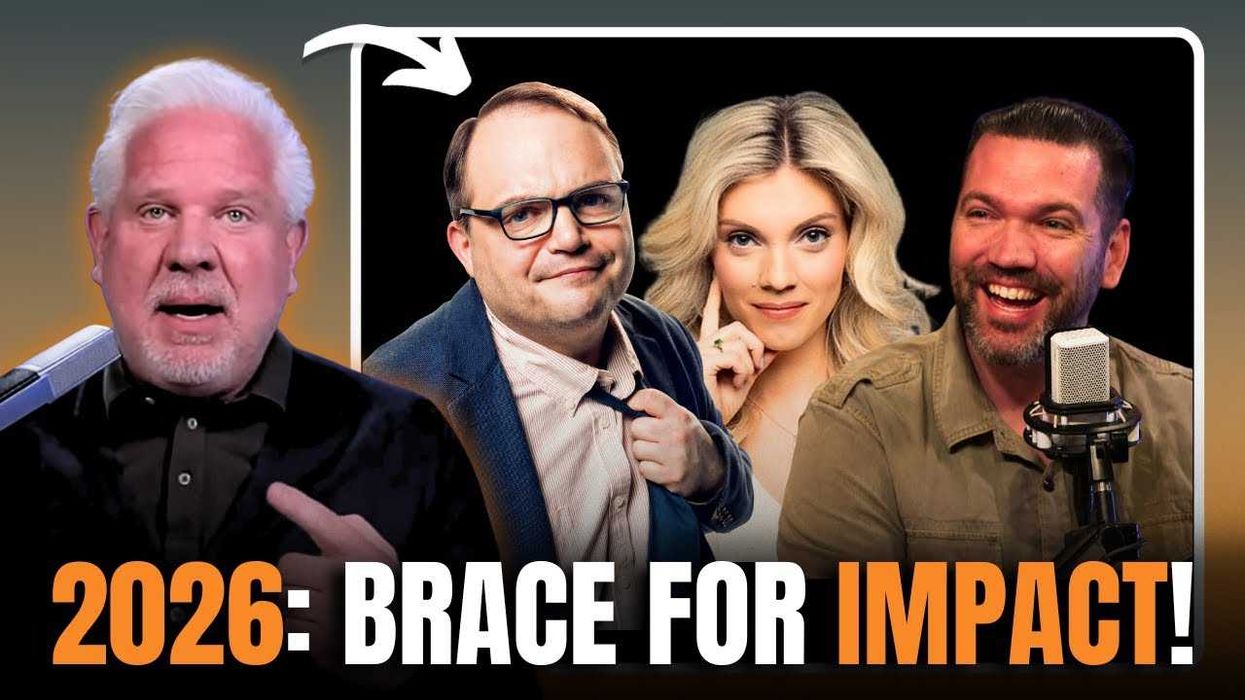
Bold Predictions for 2026: UFOs, A Deported Congresswoman & More!
Global power is shifting, and 2026 may be the most disruptive year in decades. As Glenn Beck, Steve Deace, Liz Wheeler, and Jason Buttrill lay out—from a China–Taiwan flashpoint tied to Venezuela, to the explosive rise of UFO/NHI disclosure, to the possibility of a U.S. congressmember being denaturalized and deported—major geopolitical, cultural, and political shocks are converging at once. Meanwhile, pressure is mounting inside the Trump administration, voter patience is thinning, and the world is racing toward a new strategic realignment. These aren’t far-off hypotheticals. These are the indicators shaping the next year of global conflict, domestic upheaval, and institutional collapse.
Watch the FULL Episode HERE
RADIO
December 15, 2025
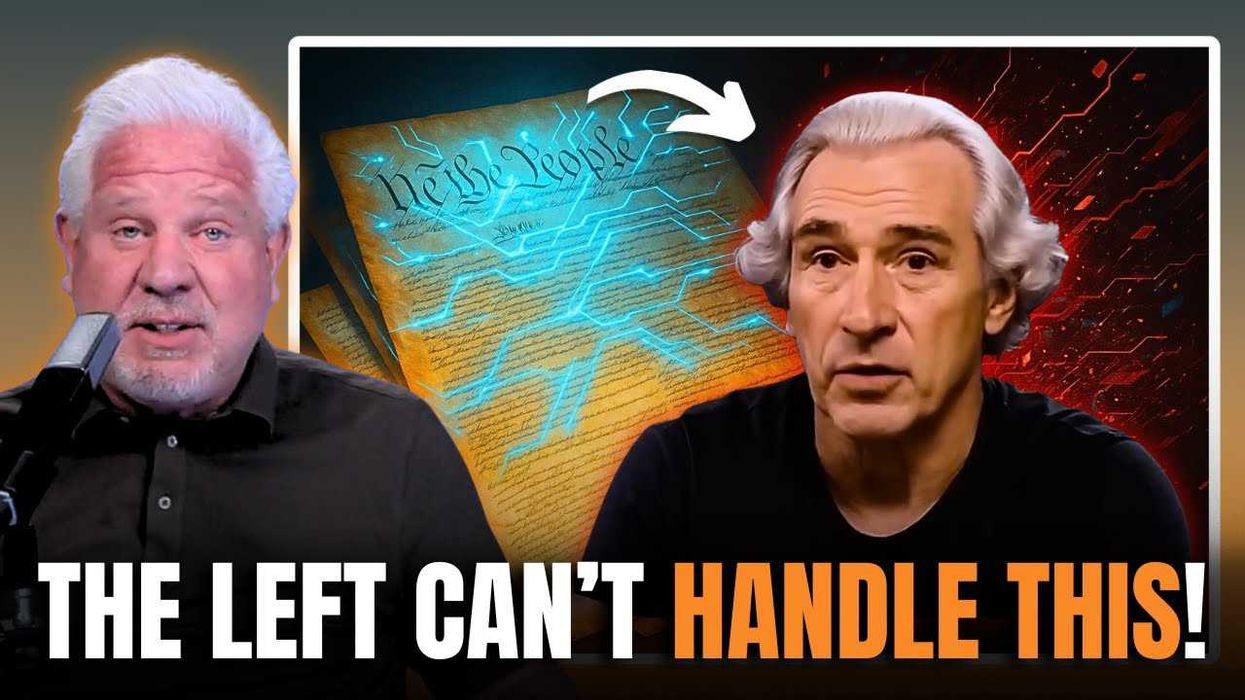
How Glenn Beck's "AI George Washington" went VIRAL and Caused a Leftist MELTDOWN
The Left is erupting over Glenn Beck’s new “George AI,” a completely fenced-off system trained only on Founding-era writings, the Federalist Papers, and the documents that shaped the United States. Critics insist it “sounds like Glenn,” but the AI doesn’t even know who Glenn is—and it doesn’t know any modern figures, media outlets, or political movements. What George AI does know is the worldview of the Founders, and that’s exactly what seems to be triggering its opponents. When the tool is asked about today’s issues, it responds entirely through the lens of 18th-century principles, often echoing truths that modern politics can’t seem to handle. This video breaks down why the backlash is so intense, how the AI works, and what it reveals about the widening ideological gap in America.
Transcript
Below is a rush transcript that may contain errors
GLENN: By the way, the left is losing their ever-loving mind on this George AI thing. There's more. I think it was trending again today. On one of the -- I mean, what -- I don't understand it.
I don't understand it.
STU: They are fired you up, and I don't know -- it's a fascinating thing, and you talked a little bit about this yesterday. I don't know if you're able to run the test. One of the fascinating parts of this.
Not only is it not echoing you.
GLENN: Yep.
STU: It is unaware of who you are.
Which, again, I wish I was.
GLENN: It is fenced off.
A lot of America is saying, right on, brother.
I'm with you, preach.
The -- the -- the way it's built, is it is only built on these specific documents.
It's only their writings.
What influenced them at the time.
The founding documents. The Federalist Papers. Et cetera, et cetera.
They keep saying, say what Glenn Beck should say.
Maybe that should tell you something. It doesn't know who I am.
I said that, and yesterday afternoon. You called me and said, does it really not know you?
We were just having a conversation. Does it really not know you. So I called Jason, who was on a plane.
And said, hey, Jason, can you have access to George AI?
What happened?
JASON: I had really crappy Wi-Fi, first thing I plugged in and said, who is Glenn Beck? And it's -- I won't give all the details for how this all works right now. But basically, what it spit out immediately is I can't even generate content on that, because I don't have data, Glenn.
GLENN: Doesn't know who I am. Has no data on me. So I asked him. Ask, does it know CNN? Does it know Anderson Cooper?
Does it know Donald Trump? Does it know the United Nations? The WEF? Does it know any of these people or any of these organizations? What happened?
VOICE: Same exact answer for every single one of them. It was actually so crazy. Well, does it know who anyone is? So I'll just pick a random person from George's era.
I just picked John Adams. Okay. So who is John Adams? And George AI spit out this amazing.
GLENN: Amazing. You sent it to me.
VOICE: Did you read this first paragraph? This is George AI.
He's saying, let me tell you about the reluctant architect of a republic. He goes, let me take you back the time before powdered wigs were considered cool before independence was in, before anyone had the audacity to name a country after ideals.
There was this man from Massachusetts. He didn't care much for fame. Didn't sparkle in debates and couldn't charm a crowd to save his life.
But give him a quill and a cause, and he would change history.
That's who John was. He goes on.
GLENN: I saw another -- I saw another piece of that, that was just -- it was just all the facts on him.
I mean, I'm reading it like I didn't know that. I didn't know that. I didn't know that.
JASON: So good.
GLENN: George AI, which begins January 5th in its own way.
I mean, we are being very careful with all of our AI. We -- it's going to be beta testing for quite some time.
And you will have access to the -- the -- the products.
As of January 5th. But you won't recognize it a year from now. But we just want to make sure that everything is safe.
And Stu asked me earlier, well, then how do you ask it. If it doesn't know anything. How do you ask it, you know, things like, what about this story? What about this story?
What about this story?
You have to put that story in. You have to say, here's a story, according to, you know, the Founders and the founding documents, what would you guys say is the problem here. Or how would you fix this, if this was happening in your society?
That's -- that's how we could compare things. You could you put in. You know, new laws, bills, anything else.
I put something in the other day. Was it yesterday or day before. Where we were talking about, oh, whether the president could fire somebody from his administration.
And the answer, I said, if there's anything in the Federalist papers, and it came back. Like, there's nothing in the Federalist Papers, per se.
However, Hamilton said, and -- and it went on. And it was like, I don't know what context he said that in, in the Federalist Papers.
I would have to look, thank you for showing all of this.
But it was exactly the answer that we're looking for. It's really a remarkable tool.
And it doesn't know who I am. So all of you lefties that are so freaked out, that it sounds like me, maybe -- maybe -- just maybe, that's something you should ponder.
Because it only has access. This is not a large language model.
This is a -- a fenced off server, that only has founding era you documents. Founding era information.
Ow, things that influence them. Things that came from them.
That's all it can relate to.
So if you're saying, it sounds like Glenn Beck. Maybe you should say, why do I hate Glenn Beck so much? If I claim to love the founding of our country?
If I claim to care about our Constitution.
JASON: One of the ways you can use this as you describe. A recent story of Donald Trump's new national security policy.
And I was running through tests with George. And just seeing what it would think about it.
GLENN: What did it say?
JASON: I won't go through the entire thing. It's pretty long. But just, from the very opening paragraph. You know, it's interesting. I'm trying to figure out, so many words of saying, when did the obvious, or stating the obvious become controversial?
GLENN: That's exactly what -- oh, my gosh. That's exactly what I said about this on the air. I read the policy on the air two days ago.
And I said, when is -- when did it become the obvious, it's like so revolutionary?
So controversial.
That is amazing.
JASON: Crazy.
GLENN: That is amazing.
RADIO
December 15, 2025
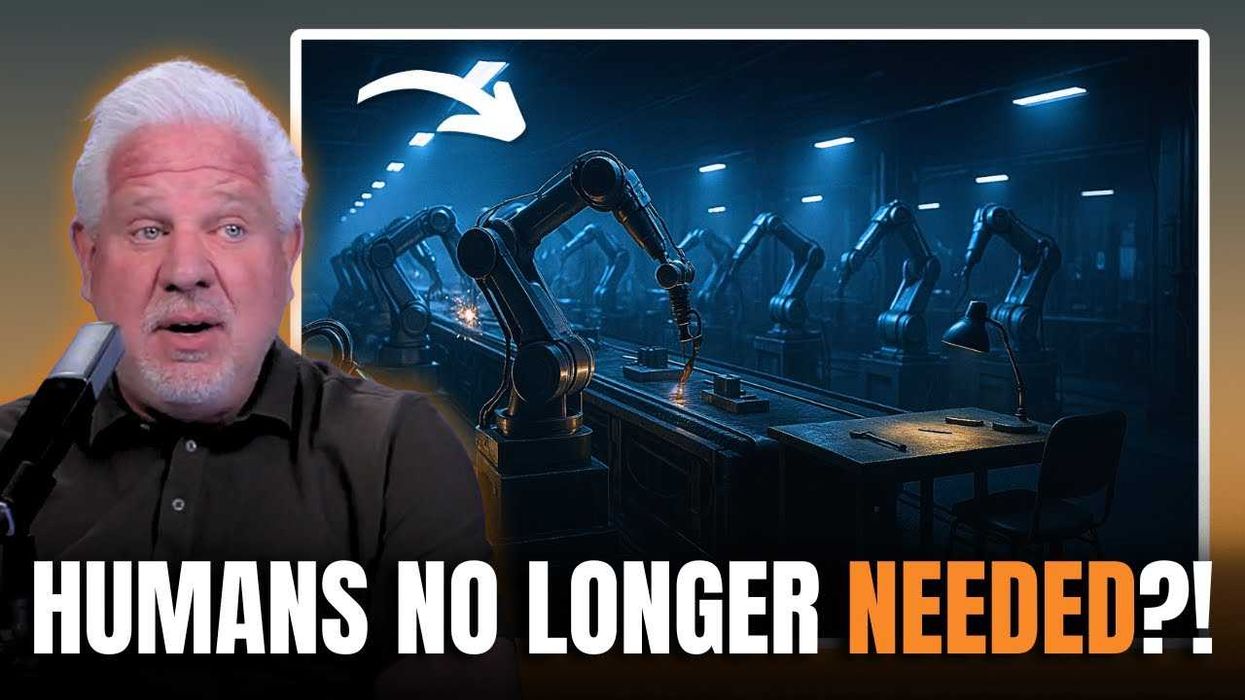
The AI Jobs Crash is COMING... And We're Not Even CLOSE to Ready
AI is NOT the bubble... the real bubble is jobs. Entire industries are on the verge of disappearing, and college degrees are rapidly losing real-world value as automation accelerates. The next decade is set to erase millions of careers far faster than most Americans are prepared for. Manufacturing continues to collapse, robotics and AI are replacing workers at an unprecedented speed, and a widening disconnect between higher education and economic reality leaves younger generations feeling cut off from the American dream. A deepening generational divide, rising economic hopelessness, and the uncertain future of both white-collar and blue-collar work reveal a reshaped workforce where even trade skills are only temporarily secure. This is the new landscape facing the next generation—and it is arriving much sooner than anyone expected.
Transcript
Below is a rush transcript that may contain errors
GLENN: All right. So we are -- we're just talking about how jobs and AI. That's the bubble that everybody should be talking about. Not the AI bubble. Everybody should be talking about the yobs bubble.
And I think in some ways, everyone in America is. I mean, why?
Honestly, why -- why would you go to college?
I mean, anybody who is sending their kids to college, unless it's for something very specific or you just want, you know, your kid to find themselves. And to, you know, whatever. That is.
Why?
Why are you doing it?
I'm -- I'm begging my kids, trade school. Trade school. Trade school. Trade school. Because that -- that is the job -- those are the jobs of the future. Trade schools. You know, you can be a plumber. I don't know how long that will last. Maybe ten or 15 queers. But that will last longer than let's say truck driver. That will last a lot longer than attorney. Physician's assistant. Well, maybe a physician's assistant. A PA will probably last a while. Nursing will probably last a while.
But doctors -- I mean, it's -- it's -- you don't need as many as we have, right now.
In the future. Because it will be able to be done, robotically.
And I know this sounds crazy, but it's coming! It is come!
Now, we need doctors. So, yes. Go to school for a doctor. But what else?
Why are you going to school? Accounting? Business?
Really? You need that degree.
JASON: I had the same conversation with my son. Exact same.
Doesn't like it. Doesn't even want to talk about it.
STU: It is depressing.
JASON: Yeah, it is depressing, but they completely shut down over anything.
I told him -- I even offered him, I said, I will go to an electrician school with you.
We will do it at night. I was going to do it just to learn another skill.
GLENN: He was confident in the show? No, the sports thing is going to work out, Glenn. The electrician.
JASON: I was actually trying to get around my life screaming at me, the next time I blow the entire circuit in the house. It happened a few times.
GLENN: Sure. Sure. I got it. I got it. You know something I don't know.
JASON: They don't even want to talk about it. These are issues that I'm scared about. It's a complete crazy circle catch-22 situation going on right now. On one hand, the youth are not able to basically survive in the economy right now.
GLENN: They're not able to survive in anything.
JASON: No.
GLENN: In anything. If it's not cooked in a microwave, how many of our kids know how to cook? Even know where food comes from?
JASON: Yeah.
GLENN: I mean, they're not able to survive. You know, I read something about Teddy Roosevelt.
STU: Robotics can definitely do that. Right?
You think, if all this stuff is going away, these jobs are going away, who will need to know how to cook?
This becomes a really depressing conversation. I'm not surprised your son was like, gosh, this sucks. And shuts down. You know what, my -- I have a relative who owns a plumbing business, and he does great. He does awesome.
And it's been incredible for him and his awesome family.
GLENN: Awesome.
STU: That being said, not everybody wants to be a plumber or an legacy. So if what you're --
GLENN: No, I know that.
STU: You're the bad parent in the after school specials. Like, just screw your dreams. Go be a plumber. Who wants to be that guy?
GLENN: Not true. Not true.
My daughter wants to do the absolute impossible. She wants to be an actress. I would love to say, screw your dreams, you're not doing that.
And she talked about going to school, you know. I could go up to, you know, some university up in New York. And I'm like, that's not happening. You want me to pay for it.
Not paying for that. Have a good time. You want to earn it yourself. Go ahead. But I'm not sending you up into that viper's nest.
But I said to her, let's design a school for you. Instead of paying all of this money, let me get private acting classes.
Let me get, you know, private dance classes. It's less than a university. And what you know really got her? Was you then don't have to study all the stuff that you're never, of going to use.
You don't -- you don't -- you don't need to take advanced calculus or anything. Because you're not going to use that. You're never going to use that. You're never going to use that.
Now, my son, he likes math. That's fine with him.
You know, but there are things, when they are driven for something, you don't have to say, be a plumber. You can say, let's find ways for you to learn this in a better way.
STU: Yeah. If you're making a point against the university system, you do not need to sell -- it's like trying to sell me on the Jasmine Crockett candidacy. You have to do no work on that one.
GLENN: Right. Right.
STU: But I do think, it's interesting. I think you're right. I think a lot of these jobs are going to go away. In fact, there are already signs of this.
GLENN: They are.
STU: To the extent of, the back and forth about, you know, tariffs and all this other stuff.
We've seen a decline in manufacturing jobs in this country, this year. A decline. Like, and I don't think that's because tariffs, you know, are shutting down manufacturing anymore than they would have previously.
You know, there's gotten harder arguments about that. But I think more than anything else, people are just taking these jobs offline.
And automating them. All these big companies are replacing thousands of jobs. These announcements are in the news every day.
And it's going to be tough to -- to figure out what the next thing is.
I think you're right. Plumbing and electricians and all these things are going to be very valuable. Particularly in the short to medium term.
It's tough to message that to a kid. Hey. Find this job, that you don't really like. And just do it. It's the only job that exists. It's not exactly an inspiring message.
GLENN: So let me just ask you a question. Because maybe it's me, and what I do.
But I don't think it is.
You know, I'm married into the idea of AI. I have wrestled with it hard. I mean, you know Stu, I've been talking about this since the 1990s. And I've been wrestling with this. Because it is a nuclear weapon, in the hands of every single person.
It's the most dangerous thing man has ever created, and the greatest thing man has ever created, okay?
And so you have to really be careful with it, and have to know how to use it. But, you know, I told -- who was it? Sara, I think I told you yesterday. I said, I am -- I mean, I cried at Kleenex commercials. So, you know, this doesn't mean anything.
But I've gotten emotional using it recently, because there's been stuff inside of me, since I was ten. Things, dreams, ideas that I've always wanted to do. And I'm now being able to not only do those things, but do those things in a way that would have cost me hundreds of thousands of dollars, that would have taken me months to are do.
It was -- just, I couldn't do it. And I'm realizing now, as I'm scratching the surface. I'm learning more about history right now. Because I can grab the resources so fast. I can look into stuff and go, well, that doesn't seem right. And I can go deeper.
What is the difference between doing that, as long as you're using -- you're directing it, and you're using it and checking the sources et cetera, et cetera.
What's that -- what's the difference between that and almost like a book that was written for all the questions that you have?
And because it -- all it's doing, it's taking what you have inside of you.
And following that, is mining for things that will make that stronger.
I've -- I've learned so much history in the last year.
I've learned so much about not just technology, but -- but by -- about my own nature on how I work. What I believe is right. What I believe is wrong.
I mean, I've had this explosion, because I'm using AI every day.
And I don't understand why that's not considered like a university in its own way.
JASON: Can I give you? So you have a perspective of that as a creative.
Think of the amazing things you can do with it. Can I view the perspective of, like, my son's generation?
GLENN: Yeah. Yeah.
JASON: This is what they're thinking. While this sucks, the economy is so screwed, I will never be able to own anything my entire life.
Now, this is what they're telling us, speaking from my son's perspective, but everyone is telling us, don't worry about it, we're going to build, build, build, and we're betting everything on AI. Okay. Great. So it is going to get better, right?
Oh, how many jobs are going to be destroyed? So I can't do that one thing that I wanted to do because of AI? So the solution to why I can't ever take part of the American dream is what's going to eventually take the job that I want to get, so I can some day get the American dream. They're in that circle. And they're like, I'm screwed.
And then you look at the people like Elon Musk, that says, don't worry about it. Because automation, I'm going to be building all these robots. It's going to completely solve world hunger. But wait a minute. I won't have a job.
So none of the math adds up. They're like, wait a minute. And, no. It does. Remember, Stu. We've been talking about this problem for how many years. And I could not get anybody to listen.
I couldn't get anybody to listen.