RADIO

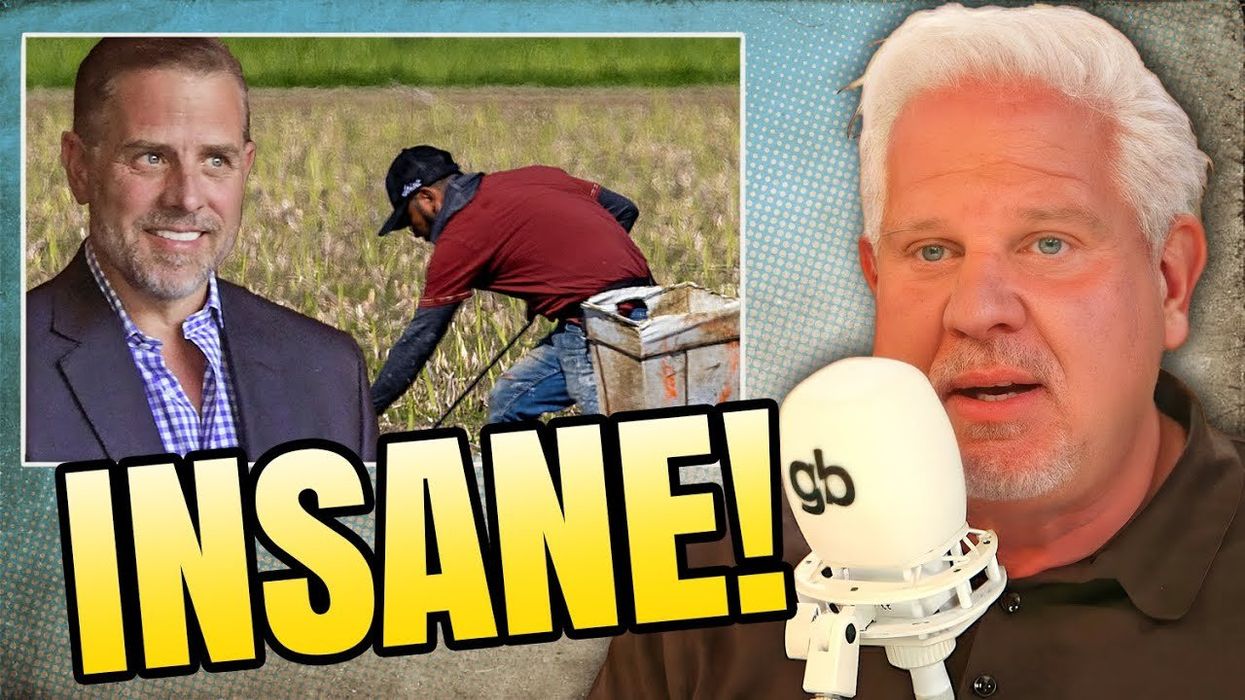
Hunter Biden admits CRAZY reason he wants illegals in America

Hunter Biden recently went on a bizarre, profanity-laden rant on the podcast “Channel 5 with Andrew Callaghan” about everything from Democrats to President Trump’s deportation program. But his reason for wanting illegal immigrants in America was absolutely INSANE! Glenn Beck comments on this admission, as well as Hunter’s take on his father Joe Biden’s disastrous 2024 presidential debate.

Transcript

Below is a rush transcript that may contain errors

GLENN: Let me talk to you a little bit about Hunter Biden. Hunter Biden is on a podcast, called channel five, with Andrew Callahan.

Now, I don't pretend to be up on the latest podcasts. But this is a show. I mean, I am -- I applaud his creativity.

I applaud his -- his nod to the past. In channel five. Has anybody watched this show?

I mean, how many views does it get, do you know, Stu?

STU: So I'm looking at this. I don't know this person that he's talking about.

This is me just looking at it, as we speak. I does seem like he has several million YouTube followers, so relatively big audience.

GLENN: Relatively big audience.

STU: Seemingly was -- so I think built a very big audience, then had what I would maybe say is a Me Too scandal.

GLENN: Okay.

STU: And had things kind of -- alcoholism.

Maybe things sort of fall apart for a while.

This is maybe -- and it came back.

GLENN: Good for him.

Good for him.

STU: Yeah. I don't know if it's good for him.

It doesn't seem like he's a hard-core leftist. But leans to the left.

GLENN: Good for him.

If he's an alcoholic. Had a crash. And he found a way to claw his way back out.

STU: You shouldn't be excited for him, on the left.

I was trying to give a full perspective of who he was.

GLENN: Yeah. So, anyway, so he was the one that did this Hunter Biden.

And it is absolutely and completely bizarre.

But what -- I mean, what else would you expect from -- from Hunter Biden?

Let me -- let's see.

Where should we start here, Stu?

Let's --

STU: It's all good, Glenn.

There's no wrong place to start with these clips.

GLENN: Okay. Let's start here. Let's start here.

Cut six. Hunter Biden on migrants.

VOICE: All these Democrats say, you have to talk about, and realize that people are really upset about illegal immigration.

(bleep) you. How do you think your hotel room gets clean? How do you think you have food on your (bleep) table.

Who do you think washes your dishes?

Who do you think does your fucking garden?

Who do you think is here by the (bleep) sheer just grit and will, that they figured out a way to get here. Because they thought they could give themselves and their family a better chance.

And he was somehow convinced all of us, that these people are the criminals?

White men in America are 45 more times likely to commit a violent crime than a Democrat.

The media is saying as well. Well, you have David Axelrod. And Rahm fucking Emanuel. Because we got to understand that these people are really mad.

GLENN: Oh. Sorry. We missed -- did we catch that in time?

STU: Yes. We did. Sorry, there's 847 F-bombs in there.

GLENN: Yeah. And we missed one. But you get the picture here of what he's talking about.
This one view I absolutely love. I absolutely love the fact that Democrats will take the point of view, that this is who cleans the hotel room. This is who washes your dishes. This is who you have, pick your food.

Like, I mean --

STU: I love it.

GLENN: The Democratic slogan should be, Democrats, helping you have cheap food since 1810.
(laughter)

STU: They've had this policy the whole time.

GLENN: They fought for it in the 1850s and '60s! We want cheap labor! I mean, it's crazy!

STU: It is hilarious. And coming from him.

Like who cleaned your hotel room? Considering what he's done to hotel rooms, I hope nobody. I hope he burns them down to the ground after he exits them. I don't know. Who takes all the bodily fluid out of the carpet fibers, Hunter? What are you thinking?

Oh, it's illegal immigrants.

We have to have them here, to clean the meth dust off the cabinets.

GLENN: Because it gives them dignity.

STU: Yes, I love it! This guy.

GLENN: Who is in there with the black light, trying to make sure they get every bit of soil out of the walls and everything else after I've been in? The legal immigrants.

STU: I -- I -- as I do, I hope, the host of the program has no more Me Too, you know, failings.

And has its -- alcoholism go away.

I, of course, also --

GLENN: Alcoholism never goes away. I hate to be that guy. But go ahead.

STU: Yes. Yes.

There you go.

I hope he keeps it in remission, we will say.

And the same thing for Hunter. Though, I -- watching this interview, I -- I am starting to doubt whether he's going to be able to keep it in remission.

And maybe directly from a crackhouse.

GLENN: Yeah. I'm not sure he is in control, still.

That he's still in remission.

GLENN: Just looking at this, it seems he's back on crack.

That's just me. I'm not on the crackhouse with him.

No, I have evidence to support that complete belief.

GLENN: Just the crackhouse on the way to the interview.

STU: My impression is that in between the clips that we're watching, he's smoking crack.

That's my impression of the interview.

GLENN: Okay. All right.

STU: I'm just putting that out there.

That's allegedly. Not even, it's just an impression.

GLENN: All right. We have a quick commercial, that we want to share with you, from the democratic party.

STU: Oh.

GLENN: Go ahead. Roll it.

VOICE: To the hands that scrubbed my 7-bedroom DC home for $4 an hour so I don't have to, thank you.

To the hands that flip burgers to keep Americans fat and stupid so they'll keep voting for me, thank you.

And to the hands that smuggle cocaine into the country for the cartels, thank you! And Hunter Biden says, he's especially grateful.

To the hands that build our bridges, hurry the (bleep) up, my constituents have been waiting for this since 2023. And to the hands that clean the hotel, where I host Chinese businessmen for top secret meetings, thank you. I couldn't survive without your cheap labor.

I mean, we could -- the market would just raise wages. But if we can just take advantage of you, and secure more votes at the same time, why not?

GLENN: Right. Right.

STU: That's a great message.

GLENN: Vote for the Democrats.

I just -- it kills me.

STU: It is a really strange argument to be the humane side of the -- of the discussion. Right?

Like, that is how the media portrays it.

Like, we're the bad ones for saying, hey. You shouldn't be exploited.

You had been come across the border.

You shouldn't have coyotes bring you across the border.

And put you into essential slavery.

GLENN: And they could say, well, we want them to be illegal citizens.

No, you don't.

Because then they won't be cheap labor.
They won't be cheap!

STU: Well, they'll vote for them.
So I think they're conflicted on that.

GLENN: But it kills me.

Who is picking your food?

What you know the price of everything would be, if they didn't -- so you are for slavery.

We are negotiating the price. That's all we're doing here.

STU: Yes. That's the fact.

GLENN: It is. It clearly is.

By the way, you were talking about Biden and crack cocaine. Here he is, defending creak cocaine. Cut eight.

STU: It's actually great.

VOICE: The only difference between crack cocaine and cocaine is sodium bicarbonate and water and heat, literally. That's it.

VOICE: That's it.

VOICE: Those things are pretty much free if you go to a science store.

VOICE: Free. You can go to your neighborhood convenience store, and just get -- anyway, I don't want to tell people, how to make crack cocaine, but it literally is. Cocaine and baking soda.

VOICE: How difference is the experience?

VOICE: Oh, it's vastly, vastly different.

For real. I feel really reluctant to kind of have some euphoric suggestion.

I know you're not asking me to do that. Have some euphoric discussion about crack cocaine.

VOICE: No. It's kind of the opposite here.
VOICE: No, it's the exact opposite.

I'm saying I don't want to have the experience of some euphoric recall. That's how powerful crack cocaine is. Does crack cocaine make you act any differently? No. Is it safer than alcohol?

Probably. People think of crack as being dirty. It's the exact opposite.

When you're making crack, what you're doing is burning off all the impurities. So that it is refines the sodium bicarbonate which makes it smoke more. That's all.

GLENN: Oh!

VOICE: You know, all of these actors, and people in the past. That talked about, they had a problem with cocaine. And free -- they're smoking crack.

VOICE: The straw on the stove, is the same thing?

VOICE: Not exactly. But close to it.

But it's a little bit different.

GLENN: What kind of conversation is this?

What world do I live in?

The former president's son talking about, you know, I don't want -- I don't want to make a case for crack cocaine. Let me make a case for crack cocaine.

STU: It's better than alcohol.

GLENN: I made it myself.

Just go to your 7-Eleven. What are you doing?

STU: You know, I was thinking Applebee's.

It should be serving crack more than margaritas.

GLENN: It's a lot safer.

It doesn't change your behavior at all.

Really? Really?

STU: It seems -- also, it's like -- I feel like the crack people, wait a minute. Yes, it does.

It absolutely does.

No one will buy our stuff.

GLENN: It doesn't have a brand. So they don't have lawyers.

I mean, if they had a brand and a trademark.

It was made crack by Pfizer.

They would be saying that, but they're not now.

All right. Back in just a second. Let me tell you about Ruff Greens. Imagine this. You wake up in the morning. You head to the kitchen. You pour yourself a big, heaping bowl of Styrofoam packing peanuts. Yummy!

Now, I mean, be honest. You would think you would walk out the door with pep in your step. Right?

Glide in your stride. Because you had the packing peanuts. You were cheated out of a real breakfast. Cheated out of real nutrition.

There's nothing in there.

And if you're feeding your dog a typical kibble diet. That's almost what you're doing. Because kibble is dead food. It's cooked at very high temperatures to kill everything that is good and alive in that. So it can sit on a shelf, for two years.

STU: Yeah.

GLENN: Then it's left to sit in that bag. There's nothing left. Your dog's body can really use some help. That's why I recommend Ruff Greens.

It's a powdered supplement, you sprinkle on top of your dog's food, loaded with probiotics.

Enzymes. This has been a very tough half-hour. Get a free jump-start trial bag for your dog today. It's a 20-dollar value. But you get it for free. Just cover the shipping.

Go to RuffGreens.com, or call them at 214-RUFF-DOG. That's 214-R-U-F-F-DOG. Use the promo code beck. RuffGreens.com. Promo code Beck.
(music)

Ten seconds.
(music)
Oh, okay.

Hello, Stu.

STU: Hey, Glenn. How is it going? Do you doo any crack today?

GLENN: I might have.

I just didn't know. Hey, it doesn't. It's better than alcohol.

STU: And it does not change your behavior. The number one thing, you need to know about crack is it does not change your behavior.

GLENN: Why would you take it, if it didn't change your behavior?

STU: Well, I think maybe it makes you feel better.

Again, this is not true.

In theory, if you had a thing that made you feel better but didn't change your behavior, that would be impossible.

GLENN: It would change your behavior. Because you feel better.

For instance, let's say you have really bad -- your legs are just riddled with arthritis. So they give you an opioid.

So you can deal with the pain.

Well, it changes your behavior.

STU: Right.

GLENN: Because you're not feeling the pain as much.

So you're like, I can do that. All right?

STU: Yeah.

GLENN: Crack cocaine. I can fly off the roof.

STU: Right.

GLENN: They will change your behavior, one way or another.

STU: Once you learn to master it though, it just makes you a better tipper to the prostitutes.

GLENN: Really? Now, I agree, for instance, alcohol.

STU: Uh-huh.

GLENN: Doesn't --

GLENN: Alcoholism doesn't really change your behavior at first.

STU: Hmm.

GLENN: At first.

It just makes you more honest.

STU: Right.

GLENN: If you're -- if you're an angry person underneath. You're going to be a very angry drunk. Okay?

If you're just a -- oh, I love you, kind of person.

That's what you turn into. Until the alcoholism part of it gets a hold of you, and then it owns you. And then you change your behavior. Because you're lying to everybody.

But at first, alcohol just loosens you up to be more of who you really are. Underneath. And takes away all of your inhibitions.

STU: That's what it's known for. Taking away your inhibitions. That tends to be negative after a while.

GLENN: And if you don't think that you would not sleep with somebody that you would really, really regret the next day, I would say, that's proof positive, alcohol changes your behavior.

STU: Beer goggles principle.

GLENN: Beer goggles. You wake up, like, what have I done?

That's changing your behavior.

STU: Yes. All of these substances change your behavior.

By the way, we think --

GLENN: By the way, what he's saying here is, I am that bad guy that sleeps with prostitutes.

STU: Again --

GLENN: He's a horrible guy.

STU: There's some truth spoken here.

But I will say, overwhelming the Whitney principle of crack being whack. It's not something we need to do in this country. It's still whack. Please believe it's whack. Don't listen to Hunter Biden.

Okay. Here's something else he said.

I want to play cut 12 first.

This is a flashback to his father, on the 2024 debate stage. Listen.

BIDEN: What's happening? I've changed in a way that now, we're in a situation where 40 percent fewer people are coming across the border illegally. It's better than when he left office. It's continuing to move until we get the total ban -- the total initiative, relative to what we're going to do with more Border Patrol. And more asylum officers.

VOICE: President Trump.

TRUMP: I really don't know what he said. I don't think he knows what he said either.

STU: That's the best moment of that debate.

GLENN: It's the best moment of any debate of all time.

Okay. So, remember, that's who he's talking about.

Listen to what Hunter Biden said about that moment. Cut 13.

VOICE: He knew exactly what happened in that debate. He flew around the world. Basically, the mileage that he could have flown around the world three times. He's 81 years old. He's tired as (bleep). Give him an Ambien to get to sleep. He gets on the stage and then looks like he's a deer in the headlights.

STU: Wait.

GLENN: Wait. They gave him Ambien?

I mean, we were all talking about maybe crack cocaine, to keep him peppy. You know what I mean?

You wouldn't be like, he's got a debate. How can we get him to perform at his best, most clear, Ambien.

STU: Yeah. And, well, crack wouldn't make sense.

Because it doesn't change your behavior.

But Ambien does.

So crack is now less potent than Ambien. Which is a fascinating development.

Well, I mean, I guess if you want to be super kind to his comments.

Is he saying, essentially like, he didn't get a lot of sleep. He had to get that to sleep through the night. They're not saying that they gave it to him before the debate, are they?

GLENN: If you remember right, Rick Perry had just gotten out of back surgery. And they had him on -- I don't know. Oxicoden or whatever.

And he was at the debate. And he's like, I've got to take the painkillers. It's killing me.

Or I won't make it standing here the whole time. He takes it. He makes one mistake. Nobody says, the guy just got out of back surgery.

STU: Right.

GLENN: I mean, really? He was on Ambien. Well, those are poor choices.

STU: And the other part about this.

Because they have tried the beginning of that excuse before, which was, he was flying all around the worlds.

And he did have a trip.

But it was several days before the debate.

He got back, like before the debate.

It wases like he landed and went to the studios.

Right?

GLENN: Right expect Trump had to be doing.

STU: Trump --

GLENN: Trump does it all the time.

STU: He has energy no matter what.

It's just a ridiculous excuse.

If you can't own the debate being bad.

How can anyone trust you on your opinion on crack changing your behavior.

I feel like he's not even all that reliable.

Even on crack.

GLENN: Right.

STU: That's the one thing he knows a lot about.

GLENN: You are so right, Stu.

STU: Gosh, so disappointing.

GLENN: Now, back to his dad. Why did the Dems lose? Cut nine!

VOICE: I will tell you, why we lost the last election.

We lost the last election. Because we did want remain loyal to the leader of the party.

That's my position.

We had the advantage of an incumbency. We had the advantage of an incredibly successful administration.

STU: Stop.

VOICE: And the Democratic Party literally melted down.

GLENN: Wait.

STU: No. They melted down, because everything was going terribly.

Then their guy got on stage. And almost fell over in the middle of a debate. Ambien or no Ambien, it's over at that point.

STU: Right. I mean, it's not an indefensible point to say that what they did to get rid of him was terrible.

GLENN: No, it was a coup!

I would go further. What they did is most likely illegal and unconstitutional.

STU: Maybe. I think --

GLENN: Well, they did the movie from Office.

STU: Right. They didn't remove him from office. And he -- they did go through a process. Again, they made the process up.

They're the Democrats. It's their own party. They can choose whoever they want. They don't to have let anyone vote.

GLENN: Oh, they won't. At some point.

STU: Yeah, they're working back toward that right now. So I don't know --

GLENN: For a good portion of the people. Not voting. Democrat since 1810.
(laughter)

STU: They have a great couple of slogans.

GLENN: We do. We got a couple of shirts, that I think need to be made.

STU: I do -- I -- the change to Harris, I think probably helped them in the actual election results. I think they probably held a Senate seat, maybe.

GLENN: Oh, yeah.

STU: That they would have lost.

I think they may have won. You know, I think they were closer than they would have been if Biden were the candidate.

But that being said, you -- they destroyed any credibility, they had to their voters, by allowing them to elect a person and then forcing them out. And there has to be a price to pay for that, I think long-term.
RADIO

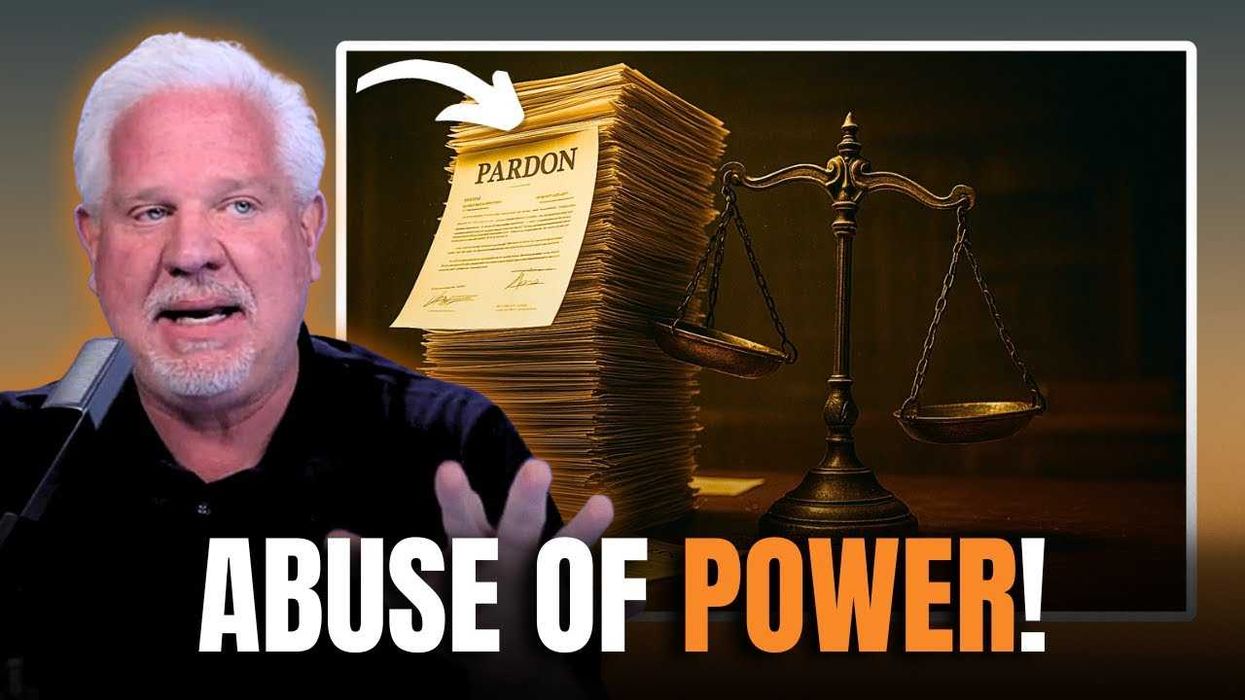
Why Biden's Corrupt Pardons CANNOT Stand... And Why it STILL Matters!

A new wave of sweeping “pardons” has triggered one of the most urgent constitutional alarms Glenn Beck has ever raised — not because the individuals involved are controversial, but because the actions themselves may not even qualify as pardons at all. Glenn Beck breaks down how these broad, immunity-style declarations can bypass investigations, rewrite laws by fiat, and push executive power into territory the Founders explicitly warned against. With mass clemency increasingly used as a political shield and executive actions replacing the legislative process, America is drifting toward a model of governance that no longer resembles a constitutional republic. This episode exposes how the pardon power is being stretched beyond recognition, why Congress has surrendered its role as a check, and what must happen before the nation crosses a point of no return. The question now is unavoidable: Who will stop this before the Constitution becomes optional?

Transcript

Below is a rush transcript that may contain errors

CALLER: I wanted to talk about the pardons. Hunter's pardon was legitimate. He was actually accused of a crime. I know you're plugged in with the president. I haven't heard anybody say this anywhere. I have been watching everything.

These pardons. Forget the auto-pen. The auto-pen doesn't even matter. Because these were immunity deals. These were not pardons. None of these people were under investigation. None of these people had any crimes they were accused of.

So you can't pardon somebody for something they may have or may not have done. That's an immunity deal.

Again, I've watched everything. I don't hear anybody bring that stuff -- I don't think the auto-pen matters. I just think those things are null and void from the jump.

GLENN: Who --

CALLER: Like I said.

GLENN: Who do we have besides Mike Lee? Because Mike is always hard to get a hold of at this time. He's like, I'm working on Senate stuff, Glenn.

Who do we have that is a Constitutional scholar that we can call real quick, and see if we can get an answer on that before the end of the show? At least put a call out to Mike Lee, will you?

But I would like to know that happen at that. Because the president has. And Stu and I have talked about this for a while. This has gotten out of control. These pardons are out of control. Out of control.

It's something Constitutional. It's been there since George Washington. The President has always had this right, and it's a privilege of his. But you're right.

These things where, wait. I can't investigate this? What that does is if you're as a president doing something that you shouldn't be doing, all you have to do then is say, I pardon everyone in my administration for anything that they might have done wrong.

That can't stand. You're absolutely right on that.

STU: Yeah. You have the immunity deal. Which again, I think is -- I don't see -- I don't see how a pre-pardon is even possibly covered.
Like, it's just such an insane concept.

The way that Biden. He's right that Hunter Biden actually committed a crime and pardoning him from that in theory, obviously, outside the family interest was the way that that was supposed to work.

But they also pardoned him for multiple years of question marks, whether he committed crimes or not. Right? That was all included on that.

To go a step farther on this, I am on a bit of a personal jihad against the pardon. I'm done with it. I'm done with it personally. There's reasons the Founders were very, very smart. But the Founders were smart enough to also have a process for Constitutional amendments. And I would support one, getting rid of the part in power completely. I'm done with it.

GLENN: Wait, may I just interrupt for a second. I just want to point out. We now have verification, not only is Stu a Canadian spy, but he's also a hidden Nazi. Noticed the word he used, jihad, which translates to my struggle. Hitler's book, My Struggle, Mein Kampf. I just want to point it out.

JASON: Exposed.

STU: Just to be clear, I'm not planning a genocide on the power of pardons.

But I'm against it, strongly. But the other part I would say that I think is every worse and is never discussed, are these types of pardons where they say, you know, all marijuana crimes. They're -- everyone -- there are 17,000 people.

That is just you legislating. If I wanted to New Jersey and say, hey.

I think marijuana should be legal. I could theoretically be president.

Saying, everyone convicted of a marijuana-related crime is now pardoned.

And that's just you making laws. It's you going completely around Congress. And the entire process we have there.

At the very least. It should be massively restricted from the way it's being utilized. Not only -- several presidents in a row, I would argue.

But it's -- it should just -- I think it should just go away completely. It's the most king-like power the president has. And it doesn't make any sense to me.

GLENN: Yes. Yes.

So I'm looking this up here.

Barack Obama did this.

He gave clemency for anybody who was convicted of a non-violent federal drug crime.

With no significant criminal history, while serving extraordinarily long sentences. And anybody who was a violent offender was not eligible.

And it was -- it wasn't a -- a true mass pardon. But it was pretty close to it. You know, it was -- it was mass in scale, but not blanketed.

STU: Right.

GLENN: And I think there were like 2,000 people that he parted on that.

STU: It was a law. Creating a new law.

GLENN: Yeah. You're saying, oh, by the way. That law that I personally disagree with.

We're not going to -- it's gone.

STU: The whole law doesn't count at him. We have a whole process to make laws. When someone -- when they pass a law, you can't say, eh. And shrug your shoulders. And say, I don't particularly like it.

And for some reason, that's the way the pardon power has been translated.

GLENN: The problem is the President can. The President has just always had the restraint not to do that.

STU: Right.

GLENN: Because it was bad for the country. And bad for laws.

You know, you don't just -- you don't do this. We're becoming more and more of a king. In our administration.

And it's not Donald Trump.

This has been about to go for a long time.

Barack Obama I think got really, really bad.

But this was going on before him. Obviously.

But Barack Obama kind of set something off.

And then because we couldn't get any legislation passed. We had Donald Trump try to do executive orders, to combat Barack Obama's executive orders.

Then Biden did it. And Trump. It's got to stop.

Because here's the problem. One of the things I said in our special on Wednesday.

Which was, biggest stories of the year.

And predictions for next year. I said, you will start to see rolling brownouts in places like Texas in 2026. Texans, wake up. Wake up.

But you're going to start to see rolling brownouts. But I also made another prediction. And I've just lost what I was going to say was the prediction.

Oh!

This massive swing. We're getting whiplash.

You can't -- you can't run a country like this.

You can't run a country where it's all being done by executive order.

Because look, we were all the way over to one side. When Trump was here. Then we swung way farther than that. With Biden.

Now Trump is bringing us back this way. If you don't pass laws, it's just going to swing.

And you can't -- you can't run a country like that.

This has got to stop!

We have to pass laws. Congress must do its job.

RADIO

Why the Australia beach shooting should terrify EVERYONE

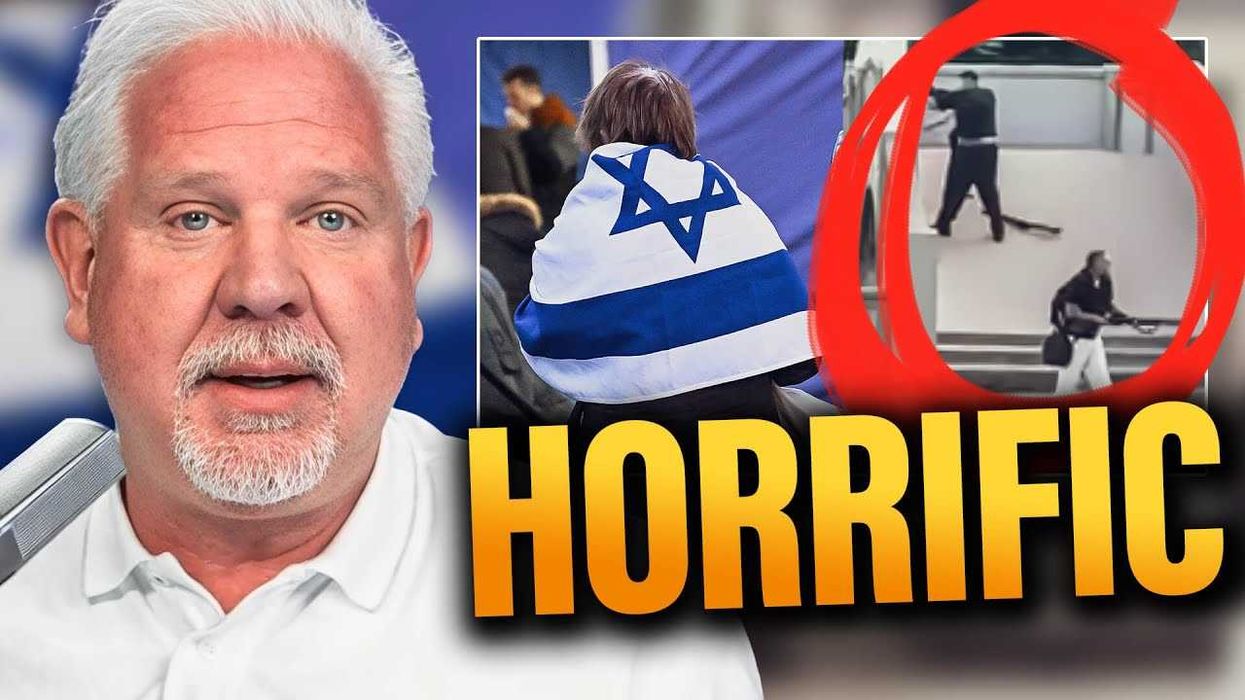
Two shooters opened fire on Bondi beach at a Jewish Hanukkah celebration. Glenn Beck reacts to this horiffic act of evil and also to the heroic act of a man who tackled one of the shooters.

Transcript

Below is a rush transcript that may contain errors

GLENN: So let me just cover the headlines really quickly: Brown University, yesterday, there was a shooter. Two are dead. The only one that has been named so far is the Republican Club Vice President Alec Cook. There have been nine that have been injured. They thought they had the shooter. But turns out, it's not him. He has been released. And there's just some questions on this one that are weird.

Also, al-Qaeda struck and killed US soldiers over the weekend in Syria. There will be a military response to that, I am sure. And yesterday -- yesterday, on the beach, Sydney's eastern suburbs. Sydney, Australia, it's summer there. There's locals. There are people that are coming from all over the country, all over the world, for the warmth of summer and the community celebration of the first night of Hanukkah. The rest of the world is the darkest days of winter. On the other side of the globe, it is still sunlight because it is in the middle of sunlight. But it was a dark, dark day yesterday despite the sun being up.

There were families with children. They were chasing the waves. The smell of grilled food that was drifting across the sand. Music, conversation, laughter in the air. And then around 7 o'clock, laughter was replaced with screams of terror. Two men dressed in black and armed with high-powered firearms positioned themselves atop a small concrete pedestrian bridge. It arched over the Campbell parade near the Bondi pavilion. They stood on top in the center of this bridge and rained bullets as they fired into the crowd. Shots rang out. Astonished the crowd.

VOICE: Get down. Get down. Boys, get down. Oh, my God.

GLENN: It just went on and on and on. Thousands had been gathered for Hanukkah by the Sea. They're now ducking for cover. Some trying to push children to safety, others frozen in disbelief as friends and strangers alike fell all around them.

The carnage was unbelievable. For ten minutes, these guys fired off this bridge. The beach, usually alive with surfers and sun seekers, just transformed instantly. Bodies were trampled. Frantic dash for some sort of shelter and protection, as the waves just continued to lap innocently at the shore while people were screaming for help.

Now, in the chaos, there were acts of individual courage. A fruit vendor, later named by the media as Ahmed al-Ahmed. He saw one of the gunmen firing his weapon. And in a moment of pure resolve, he vaulted from behind a nearby car, tackled the shooter from behind, and wrestled the rifle away. It was an unbelievable scene. Witnesses say -- and it was all captured on tape. There he is. Witnesses say, his bravery likely saved countless lives.

Police arrived, they started shooting at him. They shot at the two that were up on the bridge. They wounded both of them.

15 people had been killed by the time it was over. Dozens wounded. Young children to the elderly. Cherished members of the Jewish community, including Rabbi Eli Schlanger, a British-born assistant rabbi. He helped organize Hanukkah by the Sea.

The beach won't be looked at the same ever again. As the suspects went down, people from Australia just ran up on to the bridge.

And what I thought was an amazing, amazing moment that spoke volumes of our culture! The police were on top of these men, trying to administer care to keep them alive. While citizens, understandably, came up on the bridge and just started kicking them.
Police jumped on those people and pushed them away. And said, stop, stop, stop. And they did.

Because we're not a culture of death. First suspect, 50 year old, Sajid Akram, 50 years old. He's a dad. The second suspect is his 24-year-old son. Both in critical condition. Now in the hospital under police guard.

Let me ask you to imagine just for a minute, what it must feel like to be Jewish today. Not in theory. Because we -- we had an incident stopped in Amsterdam over the weekend, in Germany over the weekend, in LA, somebody, a drive-by just shot at a Jewish home with the Hanukkah candles in the window, screaming, "F the Jews." You want to know what -- you want to chant, "Bring the Intifada here," this is what it looks like.

It is here now. So what does it feel like to be Jewish today?

I don't know. I can't relate. But I want you to imagine, not as a talking point. But in quiet moments, when the phone would light up with another alert, another headline, another synagogue guarded by concrete barriers, armed police.

There's a particular fear that comes with memory. Jewish people carry history. Not as abstraction, but as inheritance. And it lives in names that are whispered at dinner tables, and photographs rescued from ash. And stories that begin with, "And we thought it would never happen here."

Europe told itself, that very thing once. So did Germany. So did France. So did polite society, everywhere, right before it happened.

And the world has been saying that for decades now. It would never happen here. And here we are again. And here we are, the worst we've seen in America.

Shadows that all of us hoped were buried forever. Hatred with organization, ideology. Hatred with teeth. Violence. Justification.

They're no longer whispers. They're shouting it now in our streets. They're shouting it in the streets of Australia. They're shouting it in the streets of Germany. And England and France. And Norway. They're burning flags. They're firing guns. They're chanting not only death to the Jew, but death to the West, death to Canada, death to the US. Death to Europe. This is no longer confined to the margins anymore. And the West is tolerating it. The west has explained it away. We have minimalized it. We have said it was a lone wolf. Sometimes we even excuse it.

Just for the day, let's just stop and look at Australia for a minute. For years, Jewish communities are warned the officials.

Anti-Semitism isn't theoretical. It's here. We're living it. We're seeing it. It's not just graffiti or angry words.

It's metastasizing into something ideological and organized and deadly. And in Australia, the officials told them, calm down.
Trust the institutions. We've got it.

Somehow or another, multi-cultural harmony would manage itself, but it didn't. Because it doesn't.

Ideology doesn't dissolve when it's ignored. It consolidates. It grows he has and it has across the Western world entirely. Europe, Britain, Australia. Canada. The United States. It's the same pattern!

Violent anti-Semitism rising Jewish schools like fortresses. Your families wondering whether visibility itself is now a liability.

And yet, all across the West, officials hesitate, to name the problem. Clearly!

So let me do it. Precisely. Precisely.

Truthfully.

Islamism.

Islamists. Not Islam. Not Muslim. If you're a Muslim, you want to live peacefully, worship freely. Raise children. Continue to, you know, live and contribute to a society. You know, and you're not an enemy of the West. I'm totally good with that. Look at the fruit cart guy. He apparently didn't hate Jews. He wasn't part of the culture of death.

He stopped it.

And millions do that every single day. But Islamism, Islamists, that's something entirely different.

Islamism is a political ideology.

It's not about faith. It is about power.

It's the belief that society has to be governed by religious law. Sharia law.

That freedom of conscience is illegitimate. That women are subordinate, that dissent is heresy, and that the world and everything in it has to submit. And it's very clear about all of this. It writes it down. It teaches it. It shouts it from the public square. For the love of Pete, it's everywhere. It chants it. It doesn't hide its ambitions. It doesn't hide behind anything. But here's what it doesn't do: It doesn't co-exist with open societies.

It replaces them and has been replacing open societies for centuries.

Any culture built on individual liberty, freedom of speech, equality before the law, it can't survive alongside an ideology that views all of those principles as sins or as an affront to Allah! In that scenario, one side must yield, or one side will be destroyed!

And history is very clear on which one does. You know, we're very different people. Even the difference between us and Canada. And us and Europe.

It might be seemingly starved. It might be we're very different. But when you look at us as a civilization, we're very different. Together, we're very different from the rest of the world.

We don't understand these things. Because we project our values, on everybody else.

We assume that everybody ultimately wants to live. And to compromise. Live side by side. We assume violence is accidental. We assume that it's a lone wolf. We assume that words like to do and dialogue mean the same thing to everybody.

But they don't! And so we tolerate politicians and newscasters and everything else that explain things away. They explain the stabbings and the truck attacks and the shootings and the riots. It's isolated incidents. They're not! We talk about finding the root cause. But we won't -- we won't name the root itself!

We call it extremism, as though it sprang out of nowhere, as though it was a weather event, instead of a worldview that's been around for centuries! I ask you to think about what it feels like to be Jewish today because of the Jewish people.
But also because, you're next. Jewish communities always pay the price first.

They always do. And believe me, you're on the list. You!

Your freedom. Your children are on the list!

And history shows this, with brutal consistency.

When a society begins to rot, from ideological cowardice.

The Jews are always the early-warning system.

They're the canary in the coal mine.

When they're targeted openly. And the state responds with hesitation.

That society is already sick and in the hospital.

It's already in trouble.

And make in mistakes.

The science is not far away.

It is already here.

Synagogues attached. Jewish students harassed on campus. Jewish neighborhoods guarded like war zones. Public celebrations requiring armed protection now. This is not normal, and it's not sustainable. And the West likes to believe and understands freedom.

But freedom is not a five! It's not a comfort. It's not the absence of conflict. Freedom is costly! And it requires moral clarity, and it requires the courage to draw a line and say, this doesn't belong here! And if we refuse to do that work now, our children will have to do it later under far worse conditions! They will have to fight, not to preserve freedom, but to recover it. And history always shows, that's much more costly. America, you're closer than you think to losing not only our country, but countries that took centuries to build!

Not through invasion. But through erosion. Through silence. Through the polite refusal to speak uncomfortable truths.

If not you, who?

If not now, when?

You're running out of time.

RADIO

"You're being PLAYED": Glenn Beck exposes the TRUTH about Illinois' new MAiD program

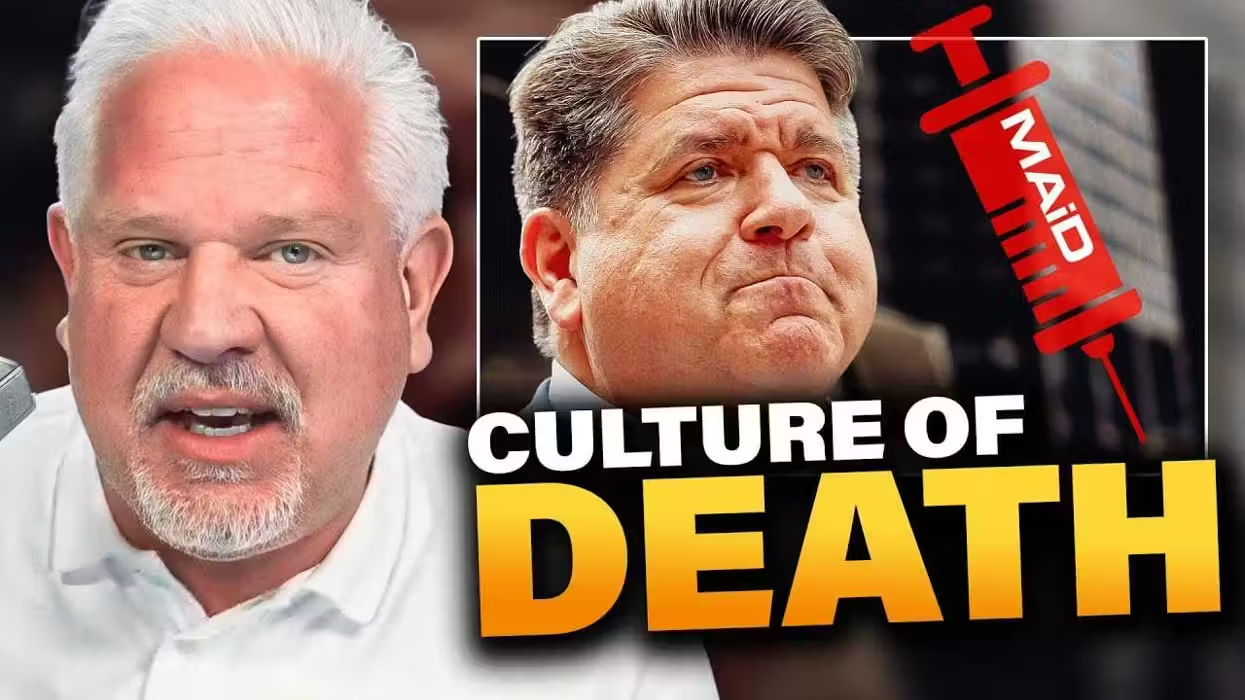
Illinois Governor JB Pritzker has signed a bill legalizing "medical assistance in dying" (MAiD) for certain terminally ill patients. Glenn Beck rages against this "culture of death" that is sweeping America, even after it ravaged Canada.

Transcript

Below is a rush transcript that may contain errors

GLENN: So JB Pritzker in Illinois signed into law a bill on Friday, that will allow doctors in Illinois to prescribe the deaths of their own patients. First, do no harm. I'm having a hard time with that, doctors. Maybe you can tell us how you're getting around this. First, do no harm.

That is a very important concept, that our doctors are to buy into. And that we all believe.

First, do no harm. If you don't have that, all kinds of things can follow. Especially when they're couched with compassion.

And that is exactly what this is always couched in. Compassion.

Okay. So this new law goes into effect in September of next year. Terminally ill patients over the age of 18 are going to be able to get a suicide drug from their doctor. This is the 12th state in the country, that is allowing assisted suicide. And there are about 25 others that are standing in line for it. What a surprise.

Illinois is the -- is the one -- the first of this -- this batch of them coming in to say, I want to kill people!

It is a culture of death. And we are -- that's what we are battling. No matter what anybody tells you, we're not battling the Republicans or the Democrats.

It's not politics.

It's not Marxism.

It is a culture of death, that we're battling. It is evil. It is evil. A culture of death.

When you look at -- when you look at what people are saying about global warming, what is the solution?

Fewer people. How do you do that? Well, culture of death takes care of that. Right?

When you look at -- when you look at, you know, just about anything now, health care, abortion, culture of death.

Islam, culture of death. Marxism, honestly, it is a culture of death. Why would I say that know.

Well, because it eliminates people who disagree with it. And first, it just pushes them off the sidelines.

But eventually it ends in camps. But also, look what's being taught to our kids. They are killing themselves, because they're so depressed. Because it has no meaning. It completely rejects the you human aspect of humanity.

Culture of death. That's really what we're fighting. Make no mistake.

Now, Illinois and Pritzker, they're saying, well, no. No, no, no. This is going to be -- we're going to be very, very careful. You have to have two doctors. Okay. That's good. That's good.

Germany had three doctors, to give you permission. You're not even up the line of Nazi Germany, but congratulations on that. And they have to be diagnosed with having six months or less to live.

Okay. Okay.

I want you to know, Illinois, America, Western world, you're being played. This is not compassion.

I'm going to be real clear with you.

This is preparation for when the system can no longer afford to fulfill its promises, that's what this is.

They are preparing the system to be able to have the way out. And they're preparing you, so you look at this as compassion and so when it gets worse and worse, up until the very end, you don't recognize it. I mean, they're beginning to a little bit in Canada, to see what's coming their way. And why is it happening? Because they can no longer afford socialized medicine. They can't afford to fulfill the promises.

Let me just say, can America afford to fulfill its promise, that it's made for generations on all of this socialized everything?

No. In fact, there are people now, trying to double down. We can't afford anything. They're trying to double down and expand those programs, which will only collapse us faster.

When they collapse, you know, nobody likes. Well, rich people can get surgery. And as I've said to you before, I don't like that either. I really don't like that. But how else do you do it? How else do you do it? Well, we have a committee. And we -- we ration things. Okay. Okay. Okay. Okay. Here's where you're not going to like that. You're not going to like that, because that's not the way humans work. When they ration things, either people with money or the people with power, always find a way to short-circuit so they can get to the top.

So the one that you're saying now is the poor, helpless waif that's not getting anything because of the rich people, when the system changes, that poor lonely waif is still not going to get any help because the powerful, the ones that are connected, they'll get the medical care, and the waif won't get medical care. People will find a way to short-circuit the system because people generally suck.

And when you give all the power to people, it's not good. It's usually not good. So you may not like the, you know, pay for it kind of system, but it is the best one out there. And you really don't want to give a bureaucracy the -- the ability to kill you if you become expensive or inconvenient.

Now, I know that's not what they're saying. That's not what we're doing. We're giving people out of compassion, help them end their lives. Uh-huh. Uh-huh. Uh-huh. That's exactly what happened in Canada. Let me just tell you. It was called C14. Let me just look up the facts here. C14 in Canada. It happened in 2016.

And it -- what it -- what it meant was, you could get compassionate care, if you had doctors. Three doctors approved.

You had a terminal, I don't remember what they called it.

But basically, you could see the end in sight. Okay?

There was -- there was no way for us to repair your body and heal you.

So we could see that.

Basically, you know, you were terminal.

We could see that.

In the future. Near future.

And three doctors agreed.

And then you had a waiting period after you requested it, the doctors would approve.

And then there were ten days, before you would administer. Ten days before you would back out.

That's what it started as, okay?

That's not what it's become. 2016, that's what it was. And you had to be 18 years or older.

And you had to have full capacity. So you couldn't listen to, you know, friends or family.

You had to make the decision. And you needed full capacity.

Okay.
Then things started to fall apart.

Then we had COVID. Then we had all these expenses. Then we had people move into the country.

This is Canada. Same thing happened here. COVID. Hospitals are overwhelmed.

Medical care goes to hell.

And then you start bringing in people from all over the world.

And now you don't have hospital care. Everybody is crowded. The doctors are overwhelmed.
And so in 2021, they decided the Quebec court decided, well, you know, death in the foreseeable future. Is that really necessary?

Excuse me?

I mean -- I mean, the reasonable foreseeable natural death requirement. Do we really need that?

The court said, no, we really don't.

There are two tracks! Those who have natural death in the foreseeable future. We're going to make it a little easier for them. So beyond the request, the three doctors and the ten-day waiting period. We're going to get rid of some of that because it's not necessary.

I mean, if you're in the reasonably foreseeable future, you don't need all those safeguards. And then people whose natural death is not reasonably foreseeable. Well, we're going to make them do all of those things. Oh, okay.

And, by the way, we're removing the ten-day waiting period too. Once the doctor says, you're good, you're good.

Okay. All right.

That wasn't far enough. Now, they have a new bill, C7.

Canada bill seven.

When they -- when that removed the foreseeable requirement, they added a temporary exclusion for people whose sole medical condition was a mental disorder.

Oh, wow. So now we're into mental illness.

So your death isn't in the foreseeable future.

But you really want to die.

So does this apply to mental.

People with mental problems?

Oh, no, no, no. No. We're not going to ban it. We're just going to put a temporary ban on that one?

Why would you put a temporary ban on that?

Why would you put a temporary ban on something like that?

Let me give you the answer and you tell you what else it's done and bring it home for you here in just a second.

Okay. So why would you -- why would you remove the restriction on the mentally ill?

Remember, the first thing was -- the first thing was, you've got to be -- you've got to be fully there.

You have to be competent and aware of what you're doing.

Then they said, well, the foreseeable future thing.

Your death is inevitable. We're going to take that away.

But we're going to put a temporary restriction on mental illness.

The only reason why you would make that a temporary restriction, is because you're just trying to get the rest of the society to catch up with what you're going to do.

That's the only reason.

And that's why, it has been extended.

Okay?

It was supposed to end in 2023.

Then it was extended to March 2024.

And now, it has been pushed to 2027.

Okay?

So you're not eligible for MAID until March 2027, if you have a mental illness.

Hmm.

Huh! Now, they may push it forward again, to give it more time to convince everybody that that's what they have to do.

And how do you convince people?

Well, you convince people, because there's shortages and be that person doesn't have the capability to think they're mentally ill. They might want to tie. They're very, very depressed. They're very depressed, and so they want to die anyway.

They want to die. I need the doctor. Okay?

That's what's going to happen. That's what's going to happen.

Unless we remember who we are. Unless all of a sudden, we -- we're like, you know what, that's -- you know, that's not who we are.

That's not the West. The West is not defined by its technology.

Even by its freedom or its wealth.

Everybody thinks, oh, the West. They're wealthy.

No. That's not it.

What makes us unique in the West. The entire West Canada, included. All of Europe. This radical idea that the individual has inherent value.

That nobody is expendable.

And not because they're useful, not because they're productive, not because they're convenient.
They have an inherent right to exist, to live.
If you look at the past, you look at Athens and Rome.
Oh. I mean, they just put you -- you this put babies that were not boys, that were girls. Where they were deforming.

They throw them on a garbage barge. These barges would go down the river. With screaming babies on them. They just let them die, okay?

That's the way it does. But West through Judeo Christian ethics taught us, that's not right!

And we build hospitals before skyscrapers.

We put limits on -- on force. We teach doctors to heal. Not to calculate.

When a society like ours stops choosing life, it does not become more compassion.

It becomes more efficient. Not compassionate! Efficient!

And efficiency has never given birth 20 moral virtue.

Efficiency kills it. If that's your goal. It kills it.

Fighting this culture of death, it is the most important thing we can focus on.

A lot of people will focus on politics and everything else.

And what JB Pritzker is doing here, there, and everywhere else.

I don't even care about politics.

We have to convince one another, we have to start standing up for the principles that made the West, the West.

Because without the choice to protect life at its most fragile, we are no longer a civilization worth saving! We're just another system deciding, eh, I don't know, is that worth the trouble? And history is very clear where that society ends. That's why, last week, to me, it was so personal, and so important.

To help this woman, not just because it's the right thing to do. And because every life matters. And this happened to be a life that came across my path.

And I'm like, we've got to stop that! But because, this goes to something bigger! And it is infecting us right now. And if we buy the lies, that this is for compassion. Look! I understand. I understand pain. I understand end of life. I don't want to be in that situation.

I know, you don't want to be.

I mean, I know what it feels like with my dog, putting my dog down. It kills me. It kills me to put my dog down. So I get it on the dog level, let alone, you know, a parent level or a spouse level. I get it.

But you cannot as a society go down this road. Because once you open this door, all the other doors just start to swing open. When there's trouble!
The first sign of shortage, all those doors open up. And guess what we're headed for. Shortages.