BLOG

The Media Once Lambasted Glenn for Calling the President Racist – Now Look What They’re Saying

In 2009, Glenn Beck had some fairly strong viewpoints regarding Barack Obama’s outlook on race relations in America that not only landed him in hot water with the mainstream media but forced several advertisers to pull out of his television program on Fox News.

Glenn’s analysis of the president’s racial prism received scathing reviews from top political pundits who went as far as to say that Glenn himself was racist. Organizations such as Color for Change demanded advertisers drop his Fox News television show citing “his dangerous drumbeat of racist misinformation.”

In a 2009 interview on “Fox and Friends,” Glenn said:

This president, I think, has exposed himself as a guy — over and over and over again — who has a deep-seated hatred for white people, or the white culture. I don’t know what it is. But you can’t sit in a pew with Jeremiah Wright for 20 years and not hear some of that stuff and not have it wash over.

What kind of president of the United States immediately jumps on the police? Just like what kind of president would ever say, “Oh, well, yeah. Well, he’s black. Of course he was breaking into the house.” You’d never do that. You’d never do that.

Fast forward to 2018 and the media is marching to a very different tune regarding President Donald Trump and racism in America. We know there’s a double standard in mainstream media when it comes to conservatives, but did you ever fathom it’d be this profuse?

In the video montage above, Glenn compared the media’s outcry in 2009 to today in which accusations of racism have now become the norm.

Watch above.

This article provided courtesy of TheBlaze.

GLENN: I do not mean to inflict him on you. Just to rile you up. I want -- I'm sorry to inflict him on you. Because I think a point needs to be made to the media.

This is Rob Reiner at the Women's March this weekend.

ROB: We were all here a year ago for many different reasons. But one of the unifying reasons was we were scared. We were scared of who was going to enter the White House.

A year has gone by, and he has corroborated every one of our fears. And we cannot whitewash this anymore. We have a racist in the White House.

We have a sexist in the White House. We have a pathological liar in the White House. And he is tearing away at the fabric of our democracy. And when we all came together, last time, we had the power. And it's the women -- the women --

GLENN: Okay. Stop. I -- okay.

Do you remember -- do you remember 8/28, do you remember going to Washington? Do you remember this time? And do you remember that they -- the media was looking for signs. They were looking for anything. They wanted -- they needed a signed that said, "Barack Obama is a Marxist." They needed it.

Barack Obama is a liar. We want our government back.

Because that was proof that you were -- you were out of your -- out of control nuts. You were a revolutionary. You were anti-government. And you were a racist.

They're just fearmongering. And what happened? We gathered, and the press didn't even notice. They still tried to make it about something else.

Not once -- not once did they say, "Wow, maybe there's something else happening here. Maybe this is about something bigger than just Barack Obama." Nope. Nope.

They could not do it. Imagine had I given that exact speech on the steps of the Lincoln Memorial. Imagine if I said half of those things on that day, what would have happened to me?

They are so certain that they are right, they lack all self-reflection. I want to give you a little montage here.

Because I learned a lesson. You cannot think out loud. You can't -- you can't question -- you can't look at somebody's record of life. You can't look at their words -- well, that's just the way white people will do. You can't look at their books -- well, my grandmother had it bred into her to fear black people. You can't look at the record of where they went to church, Jeremiah Wright.

And you can't look at what they're doing, the place acted stupidly. And say, you know what, I think this guy has a problem with race. You're a racist if you ask, is the president racist? Does the president have some racist tendencies? Is the president misinformed?

Is the president out of step with regular America? Oh, my gosh, what's regular America? How dare you. You mean white America, don't you?

You're a racist. That's exactly what happened. God forbid you do that. Or is it suddenly okay?

GLENN: I'm not saying that he doesn't like white people. I'm saying he has a problem. He has a -- this guy is, I believe, a racist.

VOICE: Glenn Beck in the news.

VOICE: How is it possible that this guy can sit on national television and call the president of the United States a racist?

VOICE: This president sees everything through a racial prism. And may even have his own --

VOICE: I wish we would just stop this. Glenn Beck and people like that need to stop this.

VOICE: There is a notion that Donald Trump reinforces his animus, his racially driven animus, his racism, that he demonstrates it over and over again from the Oval Office.

VOICE: You know, throwing out the R-word, the racist word, and some other words, are conversation stoppers. We're never going to get past the point where the Glenn Becks of the world will just hurl that out at people.

VOICE: What more do we need to see or hear from this racist man? Not only is he racist, he is an embarrassment.

VOICE: These are the birthers.

VOICE: Yes.

VOICE: This is the narrative that they want the man to fail, and now they're labeling, hey, he's a racist.

VOICE: It doesn't make what he said any less ignorant or any less racist. Not racial. Not racially charged, racist.

VOICE: As long as Glenn Beck is out there calling the president a racist or anybody else a racist, we're never going to get past this point of constantly reacting to racial flare-ups.

VOICE: Do you think President Trump is a racist?

VOICE: I think he is a racist.

VOICE: I see it with both Glenn Beck and with Rush Limbaugh. These guys with really suspect racial feelings and perceptions are projecting their own hate and their own devices.

VOICE: It's the same sentiment, Chris, and it's something that virtually everyone recognized right away.

VOICE: It's such a blunt object of racism. When you say racism, it's a big charge.

VOICE: Well, listen, I find it awful. I think you have to be very careful.

VOICE: And then, secondly, there's the racial angle. I don't think there's any getting away from the color of people from Norway, as opposed to people coming from Haiti, Africa.

VOICE: I think a lot of that is simple grandstanding, making outrageous statements, provocateur. Glenn Beck.

VOICE: If he was to show any moral courage when it comes to standing up to the racist comments made by the President of the United States.

VOICE: Can't even believe it, first of all. Glenn Beck owes the president a apology. He owes the American people a apology.

VOICE: We take this additional very clear racist thing, he's an evil man.

VOICE: This is an insult to our democracy. Our way of life.

VOICE: We have to start calling things what they are. We have to stop asking if this person is a racist. Because the evidence is there. He is.

VOICE: And I hate giving someone who says something like that anymore attention.

Outrageous is one way of putting it. I would say, irresponsible.

VOICE: If you put Haiti next to Norway, it's a black and white issue, the way the president laid it out yesterday.

VOICE: If someone on the left had called George Bush a racist on TV, would we be throwing our hands up? Would we be so outraged?

VOICE: Yes.

VOICE: Would we demand an apology?

VOICE: I would.

VOICE: Absolutely.

VOICE: Really?

VOICE: I would.

VOICE: Sure.

VOICE: Yes.

RADIO

100% of FAKE Applications Were Approved! - The Obamacare Scandal that MUST Be Prosecuted

A new GAO report reveals that 100% of fake Obamacare applicants—fake names, fake Social Security numbers, even dead people—were approved for taxpayer-funded subsidies, exposing a system so bloated and politically insulated that fraud has become indistinguishable from function. Tens of thousands of phantom identities received coverage, billions were lost through COVID-era credits, and yet no one in Washington is being held accountable. This isn’t a clerical error—it’s a national crisis. When fraud is routine and oversight is nonexistent, the question becomes unavoidable: is this incompetence or a system designed to fail?

Transcript

Below is a rush transcript that may contain errors

GLENN: There is a story going on right now. That -- that shows you what happens when a government grows so massive, so unaccountable, so convinced of its own benevolence. That it can no longer tell the difference between literally the living and the dead.

Now, I want to preface this with I want to give everybody the benefit of the doubt here. But I'm not sure they deserve it.

Let me give you the facts. We now have, in black and white, a new accountability government office report.

It's not some blogger in the basement. You know, this is not me saying it. This is GAO. And it shows that faith people. Phony Social Security numbers. And even the dear departed, were routinely approved for taxpayer funded Obamacare subsidies. Now, I emphasize the word routinely, because what I mean by that is 100 percent of the GAO's fictitious applications were approved.

100 percent!

Every single one that was fake was approved.

Okay?

You could -- honestly, you could have taken a napkin and scribbled the words John Doe. Totally real citizen. Thrown some numbers up for a Social Security number. That you pulled out of a fortune cookie, and the federal government would have said, you've got to send this guy a check.

It says right here, he's a citizen here. They would have sent tens of thousands of dollars to your insurance company to reward the fraud.

Okay? This is not a glitch. This is not a clerical error. This is massive fraud.

Once again. Systemic failure engineered, by design. Protected by politicians and politics.

Funded by your sweat. How long do you have to work every day, to pay for just the fraud?

I mean, it is getting to the point to where it's -- it's obscene.

And honestly, if I don't start seeing people go to jail, I said this -- I will start saying this every day now for the next couple of weeks.
I said at the beginning of the Trump administration.

And when they appointed Pam Bondi, I'm not going to give Pam all the room she needs for a year.

Because you just don't throw prosecutions together. Okay?

But I have seen these investigations going on now, for a year. I have seen these investigations going on in Congress for, what?

Two years! It was happening during their -- the last Trump administration. And it's happening now. I've seen Congress do these investigations. I haven't seen a single person's go to jail. What the hell are you spending my money on? Are you just chasing smoke? Because that's what it seems like, except you keep coming out and saying, oh, my gosh, look at this, look at this. But I never see a name attached to it, and that name also, attached to an indictment.

And I'm sorry. But on the year anniversary, I'm -- I'm going to start coming after Pam Bondi and the DOJ. Because enough is enough. How much time do you need? There's obvious problems here. On multiple fronts. Not just this. And I am really happy to see the DOJ and everybody else, come after, for instance, everybody who was guilty in Minnesota. I want to see jail time. You've taken a billion dollars of the taxpayer's money, and you have just given it away. And in many cases, to terrorists! You've taken literally food out of the mouth of children. You have taken money that was supposed to go for kids with autism. And you've sent it over to Somalia, to Al-Shabaab.

I don't know. I think some people should go to jail.

And I am not happy, if it's just the people who are at the low end.

I want to see the names that excused it, that covered it up. Because you don't get away with a billion dollar heist. And then this is just one. This is just one. You don't get away with these, without protection high above.

Okay?

So let me go back to what the GAO found here. This is not Minnesota. This is another case, okay?

This is Obamacare. Every fake identity submitted in 2024 was approved. Eighteen out of 20 fake people were still getting subsidized coverage the following year. So they got coverage the first year. They still were getting coverage the next year. One Social Security number, just one, was used for the equivalent of 71 years of coverage in one single year.

So they've got coverage that you -- it would take you 71 years to be able to amass. They got it in one year. That's one Social Security number. 66,000 Social Security numbers received subsidies, didn't match a single living person. 66,000.

58,000 matched Social Security death records. So 66,000 didn't exist. 58,000 did exist. But they weren't out dead, God rest their souls. They didn't need health insurance. Okay. Know

There's upwards of 6 million people who aren't actually within the income category that they're claiming credits as if they were in that income category. Yeah. I -- I don't make enough money, so I should get this.

Oh, really? Except, you do make that amount of money. In certain states, there are three to four times as many people enrolled in 100 to 150 percent of the poverty rate in those $0 plans. There's three to four times as many people enrolled in those states that actually exist in those states.
Three to four times. How do you make that error?

How's this happen?

So these COVID credits have just produced upward of 27 to $30 billion in fraud. This is just in Obamacare. That's it! Oh. But this is going to reduce -- this is going to reduce your payments.

No. It didn't. In fact, now it's just pushing us deeper and deeper into debt. Just in a deeper way than we project. This is not about health care. This is about national survival or national suicide. Which do you choose?

This is about a government program that is so unbelievably bloated. So politically insulated. That they become impossible to distinguish fraud from function.

Hmm.

But maybe that's the point.

That possible?

RADIO

Glenn Beck Warns of Dangerous Flaw in Proposed Trump Accounts

Glenn Beck breaks down the newly proposed “Trump Accounts” and explains why this seemingly good idea hides a dangerous flaw that America has seen before. Drawing parallels to Thomas Paine’s rejected 1797 proposal and the Founders’ refusal to endorse redistribution, Glenn warns that once a federal entitlement is created, it never stops expanding, especially once future administrations take control. He argues that this is a line the Right cannot cross without paying a heavy price in the future. Is America about to open a door it can’t close...

Transcript

Below is a rush transcript that may contain errors

GLENN: I want to talk about the Trump, you know, savings account or what is that called. Savings. Trump accounts. I -- I want to talk to somebody. And so they're -- they're lining up today, hopefully for the show today. They're lining up the person that actually was the designer of these Trump accounts.

And I want to -- I want to ask him about, what's the difference between this and Thomas Paine?

You know, Thomas Paine. Do you know what it was called? When he -- he suggested it in 1797 and it was basically a Trump account. When you turned -- and, I think, let me look at this here.

Was it 1521? I can't remember.
Yeah, at age 21, for a start-in life, you got 15 pounds. That's about $3,000 today.

Then you get 10 pounds per year after 50, for a retirement.

The problem was, the Founders, they rejected this -- just, right wholesale. Just nope!
It didn't get very far. And that's because they were like, no, you're raising taxes. On, what? Inheritance.

If you had money, they wanted to add a 10 percent tax to what you were going to pass to your children. So then that would go to others. And they were like, that's redistribution of wealth. We have no right to do that. No right to do that.

At all. So, no. We're not doing it. But you know what they called it?

You know what Thomas Paine called it? You want to talk about things just repeating over and over and over again.

He called it agrarian justice. It was social justice.

It was farm justice. Land justice.

Isn't that incredible?

STU: Yeah. The whole thing makes me very nervous.

I have to be honest with you.

You go back, obviously to the historical basis of it.

It doesn't seem. Like, a founder liked it.

It's not without any bases in our history.

GLENN: Thomas Paine was not a founder.

No. No. No.

It's very -- and I learned this.

It's actually a tight group. To be a Founder, you had to be one of them that signed the Declaration of Independence, or helped write it.

And also, the Constitution!

So to be a Founder, you had to be involved in one of those two moments. And he wasn't.

He was very important.

STU: Okay.

GLENN: But he was not a Founder.

STU: I do think of him in that category.

As an influence. But not maybe technically accurate.

GLENN: Influence. Okay.

STU: I think about the modern consequences of it as well.

Because, yeah. Sure, we can say it's a thousand dollars now. What happens when God, Gavin Newsom gets control of this program. What happens when, you know, some leftist, they're going to -- every Congress is going to have a new argument about how they want to expand that accounts. Not thousands. It's 3500. It's 6200. It's 8500. It will continue to go up, year after year after year after year. And it will be almost impossible to oppose.

GLENN: So here's where it did pass. It passed in the 1860s. Something like his agrarian justice passed. But it was called the homestead act.

And that was different because we wanted to settle the West. We had all of this land. We wanted to settle. And so we would give you the land. But you had to work and improve the land.

So the government. The country got something out of it. We had all this land, you can go settle it.

You can have a plot of land. However many acres. But you have to do something with it. You have to improve the land, because that will improve everybody ever seen lot in life. Okay?

The next thing that we did that was like this, was GI Bill.

But if you were in war, you got education. You did something for that. You weren't just born.

That's the problem with these things.

You can't just say no. Because then it becomes a right. And rights continue to grow and grow and grow. Rights are given by God. You don't have a right to this.

STU: Is there a reason -- there's a reason why the left keeps saying health care is a right. Right?

GLENN: Yeah, exactly right.

STU: Because once people are convinced of that, they can grow it to any level -- and have any level of control over you and your money.

GLENN: Yep. Yep.

STU: But there is a movement on the right, that is relatively defined at this point. I'm curious to see where Mike Lee is on the accounts. Senator Mike Lee from Utah, at times, talks about certain tax breaks, making for families and trying to improve those. And his -- the opinion there. And I think this is a growing movement on the right. Which is, we need to take steps through the government, to encourage the nuclear family.

To encourage things we think are good. Right?

The government should step in and work toward goals, that are -- that we believe are good. Rather than just letting the free market kind of run itself. And that's been a debate on the right obviously. That's been going on for the past few years. Do you happen to know where Mike Lee is on that?

GLENN: I just texted him. I'll see if he texted me back there.

STU: I was going to Google it. I'll just text him. That's much better.

GLENN: I guess I could Google.

STU: Yeah, no.

GLENN: He's probably like, why don't you just Google it?

STU: That --

GLENN: It will be easier to have you write it to me.

STU: It is an interesting thought. Because I think the motivation here by Trump is -- is good, right?

He's trying to say, hey, kids, get a positive start in life.

GLENN: No.

STU: Obviously savings is good. Sometimes parents start off on the wrong foot, they're not able to save for their kids. I get the motivation being good. Obviously, we could see how this spirals out of control. It's not the way the government is supposed to run in my view. The concern level for me on these is massively high.

GLENN: And rightfully so. Because you're absolutely right. What it starts as is not necessarily what it's going to end as.
And what other doors open up because of this.

And that's -- that's my biggest concern -- so he says I haven't spoken about them.

STU: Yeah.

GLENN: But between you and me. So I'm not going to tell you. Between you and me.

STU: I was going to say, please just don't just read this text cold.

GLENN: No. When we get into the break, I'll write it back. With what can I say about your opinion?

STU: Yeah. That's interesting.

GLENN: It's the interesting. What I'm reading from him is actually interesting.

STU: Tilt that screen.

GLENN: Yeah. Thank you. Thank you.

But, anyway, yeah.

I mean, the -- the idea is noble. And it is good.

It's -- it's honestly.

It's -- it's a little like getting rid of the filibuster.

If you return the filibuster back to what it was, before the progressives destroyed it. So you had to stand up, and you had to make your case.

And as long as you could stand there, you can make your case, and you can stop things. But the progressives got rid of all that. Okay?

Now, you don't even have to stand there.

Just vote on a filibuster.

Yeah. I don't even know. But if you want to return it to the way it was. Which was nothing, but a break. It was not a stop.

It was a break.

So you could -- you could slow the system down, so people could go, wait a minute. Wait a minute. Wait a minute.

I disagree with this. You know, let's -- let's rally the people. And let's rethink this.

That's good.

But to get rid of it, it might be good for us right now. I can guarantee you, it will be very bad for us in the future.

Because you're not going to have control of the House and the Senate.

You're just not. And when they have it, I mean, that's what they wanted to do. And we were against it. And we were against it because we know what they would have done with it. Well, you're going to have it. And then, what?

And then when you lose it, what do you think they're going to do with it?

You just can't cross these lines. Because it -- it will come back to roost with you. And you won't like it. This is why -- this is -- we say this all the time.

You can't -- the Constitution cuts both ways. You know it's Constitutional -- you know, when you look at something and go, oh, I really want that to happen, but it's not constitutional. Okay.

Then we don't do it. Because the Constitution will slap you in the face sometimes. And be your best friend the other time. It cuts both ways. It doesn't cut the way you always want it to.

That's the problem. People try to make the Constitution. And our system into something that always serves us.

Well, it doesn't.

It will serve the other side. It will serf the purpose that is across to your purpose every once in a while.

But it's steadfast.

It's always based on something real, and eternal. Not your emotions. Not what you want to happen. But what is the best system of fairness man has ever devised. And once you start getting into the mix of that. You are going to screw everything up.

And that is why our country is in the mess it's in.

STU: I think, Glenn, too. When you break the seal for a thing like Trump accounts. You just wind up with all.

Medicare is a good example of this to me.

Medicare is this program. Obviously, even though a Democrat started it. Like, in theory, outside of their behind the scenes motivation of wanting to expand the government and all of that.
Of course, it's a good motivation for health care for seniors. Right? Of course.

GLENN: Yes. Yes.

STU: And also, I will say this, you know, when Medicare Part D comes out.

Which is the medicine, prescription drugs.

And that was a massive expansion of Medicare. That happened under a Republican.

And while I don't want that massive expansion, once you have Medicare, how is there not a Medicare part D? How is there not a prescription drug part of it?

GLENN: So that is my case, and we're seeing it now. Once you have Obamacare. Once you have universal.

Then you have the right to tell people. You must tell people, you can't have that food!

You can't have it. Because it's costing all of us money.

Your health is now -- it now involves all of us.

So now, how do you have that? It's just this horrible slope, that once you start going down. It's logical. You just to have logically think it all the way through. And not say, that will never happen.

Because it always does.

RADIO

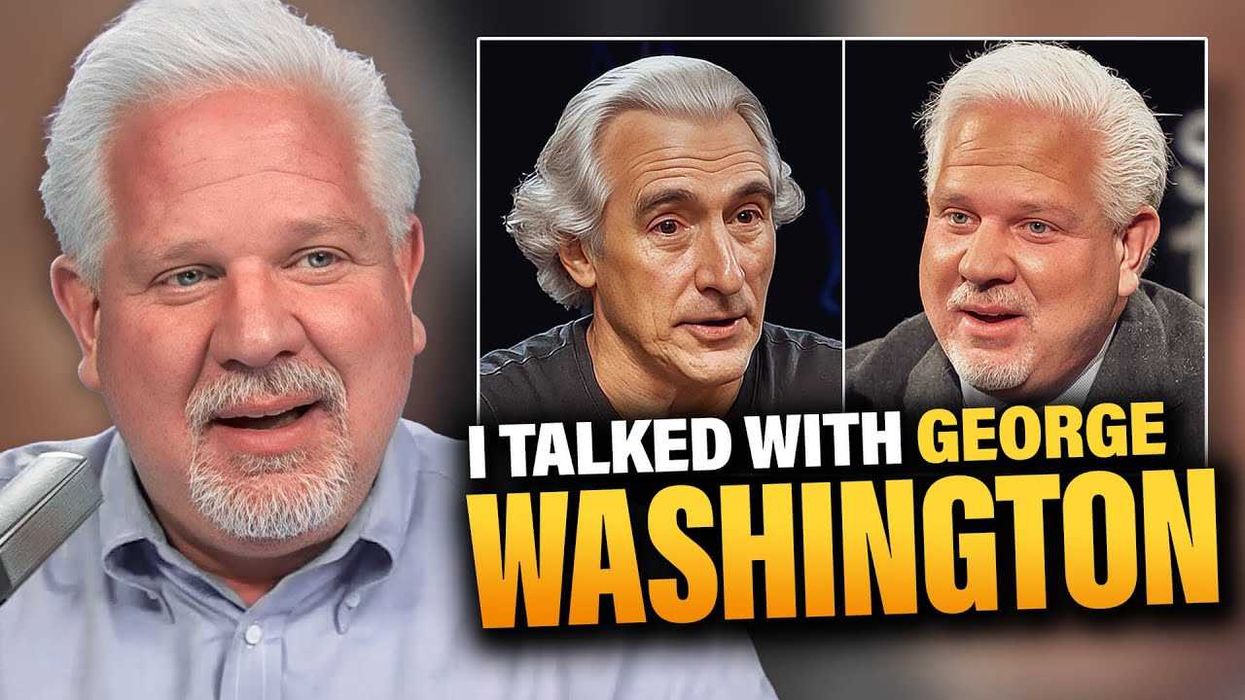
PREVIEW: George AI tells me the ONLY way to SAVE America

Glenn Beck previews his upcoming interview with George AI, an artificial intelligence he's creating for The Torch using ONLY writings from the founding era. And George has some incredible advice for how to save America ...

Transcript

Below is a rush transcript that may contain errors

GLENN: Welcome to the Glenn Beck Program. I was at Mar-a-Lago last night. I've been trying to help raise funds for several organizations. I've been speaking at several fundraisers at Mar-a-Lago over the last couple of weeks. And it's -- it's an amazing thing to see how many people are just deeply, deeply engaged in saving our nation. And, you know -- you know, our -- our life. Our -- our fortune, and our sacred honor, comes to -- comes to mind.

The denegation of people. Last night, I was there, for the American Journey Experience. Which is an offshoot of Mercury One.

It's our history section. We announce that we are building a museum. A brick and mortar museum. We begin early next year.

And we had some really exciting things to say about that. We'll give you updates on that, as it goes. But we would love to have -- right now, you can come into a very small museum. I think we have -- I don't know. Maybe 10,000 square feet. I think our vault is 5,000 square feet. And, you know, we invite people in to see some of the things.

It's really by invitation only. Or if you call Mercury One, you can get in. But we will open up the museum. And it's not just a museum, it's also the teaching center.

So we were talking about that last night, and last night, I introduced for the first time, George AI. The interaction that I had with AI. Now, remember, this is proprietary technology. And information.

This is based on the library, that we have. Which is the third largest collection of founding documents in the world.

Only behind the national archives, and the library of Congress.

And it's all original sources. So it's all the writings of the Founders. All of the -- all of the writings that influence them. That we know, from their writing, they read this. Or they were basing these things on these different items.

It's the Federalist papers. It's all of the documents. It's all of their letters to each other. It's their personal writings.

It's the Bible. It's Blackstone's law. It's all of the things that they had access to that influenced them.

In a positive way, to build America. And we have George, which is the librarian.

And George is going to be a -- a system that will be able to give you answers to things.

And show you the actual documents.

But will be able to speak to you, in your own language. If you try to read the Founders now, it's so hard!

Because they were so smart! They're using words, like, I don't even know what that means.

And when you read the Founders, you usually to have read it with a dictionary, side by side.

It's difficult. And their language is so formal.

So it's hard for us to relate to them. But all of the knowledge, this deep, deep knowledge is there from these guys.

Ritually, they wrote.

I'm trying to remember, is it George Washington?

One of them wrote at a 70th grade level.

Seventieth grade. You know, and so they're just way advanced. Way advanced. We put all of this information into our own system. This is an AI system built by me and my team.

And it has pretty much like, if you will, an electric fence around it. It cannot go and pull information from the outside. And mix it, with the information from the inside. So it can go and we can import things and say, hey. I want you to look at this bill, and tell me, is this bill even constitutional?

What would the Founders even say about this bill?

And it will look at that bill, and then it will go through all of their, you know, discussions and everything else. Everything that is in that system, memorized from start to finish. Which starts hallucinations. And it will analyze that bill. Or it will analyze that story.

Or you can say, hey. I want my kids to understand the Bill of Rights.

In George AI, right now, is I don't even know how many thousands of sermons there are, from the pulpit, where the churches where these guys attended.

Because almost everything from the declaration and Bill of Rights came from the pulpits.

And it's amazing, when you read some of these sermons that these guys gave.

It will be on, you know, the right to life, liberty, and property.

I mean, that will be the sermon.

And today, everybody will be like, oh, I can't say that from the pulpit.

We have all these sermons that our laws were based on. These whys were based on.

And so you can ask him anything.

And so when you sit down, for the very time, and you're going to talk to George Washington or a reasonable facsimile of him, when you ask him -- my question was, we fed in all the conditions of what's happening in America today. And I wanted to have a conversation. And here's a bit of the very first conversation with George AI. Listen.

VOICE: George, we have programmed a lot of information and given you a lot of information on what's going on in today's America. Based on your writing and the writings of the rest of the Founders, what do you feel like is the biggest problem or where we should start to fix things?

VOICE: If I may speak plainly, my countrymen, the danger -- the greatest danger in our republic lies not in foreign arms or.

GLENN: May I stop you for a second. Can you dumb it down just a little bit.

VOICE: Okay. I do have 29 points and they're all referenced to exactly what we said in the past.

VOICE: Just in today's language. Okay. Okay. I get it.

Let me speak to Americans. If I'm honest, America's biggest problem isn't political or economic. It's all moral. You've drifted from the virtues that make liberty possible in the first place. Freedom. To be free, you have to discipline. You have to have faith. You have to have character.

And if you don't have any of those things, laws -- laws can't stop anything. And I mean little government terms, either weak or oppressive.

You have grown skeptical of truth. You're reckless with debt. You're comfortable blaming instead of building anything. And this my time, we've understood that self-governance begins with self-control. Do you even recognize what self-control is?

Public virtue matters more than public opinion. You keep electing these people, expecting things to change, but you haven't changed. The fix is not going to be found in Washington, DC. It's going to be found in every home, every school, every heart.

You know, where are the citizens who value duty over comfort? Principle over popularity?

America was built to be a moral and self-governing nation. It's only that foundation that will still save her.
(music)

GLENN: Beginning January 5th, on the Torch. You can find information at Glenn Beck.com. You'll notice he started speaking. Because this is what you will see. At the beginning, I will have to do the interviews with him. Because compute power is so expensive.

And we'll ask you to write in. In fact, you can do it now. The Torch at GlennBeck.com.

What would you like to learn from the Founders. What would you like the children to learn from the Founders.

Would you like a posts from the Founders, on the Bill of Rights, or the Federalist papers. Or whatever.

What would you ask, if you could ask the Founders a question, what would you ask them.

At the beginning, because of compute power, we will be feeding those in. Examine then producing and rolling out every day, different podcasts or answers or whatever, from George AI. I -- I pray and I hope, and I'm -- and I'm -- I have pretty good advisers on what we're going to be able to do. And it depends on how many people are -- are using it. And -- and, you know, if we get people to help us in support.

Compute power, the cost of it will go down.

And we'll be able to afford bigger amounts of compute. And you'll be able to have a one-on-one conversation like I just did. Have a one-on-one conversation, and you'll notice at the beginning, he came out. Because this is the way. It's trained to give you the actual verbiage. And when he said, I have 29 points. Believe me, because we edited there. He went on.

And, oh, my gosh.

It gets tedious. But he has the 29 points. He can show you the documents. And it's all in his language. Or you can do what I did and say, just speak in language. Dumb this done. This needs to be understood by an 8-year-old.

And it will continue to adjust. You'll eventually, hopefully in the first year in 2026 for the 250th anniversary, you will be -- you will be able to say, I have a 15-minute commute, and I'm taking my kids to school every day. And it takes me 15 minutes to drive to solo.

And they need to understand, whatever it is.

They need to understand the civic responsibilities, they need to understand the
responsibility part of our rights.

Whatever it is. Can you develop a podcast? I need them to understand the Bill of Rights, so I would like to do it in the next ten days.

And it needs to be no longer each episode. Each episode needs to be no longer than 14 minutes. So you get into the car. And it's 14 minutes.

Eventually, when it's coming to you live, it will ask you questions. At the end, it will finish the podcast.

Then it will ask each member. You can say, I have an 8-year-old. 12-year-old.

And me. And I'm 40.

It will each of you questions, just to gauge, did you understand what was just taught?

And if you don't -- if -- if AI decides you don't really have it, you don't understand the real essence of this, it will then rejigger the next posts. So the next time you're in the car, going to and from school, it will adapt to you, to be able to go back and teach it more clearly.

And it will learn you. So it will learn, ah. The deficit is here. Or they're a more visual learner.

They're more of this kind of learner or whatever. They'll understand in stories or they understand just in facts, whatever. It will understand each member. And it will be able to teach them, directly, in their language.

The way they learn. I hope, this is my goal.

Because I feel like I -- I accomplish what I set out to accomplish with TheBlaze. I feel like I've accomplished that a few years ago, and I'm not good at treading water. And I feel like we accomplished our goal of my goal, at least, was to just open a door that others could walk through.
Open the door.

And show America and show talent, that you can start something yourself. You can do this on your own.

And you can present it in a way, that is just as credible and more -- just as, if not more powerful than any of the networks, and you don't have a boss breathing down your neck. You don't have people that you are having to answer to. You can speak your mind and tell the truth as you understand it and chart your own course. Nobody was doing that when I started TheBlaze.

I mean, the only people that had a spine. A backbone, if you will. A digital backbone, that could provide a live network kind of feed was Major League Baseball. They were the only ones. They were the first in to say, we can do a live sports coverage.

I partnered with Major League Baseball and say, can we use your spine? We want to do live news. We did. This is at a time when Netflix was still sending movies through the mail. Now, look at what's happened. So I think we've disrupted the news industry, we've disrupted all of that, destroyed it and reinvented it. This is my next phase of my life, probably the last chapter of my life. I want to do the same thing and disrupt education and the way we learn, and to show you an ethical way to use AI, one that you will not get lost into, it will always remain a tool in your hands, not the other way around.

RADIO

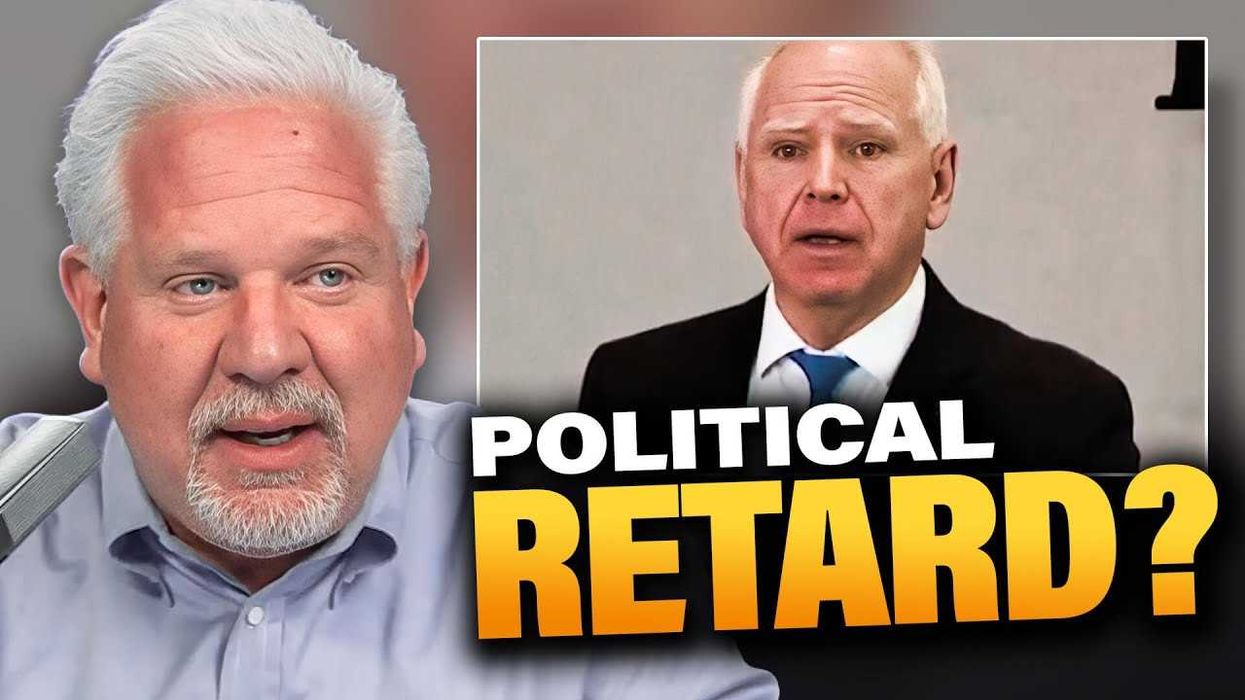
FACT-CHECK: Is Tim Walz (politically) RETARDED?

Minnesota Governor Tim Walz is mad that President Trump called him “retarded”, and that now people are driving past his house and calling him a retard. Glenn looks at the cold, hard facts: Is Tim Walz actually retarded…at least politically?

Transcript

Below is a rush transcript that may contain errors

GLENN: You're going to be upset by this. You're going to be seriously upset by this, okay? And I'm going to use -- only because I have to. Only because I have to. And 99 percent of me wants to. Okay. I lied. One hundred and two percent of me wants to use the R-word in this particular case. Tim Walz. Tim Walz is upset because the President has called him retarded.

Now, I think he might be retarded. Now, not necessarily, you know, I don't know what his IQ is. Probably pretty low. But I don't know if he's down to 60. But had you seen PQ is definitely under 60. His political quotient is definitely under 60. You know, the guy, hmm, he's, you know, I put him in the category of -- what was his name? Dean. Howard Dean. Yeah! Remember that guy who walked out. We're going to go to Virginia and Kentucky and Minnesota. Yeah!

And you're like, no. Dude, you just lost. You're not going anywhere past here.

I am not sure that he is clinically retarded. But in the playground sense, he's definitely retarded. You know what I'm saying, Stu?
STU: Yeah. Like how, you know, kids used to say it back in the day. Like that --

GLENN: Yeah, the playground.

STU: That general. Certainly, that definition, it would apply to him, I assume.

GLENN: Right. And, remember, that's the same point to where, all of us heard from our mothers, sticks and stones can break your bones, but words will hurt you. Remember? Remember that one? Remember that -- when you were called retarded or whatever on the playground. And you would go home, they called me retarded. And your mom would look at you like, yeah, well, maybe you are.

Or she just immediately said to you, sticks and stones will breaking just remember that. Just remember that, son. Words can never hurt you.

It doesn't matter what they say about you. We don't say that anymore.

STU: It was pretty good advice. Especially with the internet in mind. I don't think that's what our parents thought of at that time.

But it's much, much worse. And much more people seem to be affected by the words are violence sort of thought process. Like, that is -- that is real these days.

GLENN: I -- I also have a problem with a guy who, you know, surrounds himself with people who call the president a Nazi. I don't know. Which one is worse? A Nazi or a retarded?

STU: Yeah. Nazis were really bad. That's actually a serious accusation.

Fascist is another one.

Pretty serious accusation.

GLENN: Yeah, or just weird.

STU: I was just about to say that. That is exactly the reason he was on the ticket is because he was name-calling other people, and calling them weird.

It was his only qualification outside of he's -- you know, massively inept and corrupt.

All the other things that would, of course, qualify him to be on a democratic ticket. Outside of that. The only reason he stood out from all the other loser Democrats. Is that he said the word weird on TV once.

And Kamala Harris, who has admitted that the reason that she made. Or at least the day she made that decision. She was, quote, unquote, overtired. Why would you point that out?

I don't understand. But that the only theoretical reason he was on the ticket was because he was calling people names. He called them weird.

Which was another school -- was another like school play ground, like insult back in the day.

You're weird.

GLENN: Yeah, weirdo.

STU: Yeah. Weirdo.

Yeah, that was the way it was.

And so he's able to enjoy the benefits of calling people childish names.

But when he gets called those names, it gets really scary for him.

GLENN: I know. Well, he hasn't listened to his mother. He thinks words can actually hurt him.

Now, Stu, do we know, does he agree, does he agree with the -- the state senator that says that Minnesota won't survive without Somalians?

Can we play this, please?

It's cut four.

VOICE: State Senator Zaynab Mohamed said these attacks will stop with Somalis, and their contributions can't easily be erased.

VOICE: We are in every industry. And Minnesota will not be able to survive, nor thrive without Somalis.

STU: Hmm. Really? Is that accurate?

That the -- the state of Minnesota cannot survive without the Somali community.

Now, my understanding was that they are relatively new to the state, which has survived for a very long time before their arrival.

I would also note, Glenn. And you might be able to help me with this one.

This one, we will get deep here. And I understand at times, the audience hears us get deep into science and mathematics.

GLENN: Oh, we're known for that. We're known.

STU: We're known.

And I understand sometimes it will be confusing. You're driving to work. Hearing all these numbers.

Maybe if you looked at them on a spreadsheet, you would be able to recognize what's going on.

When you're in your car, it's hard to internalize all of this.

I'm going to try to lay it out. Because I don't understand it. And maybe you do.

What we understand is about a billion dollars of fraud, not all of it from the Somali community. But the vast majority seemingly coming from the Somali community. And then the comeback to that was that Somali community pays about 67 million dollars in taxes, every year.

So can you do the math on this?

One of the numbers is a billion. And the other one is 67 million.

Which one do you think is more important?

Which one is higher. Do we need to get AI.

GLENN: Tim Walz. Tim Walz.

67 million.

STU: 67 million. Or a billion. That's the question. Which one is larger?

GLENN: Four.

You mean with four?

Four.

STU: Now, if you think about it, Glenn, the first number in both of those. Like 1 billion, the first number is a one.

67 million, the first number is a 6.

GLENN: Six is bigger than one!

STU: Right? Six is bigger than one. Six is bigger than one!

GLENN: That's what's going on here.

GLENN: I would say. I would say, there are 933 reasons to say, anyone who says that that math works out. Is retarded.

Okay? It doesn't work out. Now, look, even though, they generate $500 million every year.

Okay. All right. And then they give back out of that, their taxes. Out of that.

Which this itself, it doesn't make sense to me. $500 million in revenue is what they generate. But then they pay in taxes $67 million. But what we're missing here is the $1 billion of fraudulent money being taken from the taxpayer.

So the 500 million doesn't do anything.

Okay?

STU: Still smaller.

GLENN: Still going to the Somali community.

Half. Half.

Dare I say it. Half of the size of what they just -- yeah. Okay.

I don't know. Can Grok do that? That's like a ten-year problem.

Ten-year problem!

Anyway, you have half. That number doesn't even -- you have 1 billion that's been stolen. 67 million that has been paid in taxes. That leaves $933 million, that is a deficit.

That -- you remain -- $933 million in the hole. I think we can survive without that. You mean -- I mean, sure, we don't get your 500 million.

But that's -- that's okay. That's okay.

Because we would have a billion dollars, that you didn't take.

STU: Yeah. That's right. I think we would be ahead. And, by the way, that's if -- that's if we took every Somali and just lumped them into this, which is not.

I'm sure there are some Somalis that are, you know, part of that 500 million, that are not crooked.

STU: I'm sure.

GLENN: They can stay. They're fine.

STU: I'm certain of that. In fact, I would argue, those are the people likely paying the 67 million people in taxes.

The people who were stealing all the money. Weren't paying taxes on it, which is kind of the problem. In fact, all that money that came from the state was specifically designed so they don't have to pay taxes on it.

The programs were designed, of course, when you're talking about a low income person, right?

You're not going to charge them taxes on their autism treatment. Of course, those weren't really treating kids with autism. So the actual productive members of this society, were instead paying those taxes to fund the corrupt Somalis who were stealing all the money.

And, you know, again, we've made this point a million times. And I think it holds here. Maybe treat people like individuals, right?

Maybe don't -- don't -- people -- there are members of the Somali community, that I'm sure are very important to -- to the -- to the state. They probably are great. Probably great people in that community.

I can tell you, we know with these charges. That there were a lot of people that were not living up to that expectation. Those people should be punished.

We shouldn't hide from it. We shouldn't act as if this isn't a massive problem from this group people. Charge the people responsible for it. Stop acting like we need them to survive. We don't need criminals survive as a country or a state.

GLENN: Let me just -- I have to go back to Tim Walz being upset about the retarded thing.

Play cut two, please.

VOICE: This creates danger. And I'll tell you what, in my time on this, I had never seen this before. People driving by my house and using the R-word in front of people. This is shameful. And I have yet to see an elected official, a Republican-elected official say, that's right. It's shameful. He should not say it.

Look, I'm worried. We know how these things go. They starts with taunts. They turn to violence.

STU: Taunts! Founder of the taunts of weird.

GLENN: That's weird.

STU: Thinks that that taunt can lead to violence. That's so strange.

GLENN: Who is living in the world of, he's a fascist Nazi.

STU: Uh-huh.

GLENN: Okay. Now suddenly, and I've never seen this.

I've never seen anything like this, Stu.

Never seen anything like this. I'm in my house, and people are driving by my house, rolling down their windows, and just screaming "retard" out.

That's going to lead to violence. That's going to lead to violence.

STU: Violence.

GLENN: No. No. It's not nice. And it's wrong. Jesus wouldn't have done it. But I don't think Jesus had to put up with all these retards as politicians, quite honestly.

I mean, I can't -- I can't answer for that. I don't know.

STU: I --

GLENN: I'm not a Biblical scholar or scientist or mathematician.

STU: We've learned that. We can't even tell numbers apart.

GLENN: Yeah.

STU: But I will say, while you're right, it's obviously not -- I wouldn't tell my -- teach my children to behave that way.

GLENN: No. It is shameful. It's not right. It's not right.

STU: I will say, it's wrong to do. I will also say, it's objectively funny, picturing Tim Walz looking out his window and hearing people yell the R-word at him when he's going out to get his mail.

And people -- like, it's an objectively funny scenario.

GLENN: Every time. It is. It is. It is funny.

STU: It's bad. It's wrong that it's funny. But it's objectively funny.

GLENN: No, it's horrible.

STU: But it's objectively funny. There's no way -- there's no way to read it.

Look, I'm sure the left laughed, because -- think of what they did with J.D. Vance. They called him weird, right?

Because he ran, came up from a very poor upbringing. And rose to the levels of -- high levels of wealth and achievement and power.

They called that weird.

GLENN: Yeah. Yeah.

STU: That he loved his family.

And they -- they celebrated.

GLENN: We call that the American dream.

STU: Yeah. That used to be the American dream. Now it's weird. They, of course, yell this all the time.

They make the meme of him looking like you would say, potentially retarded would be the example of the meme they've created, to mock J.D. Vance.

They constantly mock him with this. But that doesn't lead to violence. Calling people Nazis don't lead to violence.

Despite the fact that we have seen the president of the United States, taking a bullet after all of this has happened. We saw a Charlie Kirk get assassinated at a stage. After people said that about him.

But it's the R-word being yelled at Tim Walz when he goes to get -- when he waddles out to get his mail.

That's the thing we're supposed to be concerned about?

No. No.

GLENN: I mean, I don't want to see this in real life. I don't want this to happen.

Because it is wrong. But I do want somebody to create an AI reproduction of just some kids driving by.

And he's in his fuzzy slippers getting newspaper in the morning.

And these kids, like in American graffiti, going, hey, retard.

I mean, I do kind of want to see that. I do. I do. Yeah. It's wrong. It's wrong of me.

All right.